Showing posts with label Emanuel Swedenborg. Show all posts

Saturday, December 17, 2022

Heaven´s secret agent


Previously posted on November 18, 2020 under a different title

"Emanuel Swedenborg, Secret Agent on Earth and in Heaven. Jacobites, Jews, and Freemasons in Early Modern Sweden" is a 800-page scholarly work by Marsha Keith Schuchard, an American historian specializing in William Blake and his sources. I suppose this is about those sources!

The book is extremely detailed and deals more with political and Masonic intrigue than with esotericism, although that subject is also touched upon. Indeed, one of the author's points is that the distinction between "real" espionage and esoteric activities aren't that obvious, anyway. 

The center of attention is Swedish esotericist Emanuel Swedenborg (1688-1772), the so-called Seer of the North. Schuchard argues that the real life Swedenborg was very different from the picture painted by his later followers in the Swedenborgian "New Church". Swedenborg was deeply immersed in esotericism and the paranormal since his childhood. He had contacts with a wide array of antinomians, ecstatics and mystics before he began to have revelatory visions himself. Swedenborg probably practiced yoga and various erotic-spiritual techniques akin to Tantrism. With such a background, it would have been strange *not* to experience visions from the spirit-world!

But Swedenborg was more than just an apolitical scientist turned prophet in old age (or religious nutjob, if you're more skeptical). Most of his life, Swedenborg was a secret agent of the French. He was part of a shadowy "underworld" of scheming and plotting spies, double agents, turncoats, adventurers and Freemasons. In other words, 18th century European politics as usual...

After the death of Swedish warrior-king Charles XII (Karl XII) in 1718 and the defeat of Sweden in the Great Northern War, the former regional great power fell on hard times. The so-called Age of Freedom following the king's death saw a succession of weak, "parliamentary" governments. Factional bickering was rife. The two main factions in the Swedish Diet, the Hats and the Caps, were both on foreign payroll. The Hats took subsidies from France, while the Caps were underwritten by Russia and Britain. The Hats were the slightly reckless "war party", dreaming of a restoration of the Swedish great power, something Russia and Britain wanted to stop at all costs. This explains why France - Britain's perennial adversary - backed the Hats. The British and the Russians, just as inevitably, backed the Cap "peace party". While both factions were dominated by nobles, the Caps had a more "democratic" image than the obviously aristocratic Hats. 

Swedenborg had began his political career working for Charles XII, whom he greatly admired. He also supported the king's controversial minister of finances, Görtz (who was disgraced and executed after Charles XII's death). During the Age of Freedom, Swedenborg was a Hat (albeit a fairly moderate one). He was a member of the House of Nobles in the Diet, and sometimes attended meetings of the Secret Committee, where Swedish foreign policy was decided upon. Above all, Swedenborg was a Hat-French intelligencer. 

The French king Louis XV was running a vast intelligence network all over Europe, known as Secret du Roi. Or rather *not* known, not even to the king's own ministers. The French court was split into several factions (including a pro-British "peace party"), and Louis clearly didn't want to risk sensitive information getting into the wrong hands. Schuchard considers it more or less proven that Swedenborg was on Louis XV's payroll. Despite a frugal life style, the future Seer of the North always had mysteriously large sums at his disposal. When the Hats joined forces with the so-called Court Party (which called for more royal power), the Age of Freedom was drawing to its close. Swedenborg supported king Gustav III, seeing him as the savior of Sweden and as a new Charles XII. In 1772, after Swedenborg's death, Gustav III did carry out an "auto-golpe" with Hat support. Perhaps it saved Sweden from being dismembered by Russia. 

Due to their secrecy, Masonic lodges were excellent vehicles for espionage and intrigue. France operated a network of pro-French Masonic orders. The Hanoverian regime in Britain created their own international Masonic network in turn. Later, Gustav III would set up a pro-Swedish Masonic network, with himself as Grand Master of the Swedish Order. The most important component of the Francophile lodges were the Jacobites, Catholic supporters of the House of Stuart, who had fled Britain after the 1688 Glorious Revolution and the subsequent defeat of James II at the Battle of the Boyne. The Jacobites (many of whom were Scottish) became French "assets". A whole series of attempted invasions of Britain and other plots against the British government involved the Jacobites. Their de facto leader Bonnie Prince Charlie (The Young Pretender) became a romantic figure, moving around Europe in heavy disguise, secretely visiting various Masonic lodges, and eventually elevating himself to the Grand Master of the Temple during the 1745 Jacobite invasion of Scotland. Apparently, Gustav III later took over the title, despite being a Protestant! Sweden often aided Jacobite attacks on the British. Schuchard believes that Charles XII's attack on Norway (during which he was killed) was part of a wider plan to invade Britain. The mysterious "Madagascar pirates" were also Jacobites...

I always assumed that the Jacobites were ultramontane Catholic fanatics, but if Schuchard is right, the picture is cobsiderably more complex. The loyal followers of the House of Stuart did believe in the divine right of kings (royal autocracy), but on other issues, they were surprisingly "enlightened". The Jacobites called for religious tolerance for all Christian groups, but also for Jews and Muslims. Jewish immigration to Europe should be encouraged. Alliances with the Muslim Ottoman Empire were seen as non-problematic. The tolerance towards other faiths weren't simply driven by economic (Jews) and political (Muslims) factors. The esoteric aspects of Jacobite "Scottish" Freemasonry also played a part. There was a strong interest in both the Jewish and the Hermetic Kabbala, in Jewish-Christian syncretism, Hebrew studies, and even Quranic studies. Swedenborg was (of course) part of this milieu, a kind of occult-Jacobite underground. This might explain why a Masonic body claiming descent from the Catholic Knights Templar could nevertheless have a Lutheran Grand Master.

Going back to Swedenborg, Schuchard believes that many of his "paranormal powers" have more earthly explanations. How did Swedenborg know about the great fire of Stockholm in 1759 while he was in Gothenburg? Perhaps he had access to secret British intelligence? The fire may have been the work of British agents. Some of his visions were wrong! The author speculates that Swedenborg may have suffered from temporal lobe epilepsy. 

Schuchard has written a (perhaps) more accesible work on this murky topic, "Why Mrs Blake Cried". The work under review is for specialized research libraries only. Still, a compelling and fascinating book! 


Wednesday, November 18, 2020

Swedenborg's secret


"Emanuel Swedenborg, Secret Agent on Earth and in Heaven. Jacobites, Jews, and Freemasons in Early Modern Sweden" is a 800-page scholarly work by Marsha Keith Schuchard, an American historian specializing in William Blake and his sources. I suppose this is about those sources!

The book is extremely detailed and deals more with political and Masonic intrigue than with esotericism, although that subject is also touched upon. Indeed, one of the author's points is that the distinction between "real" espionage and esoteric activities aren't that obvious, anyway. 

The center of attention is Swedish esotericist Emanuel Swedenborg (1688-1772), the so-called Seer of the North. Schuchard argues that the real life Swedenborg was very different from the picture painted by his later followers in the Swedenborgian "New Church". Swedenborg was deeply immersed in esotericism and the paranormal since his childhood. He had contacts with a wide array of antinomians, ecstatics and mystics before he began to have revelatory visions himself. Swedenborg probably practiced yoga and various erotic-spiritual techniques akin to Tantrism. With such a background, it would have been strange *not* to experience visions from the spirit-world!

But Swedenborg was more than just an apolitical scientist turned prophet in old age (or religious nutjob, if you're more skeptical). Most of his life, Swedenborg was a secret agent of the French. He was part of a shadowy "underworld" of scheming and plotting spies, double agents, turncoats, adventurers and Freemasons. In other words, 18th century European politics as usual...

After the death of Swedish warrior-king Charles XII (Karl XII) in 1718 and the defeat of Sweden in the Great Northern War, the former regional great power fell on hard times. The so-called Age of Freedom following the king's death saw a succession of weak, "parliamentary" governments. Factional bickering was rife. The two main factions in the Swedish Diet, the Hats and the Caps, were both on foreign payroll. The Hats took subsidies from France, while the Caps were underwritten by Russia and Britain. The Hats were the slightly reckless "war party", dreaming of a restoration of the Swedish great power, something Russia and Britain wanted to stop at all costs. This explains why France - Britain's perennial adversary - backed the Hats. The British and the Russians, just as inevitably, backed the Cap "peace party". While both factions were dominated by nobles, the Caps had a more "democratic" image than the obviously aristocratic Hats. 

Swedenborg had began his political career working for Charles XII, whom he greatly admired. He also supported the king's controversial minister of finances, Görtz (who was disgraced and executed after Charles XII's death). During the Age of Freedom, Swedenborg was a Hat (albeit a fairly moderate one). He was a member of the House of Nobles in the Diet, and sometimes attended meetings of the Secret Committee, where Swedish foreign policy was decided upon. Above all, Swedenborg was a Hat-French intelligencer. 

The French king Louis XV was running a vast intelligence network all over Europe, known as Secret du Roi. Or rather *not* known, not even to the king's own ministers. The French court was split into several factions (including a pro-British "peace party"), and Louis clearly didn't want to risk sensitive information getting into the wrong hands. Schuchard considers it more or less proven that Swedenborg was on Louis XV's payroll. Despite a frugal life style, the future Seer of the North always had mysteriously large sums at his disposal. When the Hats joined forces with the so-called Court Party (which called for more royal power), the Age of Freedom was drawing to its close. Swedenborg supported king Gustav III, seeing him as the savior of Sweden and as a new Charles XII. In 1772, after Swedenborg's death, Gustav III did carry out an "auto-golpe" with Hat support. Perhaps it saved Sweden from being dismembered by Russia. 

Due to their secrecy, Masonic lodges were excellent vehicles for espionage and intrigue. France operated a network of pro-French Masonic orders. The Hanoverian regime in Britain created their own international Masonic network in turn. Later, Gustav III would set up a pro-Swedish Masonic network, with himself as Grand Master of the Swedish Order. The most important component of the Francophile lodges were the Jacobites, Catholic supporters of the House of Stuart, who had fled Britain after the 1688 Glorious Revolution and the subsequent defeat of James II at the Battle of the Boyne. The Jacobites (many of whom were Scottish) became French "assets". A whole series of attempted invasions of Britain and other plots against the British government involved the Jacobites. Their de facto leader Bonnie Prince Charlie (The Young Pretender) became a romantic figure, moving around Europe in heavy disguise, secretely visiting various Masonic lodges, and eventually elevating himself to the Grand Master of the Temple during the 1745 Jacobite invasion of Scotland. Apparently, Gustav III later took over the title, despite being a Protestant! Sweden often aided Jacobite attacks on the British. Schuchard believes that Charles XII's attack on Norway (during which he was killed) was part of a wider plan to invade Britain. The mysterious "Madagascar pirates" were also Jacobites...

I always assumed that the Jacobites were ultramontane Catholic fanatics, but if Schuchard is right, the picture is cobsiderably more complex. The loyal followers of the House of Stuart did believe in the divine right of kings (royal autocracy), but on other issues, they were surprisingly "enlightened". The Jacobites called for religious tolerance for all Christian groups, but also for Jews and Muslims. Jewish immigration to Europe should be encouraged. Alliances with the Muslim Ottoman Empire were seen as non-problematic. The tolerance towards other faiths weren't simply driven by economic (Jews) and political (Muslims) factors. The esoteric aspects of Jacobite "Scottish" Freemasonry also played a part. There was a strong interest in both the Jewish and the Hermetic Kabbala, in Jewish-Christian syncretism, Hebrew studies, and even Quranic studies. Swedenborg was (of course) part of this milieu, a kind of occult-Jacobite underground. This might explain why a Masonic body claiming descent from the Catholic Knights Templar could nevertheless have a Lutheran Grand Master.

Going back to Swedenborg, Schuchard believes that many of his "paranormal powers" have more earthly explanations. How did Swedenborg know about the great fire of Stockholm in 1759 while he was in Gothenburg? Perhaps he had access to secret British intelligence?The fire may have been the work of British agents. Some of his visions were wrong! The author speculates that Swedenborg may have suffered from temporal lobe epilepsy. 

Schuchard has written a (perhaps) more accesible work on this murky topic, "Why Mrs Blake Cried". The work under review is for specialized research libraries only. Still, a compelling and fascinating book! 


Monday, September 24, 2018

Shia Islam and Swedenborgian Gnosis


Henry Corbin was a French scholar of philosophy and religion, often regarded as a follower of the Traditionalist school associated with René Guénon. Corbin was particularly interested in the mystical and esoteric sides of Shia Islam. He is also notorious for being very hard to read, although Guénon is probably even worse!

In this book, Corbin offers an extensive exegesis of 18th century Swedish mystic Emanuel Swedenborg's teachings. He then relates them to strikingly similar teachings found among Shia Muslim mystics and esotericists. Corbin's point is *not* that Swedenborg was somehow influenced by Shia Islam, but rather that we are dealing with an objective spiritual reality which therefore appears in more or less the same manner to those capable of perceiving it. On the purely historical plane, Corbin believes (I think!) that Shia esotericism is indebted to both Zoroastrian angelology and Neo-Platonism, representing a kind of fusion of both strands, expressed in Muslim garb. It's less clear whether Corbin regards Swedenborg as influenced by earlier thinkers, but he does mention Boehme. But, as already mentioned, Corbin regarded the spiritual realities described by “Gnostic” mystics as real, which makes his scholarly works simultaneously theological in character.

I admit that I didn't find the first essay in this book that difficult to comprehend, but that's mostly because I've been reading similar-sounding books for several years (and no, I didn't get half of it at first try). If you have successfully assimilated Patrick Harpur's “Daimonic Reality”, Owen Barfield's interpretations of Coleridge and Steiner, and perhaps some Steiner and Emerson, this will strike you as familiar territory. A very good knowledge of Western esotericism in general might also be of assistance. Somewhat ironically, a working knowledge of Guénon and other Traditionalists doesn't help much when reading Corbin, the latter having his own distinct style and (perhaps) agendas.

Here are some of the issues discussed in this book, with Swedenborg's teachings as the immediate context. Corbin believes that there is an “imaginal sense” different from mere imagination or fancy. The imaginal sense, which only exists in some humans, is what makes knowledge of heavenly realities possible. This sense corresponds to the imaginal world, which is both similar and different from what modern occultists call “the astral world”. The visions of this plane of existence shouldn't be taken absolutely literally, but they aren't entirely subjective either. Rather, they are a kind of symbols of even higher realities. It's interesting to note that both Swedenborg's and Rudolf Steiner's visions sound weirdly literal and are often interpreted that way by both friend and foe, while both visionaries apparently believed that their visions were “translations” of spiritual realities not easily rendered in human language.

Corbin then discusses the various levels of reality (celestial, angelic and terrestrial), and argues that humans live in all three at once. The physical reality, often interpreted as “external”, is really “internal” in the sense of being encompassed by the spiritual spheres. Human bodies have the same three-fold structure. Corbin believes that communication between humans and God is made possible through (literal!) angels, and that the Platonic forms are really personal angelic beings (compare “The Place of the Lion” by Charles Williams). Another important concept concerns correspondences between material realities and spiritual ditto. These are discernible only to the mystic, although all humans had the ability to see the spiritual dimension before the fall. Interestingly, Corbin doesn't believe that pre-fall humans were of pure spirit, rather their physical bodies (and the physical reality surrounding them) was subsumed under the spiritual reality, humans constantly seeing material objects under their spiritual aspects. (This is at least somewhat similar to interpretations of Eden in Eastern Orthodoxy.)

In the second and more difficult essay, Corbin tackles the interpretation of Scripture. Just like reality itself, the Bible has several different levels, and the esotericist naturally goes behind the purely literal sense to discern its spiritual meaning. The doctrine of correspondences signifies that every event described in the Bible (say, the Deluge or the Exodus) has its spiritual counterpart, which is more important. Besides, many events described in the scriptures are purely symbolical even on “our” level. Corbin believes that the literal meaning of Scripture both reveals and conceals the esoteric meaning: to the man of spiritual discernment, the Bible is a revelation of spiritual truths, but to most people, the literal text instead hides them. The Catholic Church believes that the Biblical text has several levels of meaning, but Corbin and Swedenborg take this further, since the spiritual meaning often directly contradict the plain meaning (for instance, the Apocalypse isn't a literal event). It's not clear what objective criterion Corbin can appeal to if two or more seers present different hidden meanings of the same text. Presumably, he believes that we are dealing with a unified tradition that exists in all religions and goes back millennia before Christ, perhaps to Mahayana Buddhism. (When Swedenborg claims that the true message emerged from Central Asia, Corbin for once interprets this as an actual geographical location.)

It's also interesting to note that Corbin emphasizes the need for both the esoteric and the exoteric during the present world cycle (this is the official Shia Muslim position), and that Adam and Eve fell because they wanted to prematurely do away with the exoteric in favor of pure esoterism! (In Shia Islam, the exoteric includes the sharia, which all faithful Muslims are supposed to follow.) The fall can take two forms in Corbin's exegesis: pure exoterism as in Western materialism and its dead science, and libertinage as in antinomian sects which claim to have “the esoteric” or “the spiritual” without any outer propriety.

The latter half of the second essay is the most difficult, dealing with Shia Muslim esotericism, mostly that of the Ismailites. While Corbin's point is that Swedenborg and the Ismailites have the same Gnosis, the worldview and terminology of the latter is so alien to a Western reader, that the whole thing becomes almost incomprehensible. Corbin's speculations on the divine feminine and its diverse incarnations on the physical plane (sometimes as a man!) are particularly hard to grasp, apart from the obvious connection to the heavenly androgyne known from esoteric traditions.

“Swedenborg and Esoteric Islam” is one of the most narrow books I've reviewed here, and I honestly don't know who might be interested in reading it. Perhaps scholars of comparative religion specializing in Swedenborg or Ismailism, respectively. Or some kind of high Gnostic initiates? It does seem to be a text which simultaneously both reveals and hides…

Friday, September 21, 2018

We have reached such levels of wokeness


This is one of the most entertaining books I've ever read. It gives a new meaning to the two contemporary slang words “based” and “woke”. The book covers a number of Swedish occultists from the 16th, 17th and 18th centuries. As you might imagine, most were quite the characters. If you think Emmanuel Swedenborg was an extreme mystic, think again kiddo – he is the most *moderate* of the people described in this book!

One of the absolute highlights is Sigfrid Aron Forsius (17th century), whose varying social roles included parish priest, court astrologer, university chancellor and translator of Biblical apocrypha. Forsius, who was usually stone drunk, was also notorious for constant conflicts with his wife, who was no angel herself, being charged with attacking another woman and kidnapping her baby. Weirdly, this based (and debased) character became the confidante of both Johannes Bureus (“the Swedish John Dee”) and two kings. Of course, his relation with the notoriously short-tempered Karl IX wasn't always *that* good, since His Majesty suspected the disgraced priest of Polish sympathies, unceremoniously throwing him in the slammer. (Poland and Sweden were enemy nations, Karl IX ironically being the uncle of the Polish king.) Apparently Forsius was saved after Halley's comet had so scared the king that he needed a court astrologer, at which the former gladly volunteered his services! His relation with Karl IX's son and successor Gustav II Adolf (Gustavus Adolphus) was also somewhat turbulent, since Forsius had somehow daringly included “heretical” prophecies from a recusant peasant in one of his astrological almanacs…

Another colorful personality mentioned in this little book is Hans Pauli, a 16th century Catholic monk in constant conflict with the Lutheran kings of Sweden. With the monastery at Vadstena closed, Pauli was forced to make a living by wandering the mining district of Bergslagen, supposedly exorcising evil spirits from the mineshafts. According to legend, the pro-Catholic king Johan III hired Pauli to exorcise the Sala silver mine, the most important mine in Sweden. When production at the mine declined, the king's advisors drew the somewhat hasty conclusion that black magic was responsible. After successfully restoring silver production (and presumably saving the Swedish economy), Pauli was allowed to return to Vadstena to become father-confessor of the Catholic nuns still housed there. Somewhat ironically, the monk ended his life having serious conflicts with the mother-superior…

Apart from Pauli, Forsius and Bureus, all people mentioned in the book were active during the 18th century, the Golden Age of Swedish occultism (but, interestingly enough, also Swedish science). Swedenborg, the Seer of the North, is well known. However, I didn't know that this “heretic” and de facto schismatic is buried in the Uppsala cathedral, the main Lutheran church building in Sweden! His disciple August Nordenskjöld was a left-wing utopian who tried (and failed) to make gold in order to destroy the gold-based currency system, thereby ushering in an egalitarian millennium. He also tried (and failed) to create a utopian Black state in West Africa, unsullied by the savagery of civilization. Weirdly, Nordenskjöld was employed by King Gustav III, who presumably wanted to confiscate any gold the woke alchemist succeeded in producing! Many occultists during this period, both serious and charlatans, were associated with Gustav III or his brother, duke Karl. Personally, I think the author is too hard on Carl Adolf Boheman, a Rosicrucian who demonstrated his magical abilities to Karl and his wife, leading to a conflict with king Gustav IV Adolf who in sharp contrast to his father Gustav III rejected all forms of occultism. Boheman was forced to leave Sweden, seeking the protection of Karl von Hessen, a German-Danish prince who played a prominent role in Masonry and esotericism during this period. Perhaps I'm partial to Rosicrucians, but I somehow want to believe that Boheman was the real thing...

In the end, I give this entertaining extravaganza, unfortunately only available in the based Swedish language, five stars.

Sunday, September 16, 2018

Esoteric trailblazer


This is an introduction to the life and ideas of Emanuel Swedenborg, the 18th century Swedish scientist who became a prophet of a new religion. Although I lived in Sweden most of my life and (of course) know about Swedenborg (his old house is currently on display at the Skansen outdoor museum in Stockholm), I've never taken the time to actually study the man and his writings. I suppose nobody becomes a prophet in his hometown! This particular book about Swedenborg is written by former rock musician Gary Lachman, who has authored a long string of popularized works on the esoteric and occult of varied usefulness.

“Swedenborg: An Introduction to His Life and Ideas” is probably too short for those used to scholarly treatments of the Swedish seer, but I think it works relatively well as a teaser if you know next to nothing about him. What the book lacks is historical context. Lachman says relatively little about Swedenborg's exact place in the Western esoteric tradition and even less about his political activities (which may have included secret missions on behalf of the French and Swedish governments). On a positive note, Lachman is sympathetic to Swedenborg and refrains from painting him as barking mad, a common accusation against a man who claimed to have visited both Heaven and Hell! There is also a good bibliography, pointing the reader to modern English translations of Swedenborg's most important works.

I realized several things when reading Lachman. One is that Swedenborg's conversion from scientist and respectable civil servant to crazy-sounding prophet of a new form of Christianity didn't just happen out of the blue. Quite the contrary, Swedenborg had conversed with angels already as a child, and had practiced a form of “controlled breathing” (a meditation technique) for decades before his dramatic religious visions. His scientific works frequently contained metaphysical speculations of a Neo-Platonist or Christian character. Indeed, Swedenborg seems to have been an early example of the modern attempts to harmonize science and spirituality, or portray spirituality itself as scientific. Lachman is fascinated by this side of Swedenborg and believes that his cosmological speculations are similar to those of quantum physicist David Bohm or the idea of a “holographic universe”. Lachman also believes that Swedenborg, rather than Kant or Laplace, was the first to formulate the nebula hypothesis. Kant read Swedenborg and might therefore have gotten the idea from him.

While Swedenborg's more respectable followers portray him as a Christian theologian, “Swedenborg” clearly demonstrates that the Seer of the North was really an esotericist. After his religious conversion, Swedenborg frequently visited London where he conferred with a Sabbatian-Kabbalistic rabbi, Samuel Jacob Hayyim Falk. The rogue rabbi (who had been forced to leave Poland in a hurry) was the center of a virtual occult community of Rosicrucians, alchemists and Moravian Brethren, the latter led by the colorful Count Zinzendorf. Apart from studying the Kabbala, these people were into erotically charged mysticism and magic. Swedenborg is therefore a representative of this somewhat problematic version of Western esotericism. My overall impression of Emanuel Swedenborg is that he was a transitional figure in the history of the Western esoteric tradition. Some of his ideas are decidedly old fashioned, such as the theory of “correspondences” or the centrality of the Bible. Erotic mysticism can be found already in Plato's “Symposium”. Others point forward to a new age: attempts to harmonize science and spirituality, “channeling”, meetings with aliens on other planets, etc. Swedenborg's curiously literal descriptions of Heaven as a kind of Earth double points forward to Spiritualism with its “Summerland”. There are also similarities between Swedenborg and Joseph Smith, the Mormon prophet, suggesting that the latter had studied the former's writings or related traditions.

Lachman compares Swedenborg to Rudolf Steiner and Carl Gustav Jung, especially the former. One intriguing similarity with Steiner is that Swedenborg's visions are both literal and non-literal at the same time. Steiner is notorious for his detailed and frequently bizarre visions, but in one of his texts he points out that these are really “translations” of spiritual realities. Swedenborg claimed that time and space as we know it doesn't exist in Heaven or Hell, where everything is rather a matter of psychological states – but if so, his visions cannot be as literal as he makes them out to be. Presumably, they too are “translations”. On the other hand, both Steiner and Swedenborg were thinking in pictures, which *does* sound literal, but perhaps the picture was induced by the spiritual reality?

Judging by Lachman's “Swedenborg”, the Swedish prophet, seer and revelator was actually a kind of universal genius who foreshadowed many modern developments within both science and religion. I admit that I had no idea. Despite being rather short and elementary, I will therefore give this Swedenborgian teaser trailer four stars!

Friday, September 7, 2018

Almost famous

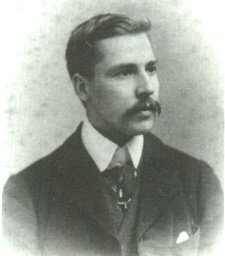
A E Waite 


"Famous Mystics" is a book about Saint-Martin, Jacob Boehme and Emanuel Swedenborg. The article on the French mystic and Freemason Louis Claude de Saint-Martin is written by Arthur Edward Waite, who was both a scholarly expert on occultism and an occultist himself (Golden Dawn and its split-off Fellowship of the Rosy Cross). The pieces on Boehme and Swedenborg are penned by W.P. Swainson, an author about whom I know nothing, except that he is obviously sympathetic to the two men and their ideas.

Waite's article on Saint-Martin is rather bad, saying almost nothing about "the unknown philosopher's" actual philosophy (or mysticism). Instead, Waite concentrates on the pre-mystical part of Saint-Martin's life, tediously detailing every grade of the obscure Masonic groups to which the Frenchman or his friends had been affiliated. Apparently, Saint-Martin had originally belonged to a group which had conjured "Jesus Christ" through white ritual magic (!) and received a substantial amount of communications from the same. I suppose this is of great interest to a member of the Golden Dawn, but what about Saint-Martin's independent career?

Swainson's presentations of "the Teutonic philosopher" and the "Swedish seer" are better, since they actually attempt to introduce the reader to Boehme's and Swedenborg's respective messages. Unsurprisingly, the weirdly literalist revelations of Swedenborg ("the angels dress like humans", etc) are easier to describe than the Christian Kabbala of Boehme. Still, Swainson's descriptions of the latter's speculations are neither better nor worse than anybody elses. He emphasize the specifically Christian traits in Boehme: Jesus as literal historical figure who died and rose again in order to redeem the world, prayer, sacraments, etc. Of course, I suppose non-Christian admirers of the shoe-maker from Goerlitz can claim that this was just clever allegory...

I'm not sure why anyone would want to read this book, rather than the innumerable other books on the famous mystics, but I nevertheless give it three stars.

Sunday, July 29, 2018

Dreams of a spirit-seer


"Schelling and Swedenborg" is a scholarly monograph on the influence of Swedish mystic Emanuel Swedenborg on the German philosopher Schelling.

Before reading this work, I assumed that Schelling was a boring, bland pantheist with a Romantic crush on "nature" (read meadows, hills or something to that effect). In reality, of course, Schelling was a sophisticated thinker who constantly straddled the border between philosophy proper and theology. Eventually, he came to accept the existence of a spirit-world and even a kind of personal God whose highest revelation was "Johannine" Christinianity. For good or for worse, Schelling was strongly inspired by the Gnostic speculations of Jacob Böhme, something he shared with other Romantic thinkers as well. And then, he studied Swedenborg.

The author, Friedemann Horn, seems to be either a Swedenborgian himself, or some kind of sympathetic fellow traveller. He mentions both similarities and differences between Schelling and the "seer of the North". Schelling accepted Swedenborg's idea of spiritual corporeality. I admit that I don't quite understand this notion, but Schelling's point seems to be that spirits aren't a kind of abstract "ideas" or disembodied entities implying complete dualism between spirit and matter. Rather, spirits are in some sense "material" and hence very real, keeping their earthly personalities intact. At death, humans only shed the grossest, physical part of the body - a spiritualized body survives as a vehicle for the immortal soul. (Perhaps he had in mind what others would later call "the astral body"?)

Schelling was also interested in Swedenborg's ideas about heavenly marriage. Swedenborg apparently believed that spouses would be re-united in the spirit-world and continue to live there as husband and wife. Schelling had personal, psychological reasons for embracing both a very concrete personal immortality and heavenly marriage after the death of his beloved wife Caroline.

Other Swedenborgian notions discussed by Schelling include the theory of correspondences, Christology and eschatology. Interestingly, however, Schelling rejected Swedenborg's allegorical view of the apocalypse and resurrection in favour of a more "orthodox" position.

The book also contain more disturbing information, but not about Schelling. Apparently, both Schelling and Franz von Baader believed in a quite literal spirit-world, but Baader took the thing a bit too far, even carrying out bizarre experiments on his own daughter, whom he regarded as demon-possesed! Schelling started to avoid the Baader household after this. (Note that Baader was a well known and important intellectual and political figure in his native Bavaria!)

Obviously, I did some further reading on Schelling after digesting this book! What struck me is that Schelling accepted ideas that were decidedly non-philosophical. How do you philosophically "deduce" the spiritual corporeality of dead people? There seems to have been a tension in Schelling between a genuine religious longing, and demands of a strict philosophical Systeme. His rival Hegel strikes me as a very different kind of person!

"Schelling and Swedenborg" is a very specialized, in-house kind of book. Frankly, it *is* somewhat boring. Nor does it contain any sensational revelations, at least not if Schelling's intellectual evolution is taken into account. I mean, why shouldn't Schelling have read Swedenborg? Still, Horn's book could be of some interest to students of philosophy, theology and theosophy.

Perhaps F.W.J. Schelling at bottom wanted to be...a spirit-seer.