Showing posts with label Kazakhstan. Show all posts

Sunday, March 1, 2026

No coke in Doha


Jag kan förstå att någon måste mellanlanda i t.ex. Qatar. Som den gamle popparen Dr Alban i artikeln länkad här nedan. Det är svårare att förstå folk som bor på lyxhotell i t.ex. Dubai under en rätt så uppenbar internationell kris i närområdet. Jag menar, varför i all sin dar åker man just *dit* på semestern?!

Dr Alban fast i Doha efter attackerna i Iran

Monday, August 7, 2023

Well played, Mr Wagner


Hate to admit it, but...

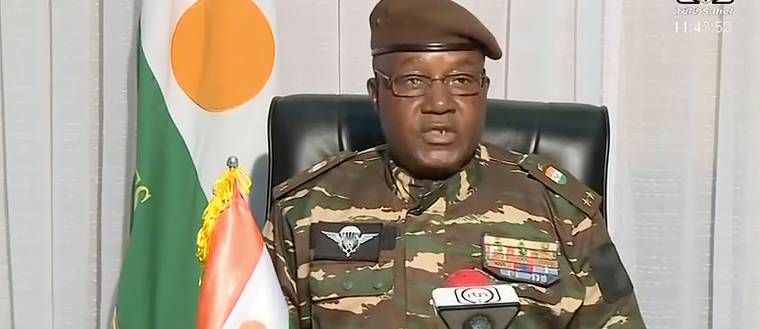
It seems the recent military coup in Niger was a very smart move from the Russians. In Swedish media, it´s being reported that the people of this extremely poor African country actually support the coup due to anti-colonialist and anti-French feelings. The French embassy has been stormed, crowds with Russian flags show up at mass rallies, and so on. The Wagner Group may already be moving in to Niger from Mali.

Why is this a master move from Putin´s side? Well, I suppose it´s possible that he was simply lucky - after all, there are always conflicts in Africa! Still...

France has the largest nuclear power industry in the world, with a substantial part of its electricity coming from nuclear power. And their nuclear power plants are dependent on uranium from...you guessed it...Niger. Could the coup be a way to put pressure on France to drop out of the Ukrainian war? 

Note also that another huge producer of uranium is Kazakhstan, probably a Russian ally. Yet another is Russia itself...

We´re not sanctioning the Russians. They are sanctioning us. There is a pattern here: the Russians are hiking the world oil prices, they are bombing Ukrainian ports to stop grain exports (and hence hike food prices), and now a mysterious coup in a French neo-colony directed against uranium supplies.  

And if France intervenes in Niger, only a swift victory followed by BAU will do the trick. A protracted war in Niger between the French and the Nigerien military (and peuple) is probably the last thing the West needs right now! 

Friday, January 14, 2022

The Three Evils


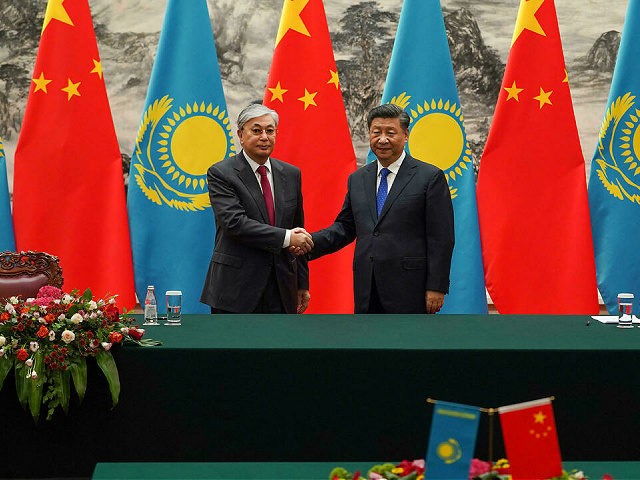
Credit: Andrea Verdelli/AFP via Getty Images

China wants all bordering nations to be authoritarian (just as China) and, of course, pro-Chinese! No surprise there, I suppose. 

China on Kazakhstan

Jag kanske är ironisk


Plan A:

Byt ut USA:s utrikespolitiskt mest pragmatiske president mot en senildement adventurist och en vice vars främsta merit är att ha kastat små negerpojkar i fängelse för skolk.

Slå ut hela medelklassen genom kravaller och lockdowns.

Medvetet öka kriminaliteten i storstäderna.

Gör en hel generation galen och tondöv genom lockdowns. 

Slit sönder hela västvärlden genom att kräva "vaccinpass" och "vaccinmandat".

Massinvandring av folkfrämmande element.

Mer transor i militären.

Planerad energikris. 

Ekonomisk kris, miljontals arbetslösa. 

Debacle i Afghanistan (gratis glass ingår).

Provocera fram krig med Ryssland i Ukraina och Kazakstan, precis de två områden där Ryssland inte kan tänka sig att backa.

Provocera fram krig med Kina om Taiwan, samtidigt som man skickar amerikanska atleter till ett kinesiskt OS (potentiell gisslansituation).

Krig.

Seger.

Om ovanstående misslyckas, vad är plan B? 


Wednesday, January 12, 2022

The end of multi-vectoralism


The pro-Russian blog "The Saker" on Kazakhstan and the recent events there. Argues that Russia had foreknowledge of the attempted insurrection. Kazakhstan, Armenia and Belarus are now even more subordinate to Russia than before, this being a huge defeat for the United States. While I obviously disagree with the fanaticized Greater Russian nationalism of this particular raptor, his analysis is nevertheless interesting. It could even be true - from Putin´s perspective!

Who "lost" Kazakhstan and to whom?

Sunday, January 9, 2022

What color is revolution?

Credit: Esetok

I previously linked to a longer article on Kazakhstan by the Trotskyist "International Marxist Tendency". Here is a shorter piece which I somehow managed to miss. IMT seems to have a few supporters in Kazakhstan, and I assume this was written by one of them. 

Note the relatively well organized character of the protests, bordering on an actual insurrection. Note also the political manifesto. The IMT argues that the protests are a genuine revolution spearheaded by the working class, not a CIA "color revolution". Make of that what you will. 

Kazakhstan: fuel price protests lead to uprising

Saturday, January 8, 2022

Red is the color of our revolution

Credit: Esetok


Are the violent protests in Kazakhstan an actual working class insurrection (or attempted such), rather than a CIA-orchestrated "color revolution" of the usual kind? The Trotskyist group IMT, which seems to have supporters in the country, argue that it´s the former. No idea if they are right, but the article is very interesting!

Kazakhstan: President calls in foreign troops to smash protest movement

Vi har hittat lösningen på gängkriminaliteten


Eller är jag bara väldigt ironisk här på något sätt? 

Thursday, January 6, 2022

"We are monitoring the situation"


Could even be true, given the current weakness of the US and the obvious senility of its "Commander in Chief". At this stage, Taliban in Almaty winning over the population with free ice cream deliveries are probably more likely! Last time I paid any notice to Psaki, she was threatening to censor anti-vaxxers on Facebook. Priorities... 

US denies role in Kazakhstan uprising

Bitcoin and uranium

Credit: Kalabaha1969


The Kazakh protests have some interesting repercussions...

Summary: Bitcoin are worthless if the web is killed by, you know, national governments. Or ISP´s? And uranium prices just went up, since 40% of all the world´s uranium is mined in Kazakhstan... 

Bitcoin dives after Kazakhstan kills Internet

Uranium prices soar as top supplier rocked by riots


"We are only here for your own protection"


The Russian-dominated military alliance CSTO is going to send "peace keeping forces" to Kazakhstan, where violent protests against the pro-Russian regime has broken out. This according to the Russian news agency RT. The guys at the photo above are apparently some kind of CSTO rapid response forces. 

In plain English: Shit about to go real. 

Russia sends "military peace keeping force" to Kazakhstan

Saturday, October 16, 2021

Science for the People


A world without Sci-Hub

It seems the site "Palladium" is the gift that never stops giving, this must be the sixth article of theirs I link to! 

Imagine a world where information is free, where scientists can freely publish their research, where you don´t have to break the law by trying to access an obscure pirate site in Kazakhstan just to avoid prohibitive paywalls... 

Indeed, imagine a world in which scientific research is actually controlled by scientists, rather than by rapacious academic publishers. Maybe it would be better science, too. 

It´s not the scientists, apparently, we need to hunt down in the event of a Global Apocalypse...

It never was. 

Wednesday, March 31, 2021

Huns: the model minority?


I recently watched a documentary about Attila the Hun on Swedish TV. The documentary is really French, produced by Pernel Media for a number of English-language channels. The version I´ve seen was 50 minutes long, and it´s not entirely clear what the English title might be. Perhaps "In the Footsteps of Attila the Hun". 

I´m not a world leading expert on the Huns, but at least on one point, I think the documentary-makers pulled a fast one. They actually claim that the Norse god Odin is based on Attila, and that the Huns somehow reached Scandinavia?! Naah, unless you chose to believe some ancient tall tale á la Snorri Sturluson...

Otherwise, the documentary seems to be scholarly, with a number of "talking heads" from various academic institutions and museums. Somewhat unexpectedly, they don´t really tell the full story of Attila in the usual chronological fashion, instead concentrating on the archeological, linguistic and genetic evidence. It´s actually quite intriguing. 

Apparently, the name "Attila" isn´t known from any Asiatic language. It´s actually a Goth (Germanic) word, meaning "Little Father", presumably a term of deference to the great leader. But why would an Asiatic conqueror be widely known by a Gothic name? Perhaps Attila was of mixed race? The Huns had Goth vassals, but in the documentary, Asiatics and Whites are depicted as equal. The Huns were a multi-racial band of marauding brothers, not an example of henious Asian oppression of the fair Goths. 

Further, the documentary claims that DNA tests show that the "Hun elite" came from northern Mongolia and Lake Baykal, so presumably they were Asians and related in some way to the Xiongnu (Hsiung-nu), after all. (Otherwise, it´s interesting to note that Indo-Europeans also roamed the same area in ancient times, see the "Celtic" mummies in Xinjiang!) There are also archeological sites in Kazakhstan that are related to the Huns. Their golden artifacts are a perfect match. 

Attila and the Huns have a *very* bad reputation in European historiography, except in Hungary (Hun-gary) where nationalists to this day claim descent from the Huns and regard their leader as a Hungarian hero. Several modern monuments celebrating the scourge of God are shown in the documentary. Apparently, the theory in vogue is that the Magyars (the ancestors of modern-day Hungarians) were somehow related to the Huns, or indeed *were* the Huns at a later stage of development. I´m not sure what Viktor Orbán thinks of all this, I mean, there seems to be a contradiction between claiming to be "the defender of Europe against the barbarians" and celebrating descent from one of the barbarian tribes! 

After Attila´s death, his vast "empire" (or whatever is the correct term) soon split and was dissolved, but that´s normal steppe politicking, and the moment Russia breaks up around the year 2500, well, here we go again, with new Attilas...  

Hopefully more Germanic ones, this time.


Sunday, December 16, 2018

Russian chimera


“The Gumilev Mystique: Biopolitics, Eurasianism, and the Construction of Community in Modern Russia” by Mark Bassin is a scholarly summary of the life, ideas and contemporary influence of Lev Gumilyov (1912-1992). Or perhaps attempted summary since Gumilyov´s ideas were incredibly complex, eclectic and contradictory. So is his influence on the political discourse in the ex-Soviet Union. First, an admission: I never even heard of Gumilyov (whose name is spelled Gumilev in the book) until a few months ago, yet he has been a towering intellectual presence in Russia since the 1970´s. Bassin´s book popped up in a search engine when I was looking for material by Nikolai Trubetzkoy in English…

Lev Gumilyov was the son of two prominent Russian poets, Nikolai Gumilyov and Anna Akhmatova. Nikolai was executed by the Communist Cheka in 1921, while Lev spent a total of 15 years in Stalin´s labor camps. He enjoyed a kind of quasi-approval during the post-Stalin decades, but it wasn´t until the advent of the perestroika and the collapse of the Communist regime that Gumilyov´s ideas became more widely known. Gumilyov is regarded as a historian and ethnologist, but I think it´s more useful to see him as a philosopher in the broad Russian sense. Indeed, I get the impression that Gumilyov was a mercurial intellectual and “mad genius” with the usual persecution complex and delusions of grandeur. Somehow, I consider this particular type of person to be very Russian!

Gumilyov´s ideas are difficult to describe in a short review. They are a bewildering blend of vitalism, biologism, geographic determinism, anti-Semitism, anti-Communism, anti-modernism and Russian nationalism, but also Turkophilia and Mongolophilia. I agree with Bassin that the various strands don´t always combine very well. There are certain similarities to the ideas developed by Spengler and Toynbee, but the differences are more striking. Gumilyov had an essentialist view of ethnic groups, viewing them as more or less self-contained units of a biological and psychological character. In some writings, he described the origins of an ethnos in geographical and ecological terms. Each ethnos was molded by its natural living environment and could even be seen as part of nature itself (note the strong biologism). In other writings he claimed that the “ethnies” (plural of ethnos) were products of cosmic radiation (!). Somehow, this solar radiation gives rise to new ethnies by mutations affecting the psychological make-up of certain persons. These founding fathers are also given an energy impetus (which thus comes at least indirectly from the sun), giving rise to what Gumilyov called “passionarnost” – a central term in his writings. My interpretation is that passionarnost is really the élan vital and that its bearers roughly correspond to the “creative minority” in Toynbee´s writings. A new ethnos is *not* dependent on its living environment, to the contrary, it rebels against it, perhaps by moving out to new territories. Each ethnos follows a life cycle of roughly 1,500 years during which it rises, reaches maturity and then loses the energetic impetus due to entropy. Eventually the ethnos disappears or becomes a relict population. (Curiously, the Russians – uniquely – have experienced two ethnic cycles, rather than just one.) Gumilyov believed that his ideas were scientific in the strict sense of that term, but critics see them as sheer fantasy. Another central concept for Gumilyov is “chimera”. Apparently, there is one way in which an ethnos could artificially prolong its existence almost indefinitely: by turning into a parasite on other ethnies, sucking their solar energy. This kind of parasitical ethnos is what Gumilyov called a chimera. Unsurprisingly for a Russian nationalist, his prime example of such was the Jewish people…

More surprising are Gumilyov´s pro-Turkic and pro-Mongol positions. Bassin never really explains where they come from, except that some Russians romanticized the life and culture of the steppe nomads, both that of ancient peoples such as the Scythians and that of later Tatars and Mongols. Gumilyov´s parents were influenced by this romanticism in their poetry, and his mother´s last name Akhmatova is really a pseudonym – she claimed to be a literal descendant of Khan Ahmed (Akhmat) of the Golden Horde! Gumilyov claimed that the Tatar yoke never existed, calling it a “black legend”. Russians and Mongols/Tatars cooperated peacefully. The battle of Kulikovo in 1380, when Prince Dmitri of Moscow defeated the Horde, wasn´t a Russian liberation struggle against the evil Tatars, but rather a joint Russian-Tatar effort to repulse a dissident Tatar faction backed by Lithuania (a hostile “Western” nation). Today, Gumilyov´s legacy is cherished in Kazakhstan, Tatarstan and Sakha (Yakutia). A university in Kazakhstan´s capital Astana is named after Gumilyov and a monument in Tatarstan´s capital Kazan – the monument was dedicated in the presence of Vladimir Putin himself – shows a statue of the man.

One thing that immediately struck me when reading “The Gumilev Mystique” is the strongly anachronistic character of Gumilyov´s writings. Thus, he claims that Khazaria and the Vikings cooperated in a genocidal war against Kievan Rus. Translation: Jews and Nazis are equally dangerous to modern Russia. Another possible translation: Bolsheviks and Nazis! Gumilyov believed that some ethnies were closer than others. They could be grouped into “super-ethnies” based on “complementarity” (another essentialist psychological term). This is strikingly similar to the Soviet concept of “the brotherhood of nations”. Gumilyov also made a distinction between ethnos, which is natural, and society, which is a social construct by man. This notion also has an affinity with the Soviet idea that the Communist state, of course, transcends all ethnic identities. It may seem strange that a man who spent most of his youth in Soviet labor camps would nevertheless have certain similarities to the regime which put him away, but the relation between Russian nationalism and Communism is a complex issue in itself. Gumilyov was no liberal democrat, usually avoided the pro-Western dissidents, supported the Soviet Cold War confrontation with the West, and opposed Gorbachev´s perestroika. He enjoyed a certain amount of support in the party hierarchy from the Brezhnev years onwards.

Due to their highly eclectic nature, Gumilyov´s ideas have inspired a wide range of people, from more strictly scholarly types interested in sociobiology or geography to decidedly less scholarly people such as Eurasianist philosopher Alexander Dugin, often cast in the role of Putin´s Rasputin (at least by the Western media). Russian ethno-nationalists, Russian imperial or state “nationalists”, Kazakh pro-Russian Eurasianists and Kazakh anti-Russian ethno-nationalists have all claimed Gumilyov´s legacy. Ziuganov, Zhirinovsky and Putin himself have name-dropped him on many occasions. The Green movement in the Soviet Union was inspired by Gumilyov, but also by Russian nationalism. At least two of his “scientific” terms have become virtual household words in Russia: passionarnost and chimera. The national question is just as vexing in Putin´s Russia as it was in Communist or Czarist ditto. Should loyalty primarily be to the state or to the Russian ethnos? And should the state be seen as multi-ethnic, non-ethnic or specifically Russian? Similar problems exist in Kazakhstan, where Russians form a substantial minority and the total number of nationalities is about 150. Should Kazakhstan be “Kazakh” or “Kazakhstani”? One possible interpretation of Gumilyov´s ideas is that Russians shouldn´t be “primus inter pares” in Russia or the Russosphere, rather this role should belong to a coalition of Russians and various Central Asian peoples! Bassin also mentions that some admirers of Gumilyov, including outright neo-Nazis, have drawn the conclusion that Jews could form a natural ethnos by moving to Israel, since the Israeli nation isn´t a chimera. Is this where the bizarre blend of neo-Nazism and Zionism of the National Bolshevik Party comes from?

My overall impression after reading “The Gumilev Mystique” is that Gumilyov, in his own kind of way, actually was right. A discourse of his type is surely impossible in Western nations, or even in “Eastern” Europe. What other European nation has spawned an intelligentsia seriously debating whether or not their historical legacy is somehow identical to or intertwined with that of Genghis Khan? Maybe the Russian ethnos really is fundamentally different. If that´s a good thing, is perhaps an entirely different question.

Thursday, September 13, 2018

MacGyver meets the Blair Witch Project


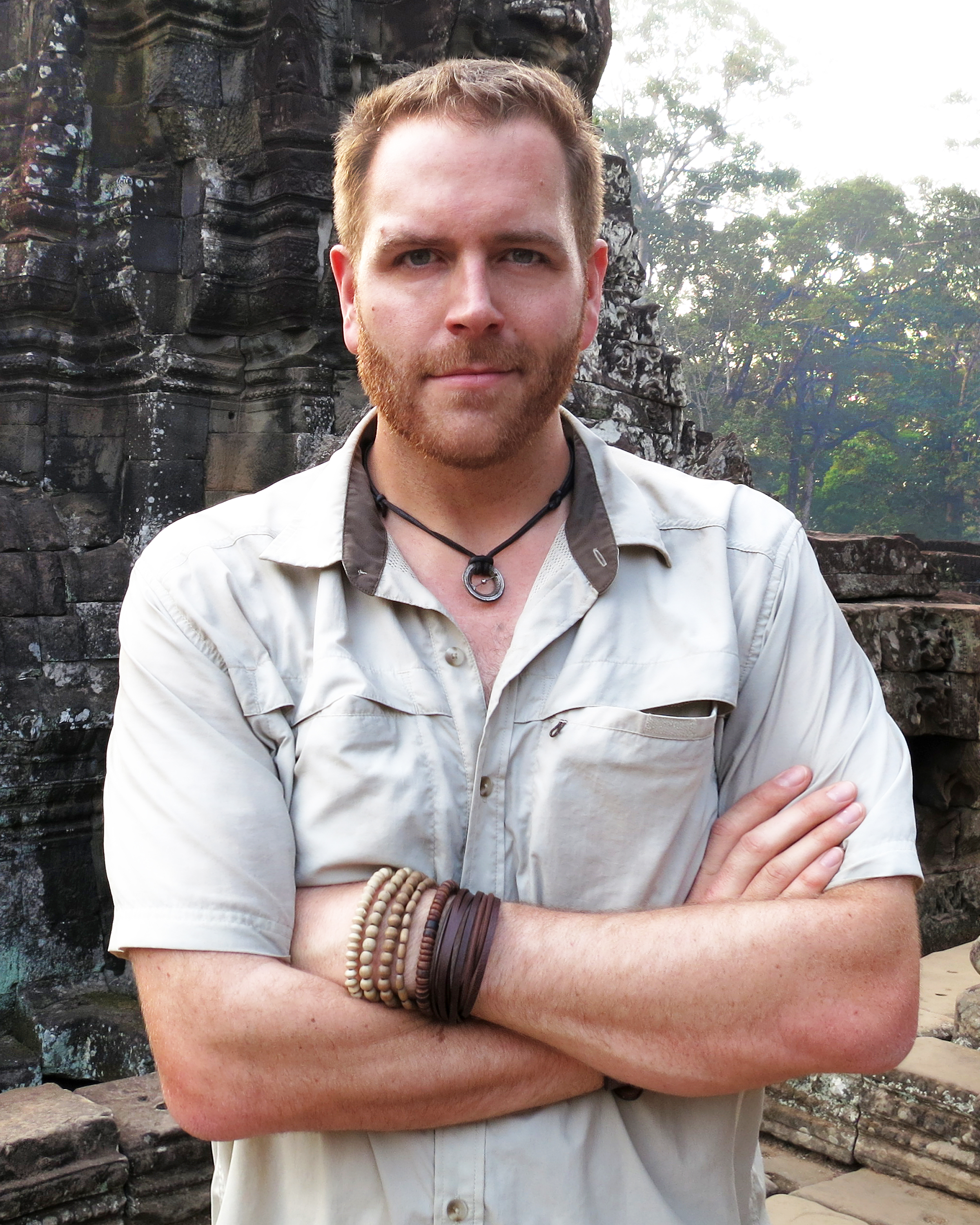
I've only seen one episode of "Destination Truth", the one ominously called "Alien Invaders/Swedish Lake Monster". I admit I laughed quite a lot, sometimes with Josh and his team, sometimes at them (or rather at the concept). But sure, this should get higher ratings than the incredibly boring "MonsterQuest" over at History Channel.

After a positively bizarre visit to the ex-Soviet republic of Kazakhstan (complete with Cold War kitsch and sputniks falling from the sky), Josh Gates and his indefatigable investigators make a landfall in Sweden - of all places. Somehow, paranormal phenomena isn't something you would normally associate with the land of The Welfare State and the Polkagris!

But yes, folks, Sweden has its very own version of the Loch Ness monster, called Storsjöodjuret (try pronounce that). It supposedly lives, breathes or perhaps snorkels in the cold waters of Storsjön, a lake outside the Swedish town of Östersund in the county of Jämtland.

For decades, the monster was protected by law, but in 2005 the local authorities were forced to rescind the protection, since higher authorities found it to be "frivolous" - after all, there *is* no Great Lake Monster, and you can't legally protect a species that doesn't exist. Ah, the Swedish red tape, don't you just love it! According to urban legend, the decision to protect the monster was taken by the county office at April Fool's Day, but I haven't been able to confirm this.

Frankly, I didn't know people in Jämtland took their little monstrosity so damn seriously. Josh isn't kidding - there are cameras rigged all around the lake, to catch the monster on tape if it ever shows up above the waterline, a project financed by both the Swedish government (or rather by an obscure outfit of the vast Swedish government bureaucracy) and the European Union. So *that's* alright, but legal protection's a no-no?!

I think Storsie, as English-speaking forteans call the monster, and "Destination Truth" go together very well, LOL. This show could be described as MacGyver meeting the Blair Witch, complete with team members screaming "OH MY GOD, WHAT IS THAT?" and constant cliff hangers (and commercial breaks) keeping the viewers on the edge...well, sort of. Josh & The Team certainly made an impression - they are still mentioned at the official website of Storsjöodjuret, where Josh is affectionately referred to as "The Boss".

OK, let me guess, this show is...well, scripted?!

That being said, I still feel a bit too old for this concept, but I'm sure the little people around 12 years of age will love every minute of it. As a crazy local patriot, I naturally have to give the episode five stars. But, as all monster shows, even "Destination Truth" ends inconclusively. After all, the Great Lake Monster might simply be...a pike.

They are not protected by law.

Sunday, September 2, 2018

Autopsy of a lake


"Aralkum: A Man-Made Desert" is a book dealing with one of the world's largest ecological disasters, the turning of the Aral Sea into a salt desert. The Aral Sea is, or rather was, situated in Central Asia. It used to be one of the largest lakes in the world, but Soviet irrigation projects diverted water from two of its largest tributaries, dramatically shrinking its size. From 1960 to 1990, about half of the Aral Sea disappeared, and in the two decades since the collapse of the Soviet Union, most of the rest has disappeared, as well. The resulting desert is known as Aralkum.

This book is somewhat less technical than other volumes in the "Ecological Studies" series. It's nevertheless difficult to read for the layman, due to the excessively detailed information it contains. "Aralkum: A Man-Made Desert" should be treated as a reference work, not something you can read from cover to cover, unless you are a budding scientist who absolutely wants to do research on salt deserts!

Chapters deal with subjects such as geology, history, climate, flora, fauna, and attempts to restore the environment for the benefit of the local population. While animal life in and around the disappearing lake has taken a heavy toll, 368 species of plants have managed to establish themselves on the former lake floor, suggesting that Mother Nature will always find a way. If humanity will is another thing entirely. As usual, the scientists take an optimistic approach, reporting on how their experiments with planting various grasses and shrubs have increased the quality of life in selected villages in the area. Thank you.

The one thing missing from "Aralkum: A Man-Made Desert" is the feeling of moral revulsion. The whole book reminds me of an autopsy of the victim of some horrible crime: dispassionate, clinical, objective. I suppose we can't expect anything else from a reference volume...