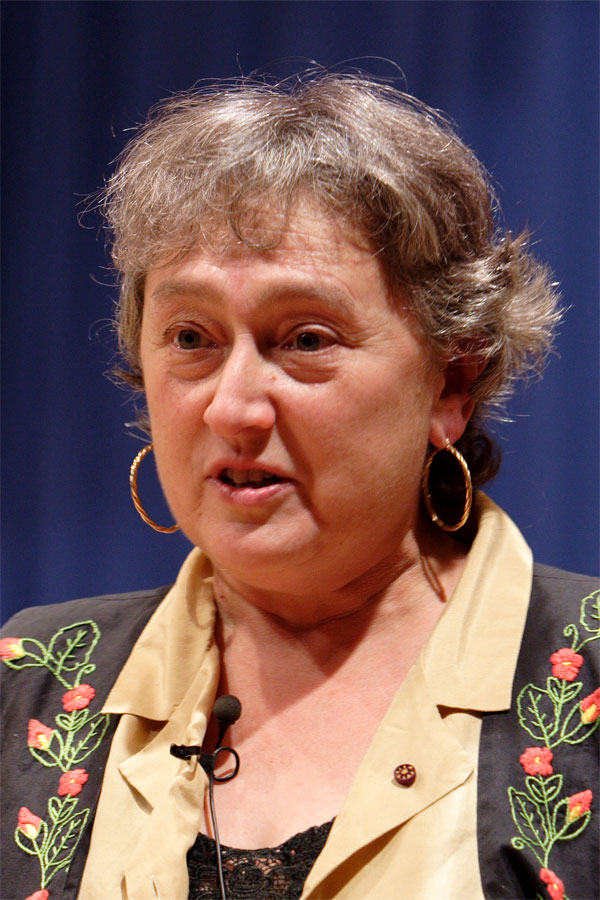
"Handbook of Protoctista" is an extensive, scientific reference
work on micro-organisms. Lynn Margulis is one of the editors. The subtitle is
rather extensive: "The structure, cultivation, habitats and life histories
of the Eukaryotic microorganisms and their descendants exclusive of animals,
plants and fungi. A guide to the algae, ciliates, foraminifera, sporozoa, water
moulds, slime moulds and the other protoctists".
Why even write a review, with this presentation?
The following statement from the introduction by Lewis Thomas is also worth
quoting: "Just a few years back, this book would have seemed to most
readers trained in either medicine or biology nothing more than an arcane
compendium of nature's most outlandish oddities, queer single cells of primary
interest only to the most specialized of specialists". Well, at least he's
honest! I suppose doing research on chimpanzees or mountain gorillas is better
for your pay check, too. What turned the scientific community to a more
pro-protoctistan position isn't entirely clear, but it sounds as if
evolutionary theory has something to do with it. Today, Protoctista are
regarded as our distant parents. Amen and amen?
When this book was published, about 100,000 species of protoctists were known
to science. As behoves a micro-organism, they can be encountered pretty much
anywhere. When studying the hypertrophied intestines of an East African
rhinoceros, W. Van Hoven discovered a new world of symbiotic eukaryotes using
scanning electron microscopy. Meanwhile, a wood-ingesting termite may contain
as many as thirty different protist species. No surprise there.
The editors of "Handbook of Protoctista" don't consider their objects
of study to be single-celled plants or animals, "anymore than humans are
shell-less multicellular amebas". An ironic statement, given the claim
that protoctists are our parents. Be that as it may, Lynn Margulis and her
colleagues wanted to establish the Protoctista not only as an independent field
of study, but also as a "kingdom" in its own right, alongside the
"kingdoms" of animals, plants and fungi. They also reject classification
schemes of algae based on colour. No more talk about red or green algae,
please! At one point, the authors call their approach Neo-Haeckelian
protistology.
The rest of the book is an extravagant super-encyclopaedia. The entries are
divided into sections dealing with Habitat and Ecology, Characterization and
Recognition, Maintenance and Cultivation, Evolutionary History and References.
There is also an extensive glossary. The text is heavy, but "Handbook of
Protoctista" is probably a must for advanced students who want to walk in
the footsteps of Margulis.