The strangest Trump-related saga continues. You can´t beat the feeling?
Coca Cola to sell cane sugar Coke after Trump said "It´s just better"
The blog to end all blogs. Reviews and comments about all and everything. This blog is NOT affiliated with YouTube, Wikipedia, Microsoft Bing, Gemini, ChatGPT or any commercial vendor! Links don´t imply endorsement. Many posts and comments are ironic. The blogger is not responsible for comments made by others. The languages used are English and Swedish. Content warning: Essentially everything.
The strangest Trump-related saga continues. You can´t beat the feeling?
Coca Cola to sell cane sugar Coke after Trump said "It´s just better"
Some more speculations about the elusive "soma" of the Vedic scriptures. The idea that soma was really the lotus is intriguing, to be sure. I think ephedra was the most official proposal 20 years ago (when I studied comparative religion at university level). What it is today, who knows.
It´s fascinating that while the original Veda Samhitas have been preserved for 3000 years, the knowledge of soma (necessary for many of the rituals) has been lost...perhaps forever.
So strictly speaking the Vedic rituals are no longer efficacious. They are LARP-s. The gods want their mad honey!
![]() |
| Credit: Ton Rulkens |
So I asked the robot to comment this week´s strangest news item. Yes, that would be Trump´s proud announcement that the Coca Cola Company (at the God-Emperor´s prodding, mind you) will stop sweeten Coke Classic with corn syrup, instead using real sugar from sugarcane. Eh?
Sugarcane is grown in the southern states, where many people support Trump. But...what about immigrant labor at the sugarcane plantations? And what´s up with the corn syrup situation anyway? My guess is that RFK Jr and his "MAHA" movement may be behind this, since I assume they oppose said syrup.
However, more sugarcane production will presumably also make it necessary to import more cheap labor from Mexico and Central America. Unless the MAHA-ites want to lift and then volunteer their working class muscle down at the latifundia...
Do sugar cane plantations in the South use labor from Mexico?
Yes, many sugarcane farms in the U.S. South—especially in states like Florida and Louisiana—do use labor from Mexico, but the situation is more nuanced and varies by region and employer.
A significant portion of seasonal sugarcane workers in the South are Mexican nationals.
Many are brought to the U.S. through the H-2A visa program, which allows agricultural employers to hire foreign workers temporarily when there are not enough local laborers.
These workers typically perform manual cutting, planting, weeding, and harvesting, especially in Louisiana, which still relies partly on hand-harvested cane.
In Florida, sugarcane harvesting is now largely mechanized—machines cut most of the cane.
However, Mexican and Central American workers are still employed in:
Planting
Field preparation
Maintenance
Milling operations
They often work under contracts with large companies (e.g., U.S. Sugar, Florida Crystals).
Louisiana relies more heavily on manual labor for certain stages of harvesting and field prep.
Mexican H-2A workers are widely used during the harvest season.
Labor shortages have made growers more dependent on foreign guest workers.
There have been ongoing debates around:
Pay levels and working conditions for H-2A workers.
Access to healthcare and housing during seasonal work.
Exploitation or legal gray areas with subcontractors or recruiters.
Several reports and labor watchdogs have raised concerns, particularly regarding wage disputes and unsafe working environments.
| Region | Labor Source | Mechanization | Use of Mexican Workers |
|---|---|---|---|
| Florida | Local + H-2A migrants | High (mechanized) | Yes, mostly for planting & prep |
| Louisiana | Local + H-2A (mostly Mexican) | Mixed (some hand harvest) | Yes, widely used |
| Texas | Less significant production | Mixed | Some use of migrant labor |
Would you like information on how the H-2A visa program works or data on the number of Mexican workers in agriculture more broadly?
Yes, there is significant criticism of high-fructose corn syrup (HFCS) from a range of consumer rights groups, health organizations, and nutrition advocates. The criticism centers on health concerns, labeling transparency, and industrial agricultural practices. Here's a breakdown:
HFCS has been linked—controversially—to the rise in obesity and type 2 diabetes in the U.S.
Groups like the Center for Science in the Public Interest (CSPI) and Public Health Advocacy Institute argue that HFCS contributes to overconsumption of sugar in processed foods and beverages.
Unlike glucose, fructose is metabolized primarily in the liver, which can lead to fat buildup and insulin resistance.
Some studies have associated high fructose intake with non-alcoholic fatty liver disease (NAFLD) and elevated triglycerides.
Consumer health advocates argue HFCS provides no nutritional value beyond calories, and encourages the consumption of sugary, processed foods over whole foods.
HFCS often appears under different names like “corn sugar”, which can confuse consumers.
In 2012, the FDA rejected a petition by the corn industry to rename HFCS as “corn sugar,” citing misleading labeling.
Critics claim food labeling lacks clear distinctions between cane/beet sugar and corn syrup, which undermines informed consumer choice.
HFCS depends on large-scale corn monoculture, which requires:
Heavy fertilizer and pesticide use
Government subsidies (taxpayer-funded support of corn)
Environmental groups (like the Environmental Working Group) criticize this model for contributing to:
Soil degradation
Water pollution (from nitrogen runoff)
Reduced biodiversity
Starting in the late 2000s, there was a consumer backlash against HFCS.
Many companies (e.g., Snapple, Heinz ketchup, Gatorade) began marketing products with labels like “no high-fructose corn syrup.”
Some health-conscious consumers see HFCS as a marker of “ultra-processed” or low-quality food.
Major health organizations like the American Medical Association (AMA) and FDA have stated that HFCS and table sugar (sucrose) are nutritionally similar when consumed in moderation.
However, they also acknowledge excessive sugar intake of any kind is unhealthy.
🟨 So while HFCS may not be uniquely toxic, critics argue that it encourages overconsumption due to its low cost and prevalence in processed foods.
| Area | Concern |
|---|---|
| Health | Links to obesity, diabetes, liver problems |
| Labeling | Lack of transparency, misleading names |
| Environment | Industrial corn farming harms ecosystems |
| Consumer rights | Reduced choice, hard-to-avoid in processed foods |
| Economics | Subsidized production distorts food markets |
Let me know if you’d like citations, major health studies, or a comparison between HFCS and cane sugar in how the body processes them.
Strangest tweet from Donald Trump so far? Maybe this can be used as an argument for lifting the blockade on Cuba, I don´t know...
If you know, you know. Muh-hah-hah-hah!
How long does it take for a domesticated species of plant to turn wild again? Does this have any bearing on the question of when agriculture began?
Excellent and deep question — let’s tackle it in two parts:
This process is called feralization — when a domesticated species reverts to a wild or semi-wild state after escaping cultivation or human management.
In some cases, feralization can begin within a few generations (e.g., 5–50 years), especially in annual plants that reproduce quickly.
Traits that are lost or reduced during domestication — like seed shattering, seed dormancy, or thorn production — can re-evolve under natural selection if beneficial in the wild.
Full reversion to a wild-type genome is rare, but feral plants often show:
Increased seed dispersal
Decreased yield
Resumption of natural defenses (e.g., toxins or spines)
📌 Example: Weedy rice (Oryza sativa f. spontanea), which evolved from domesticated rice and re-developed wild traits in only a few centuries (possibly faster in some regions).
Yes — feralization complicates the archaeological record of agriculture in important ways:
Early farming was likely intermittent, small-scale, and low-intensity.
If agriculture was abandoned for even a few decades or centuries, domesticated crops could go feral and vanish from the landscape and archaeological visibility.
This means that early domestication events could have occurred thousands of years before the earliest definitive archaeological evidence.
Modern archaeology sees domestication as a gradual, multi-generational process, not a single moment.
Some species show pre-domestication cultivation — early humans planted them before the genetic signs of full domestication appear.
If early farming societies collapsed or moved, their plants may have reverted — making it seem like agriculture started “later” than it actually did.
🧬 Genetic evidence shows that domestication traits (like non-shattering ears in wheat or barley) accumulated slowly, and can be lost under feral conditions.
✅ Domesticated plants can revert toward wild forms surprisingly quickly (within decades to centuries), depending on the species and environment.
🧠 This means that early, failed, or abandoned attempts at agriculture may have left no clear trace in the archaeological record.
📆 As a result, the true origins of agriculture may be older and more complex than previously thought, with cycles of cultivation, abandonment, and re-domestication.
Would you like examples of specific plants (like wheat, barley, or maize) and how quickly they can feralize or re-domesticate?
Great — let’s explore how wheat, barley, maize, and rice behave when feralized (i.e., revert from domestication) or re-domesticated, and what that tells us about the timing and complexity of agriculture’s origins.
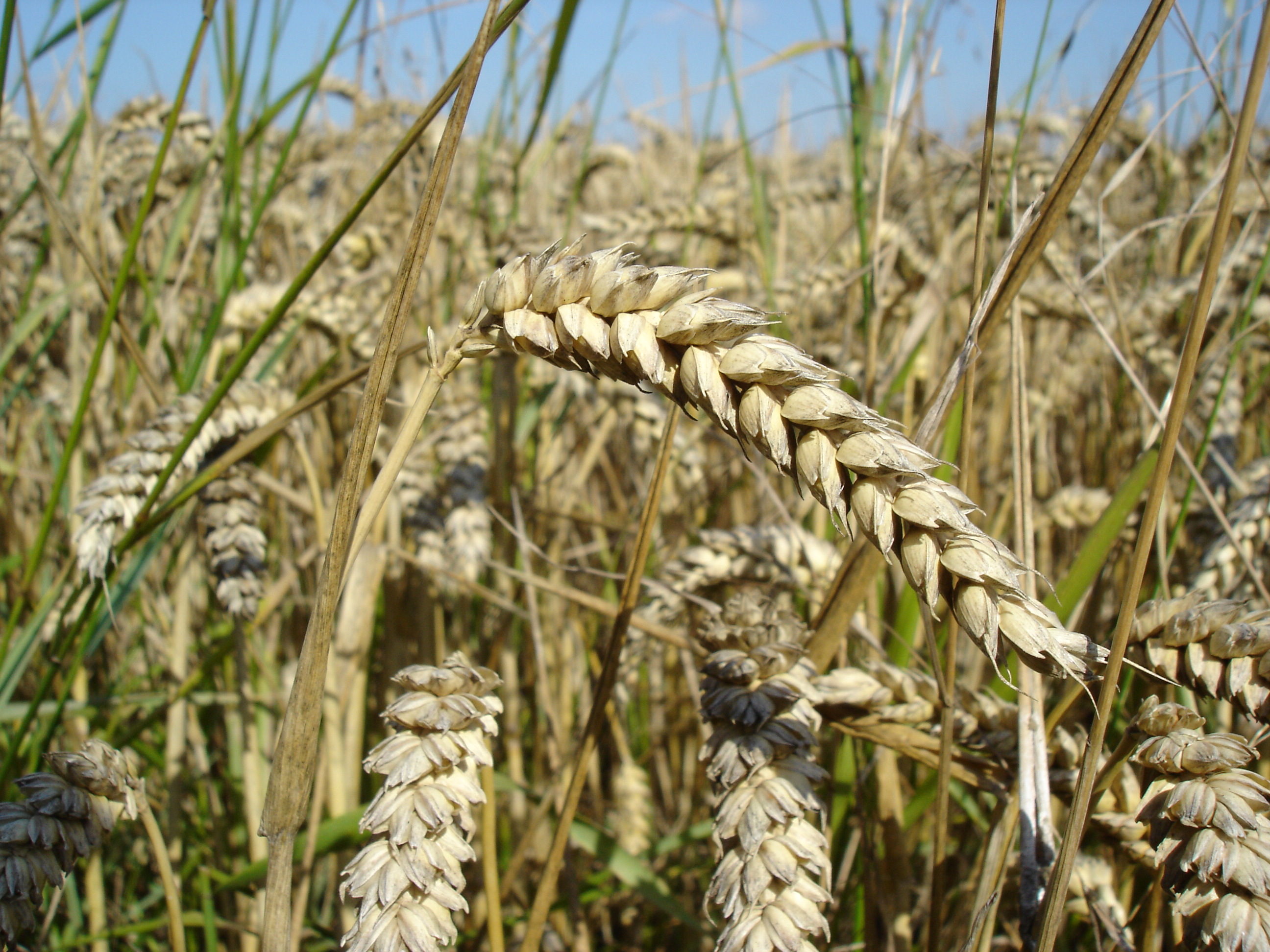
Non-shattering spikelets (seeds stay on the stalk, making harvesting easier)
Larger grains
Softer seed coats
Under wild conditions, non-shattering becomes a disadvantage (seeds don’t disperse).
Studies show that feral wheat lines can evolve partial shattering again within ~20–50 generations (500–1,000 years).
However, wheat is less weedy and does not easily naturalize without human help.
Wheat domestication was slow, taking 1,000–2,000+ years, and could reverse partially if early agriculture was abandoned.
Like wheat: non-shattering spikes, larger grains
Shorter dormancy, more uniform germination
Weedy barley populations (H. vulgare f. spontaneum) are common near fields.
Barley can hybridize with wild relatives, rapidly reintroducing wild traits like:
Seed dormancy
Rough awns (barbs)
Shattering
📌 Some barley reverts to near-wild form within <500 years when left uncultivated.
Barley is more plastic than wheat, showing frequent gene flow with wild forms. This makes archaeological dating of “fully domesticated” barley complicated.
Derived from teosinte (wild grass from Mexico)
Maize has:
Larger cobs
Multiple rows of kernels
Non-shattering seeds (fully dependent on humans to spread)
Maize is highly domesticated and does not easily revert.
However, teosinte-maize hybrids can arise spontaneously if maize is grown near wild relatives.
Some “wild maize” types in Mexico are likely re-wilded hybrids, but they don’t fully return to teosinte.
Maize is an outlier — it’s so altered that it can’t survive as-is in the wild. But gene flow with teosinte can blur the archaeological record.
Shorter seed dormancy
Non-shattering grains
Compact panicles (grain heads)
Reduced awns
Rice rapidly feralizes — a major modern problem known as weedy rice or red rice.
This happens through:
Escape from fields
Hybridization with wild rice (O. rufipogon)
Traits like seed shattering, dormancy, and red pericarps reappear in <10 generations.
📌 Weedy rice is genetically part-domesticated but behaves wild — showing how quickly selection pressure can undo human cultivation traits.
Rice demonstrates how fast domesticated traits can be lost in just decades. This has serious implications for interpreting early rice domestication in East and Southeast Asia.
| Plant | Speed of Feralization | Key Points |
|---|---|---|
| Wheat | Slow–moderate (centuries) | Stable once fully domesticated; partial reversions |
| Barley | Fast–moderate (decades–centuries) | Hybridizes easily; common weedy forms |
| Maize | Rare, via hybridization only | Cannot survive without human aid, but gene flow with teosinte confuses the picture |
| Rice | Fast (within decades) | Weedy forms arise quickly; feral rice is a major modern issue |
These examples show that:
Domestication is reversible, especially in early stages.
Many early agricultural episodes could disappear from the archaeological record within centuries, due to feralization.
Therefore, true beginnings of agriculture may predate the first archaeobotanical evidence by millennia.
Would you like a diagram or timeline showing how these crops evolved across time and geography?