Showing posts with label Malaysia. Show all posts

Tuesday, June 2, 2026

7 and 8


This is clearly some kind of cult. So we´re supposed to extend our natural life spans with some occult techniques in order to serve the cult longer? Yeah, so about that...

There seems to be fundies and fanaticos in every religion. Note also that the speaker is, ahem, conflating Amitayus and Amitabha. LOL.

Sunday, February 1, 2026

We may have a problem


Credit: Shree Ganesh 

Something called the Nipah virus is spreading in South Asia. There is no known cure or antidote, and the lethality is 57%. Or perhaps between 40% and 75%. So if the virus spreads internationally, it could potentially kill over half of the world´s population. 

Oh. 

Thank god, there is no indication that this will happen. The international spread, that is. Until next time? 


Monday, December 22, 2025

Terror on stilts


Tales of surviving terror birds. Interesting, but probably not true. I mean, there are tall tales about *very* large snakes and even dragons from 19th century Småland in Sweden. Evidence? None. And nobody has seen them since. Drinking habits have changed, too. Hint hint. So why should I believe these tales are any different? Also, natural explanations are available in some of the "terror bird" cases: the California condor in one case, the marabou stork in another (and a Redditor hoax in a third). 

Verdict: Probably not true. But hey, let´s be careful out there. 

Saturday, December 13, 2025

Orang Bunian


A slightly humorous look at Malay fairy beliefs c/o a popular YouTube channel registered in Singapore. 

The fairies are known as Orang Bunian. The lore has interesting parallels with "our" fairy beliefs. The Orang Bunian abduct humans, want to marry them to beget hybrid children, and cause time distortions. They are clearly humanoid in appearence and live in the deep forests in a mysterious settlement known as Alamzara. More surprising is the claim that the Bunian are Muslims and spend most of their time reciting the Quran!

The video looks at two high profile cases from Malaysia. One is the disappearence and alleged abduction of a young hiker. Weirdly, he seems to have gotten lost at a popular tourist destination! The Singaporean content-creator (Sneaky Sushii) thinks the story is cringe and is fairly (pun intended) skeptical towards it. 

The other story is about a very real disappareance of a Malaysian athlete in the jungle during a competition. His friends and family believed the poor man was abducted by fairies and even tried to convince the Bunian to return him safely during a search expedition. The whole thing is more tragic than comic.

Apparently, these ancient Malay beliefs have been overlaid in the Internet age with a modern Western fantasy aesthetic perhaps derived from Peter Jackson´s LOTR films. Indeed, this video is in itself an example of this Tolkien-ization of the Orang Bunian. Which is fascinating in itself! But the most intriguing question remains: why are there fairy beliefs...you know...everywhere?      

Wednesday, July 23, 2025

Order in the House


In case you think our elected officials are a bunch of fools, I give you...the Parliament of Malaysia!  

Sunday, June 22, 2025

Daylight


An interesting piece (is it inspired by Vangelis?) called "Daylight". A propos the summer solstice, and so on. 

Thursday, May 22, 2025

Abdullah-town


Is this the next suicide cult? A character who calls himself Abdullah Hashem Aba al-Sadiq used to be a student of religion and counter-cult activist before he became a cult leader himself?! I didn´t know that he was briefly based in the Swedish town of Örebro. Iraq, Egypt, Malaysia and the United Kingdom also show up in the story. 

AROPL (as the cult is known) has a bewilderingly eclectic message spiced with disturbing apocalypticism. Note the Woke stuff! It´s very nominally Muslim, but is really a classical personality cult around Abdullah himself. The group´s present compound is in the UK. Indeed, AROPL is registered as a legitimate religion in both the UK and the US. Meanwhile, Abdullah calls on followers to sell their homes, give their money to the cult and come live with him at the compound. 

Same old, same old. Let´s hope it won´t end in the same old way...    

Friday, July 28, 2023

Orangutan Mindset?


An assortement of orangs. The one that knows how to use sunglasses is...somewhat scary!


Wednesday, July 26, 2023

Saturday, June 25, 2022

The lost world


"Earth´s Tropical Islands" is a three-part British-American nature documentary (with some anthropology thrown in), dealing with Madagascar, Borneo and Hawaii. I just watched the second part, about the large East Indian island of Borneo, politically split between Malaysia and Indonesia. It´s the same basic story: a biodiversity hotspot with many endemics, threatened by large-scale deforestation at the hands of Man. As far as I understand, the docu was made on the Malaysian side of the border. 

Animal species shown include the proboscis monkey (one of the few monkeys that can swim), the saltwater crocodile, the sun bear, and the Borneo orangutan. Plants shown include the pitcher plant, a "carnivorous" plant that catches and "eats" insects.

We get to see the fabulous coral reefs off the Bornean coast, and meet some of its denizens, including a group of human "sea nomads" (Bajau) who have supposedly become so well adapted to diving that their spleens are 50% larger than average. The "nomads" can also hold their breath underwater for up to three minutes, apparently longer than any other human. Another peculiar human group shown are the Penans (known to all anthropology controversialists). Conspicuous by their absence are the Dayak "head hunters". 

The most bizarre eco-system shown is created by bat feces inside a large, dark cave. The feces is feasted upon by swarms of cockroaches. Centipedes and even crabs are also part of this truly lost world!

Perhaps all of Borneo will be lost one day, but at least we can say that these creatures lasted longer than the crazy orangutan cousin who might still kill them all off...  

Saturday, April 11, 2020

The progress of this shit storm

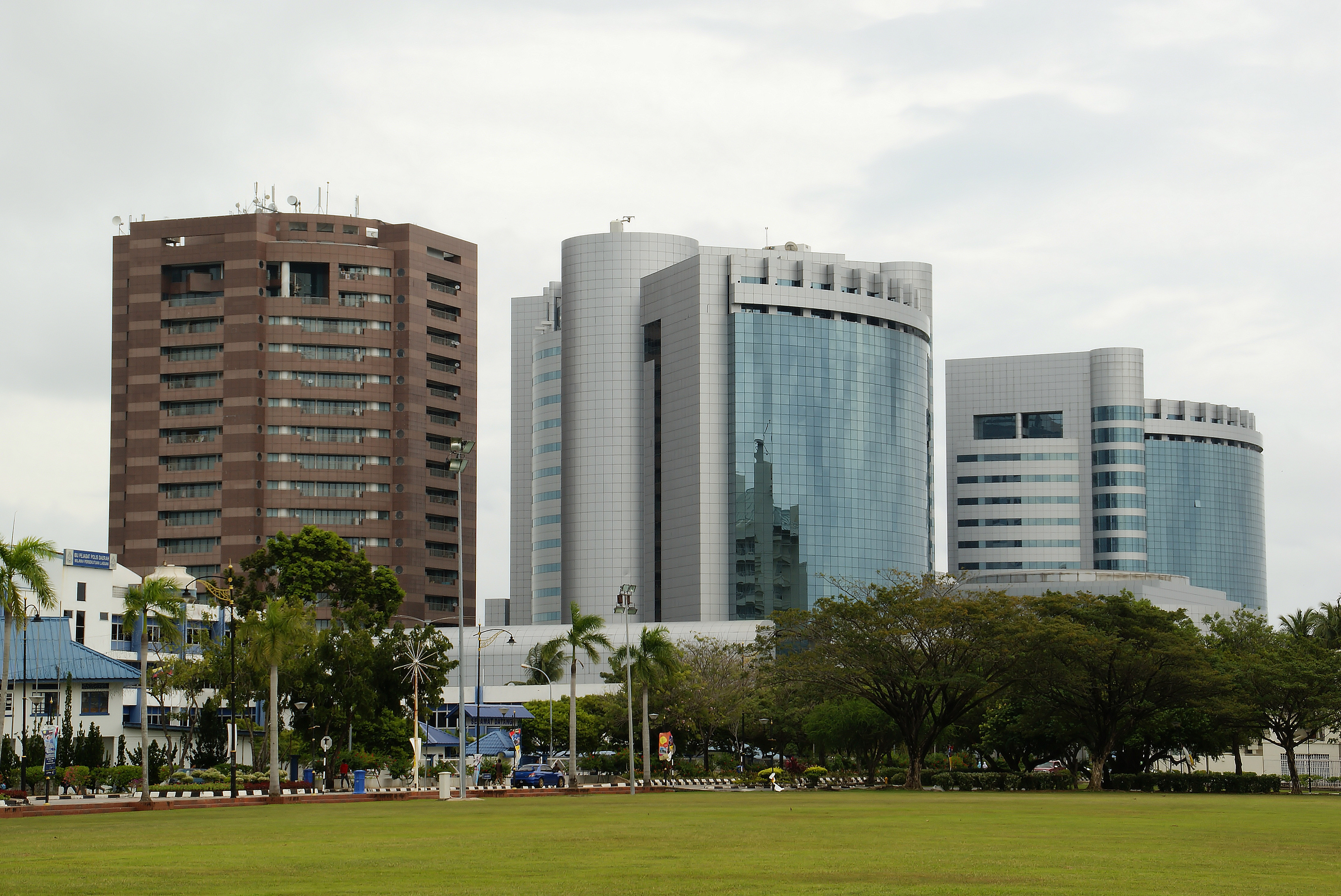
Labuan today


Andreas Malm is a Swedish left-wing intellectual and eco-socialist. I´m old enough to remember Malm as a rookie activist about 20 years ago, when he expressed support for Hizbollah, brawled with a group of exotic Trotskyists in the Palestinian solidarity movement, and called on the Swedish right-wing government to aid NATO in its bombing campaign against Gaddafi in Libya. Yes, you read that right. Andreas Malm *supported* the bombing of Libya. At the time, I rechristened him Andre-jas Malm, JAS being a highly advanced Swedish fighter plane. After reading his more recent thought products on the greener spectrum of things, I have to ask whether Malm still supports Western imperialist bombing campaigns against economically advanced Arab nations, or whether he simply wants the JAS bomber to be powered by biofuels and the bombs with solar cells? Or did he just switch his allegience from Hizbollah (pro-Iran, pro-Russia) to Hamas (anti-Iran, anti-Russia and therefore anti-Gaddafi)? 

It´s really a pity that I´m not a revolutionary Marxist, since writing a criticism of Malm´s works on the climate crisis from such a perspective would be great fun, if for no other reason that Malm claims to be, well, a Marxist. It´s a very peculiar form of Marxism, to be sure, with the working class strangely absent, replaced by the usual panoply of middle-class identity politics, petty bourgeois Greens and (supposedly) the huddled poor masses in the Third World (the migratory behavior of which strikes me as decidedly anti-Green). That capitalism can use fossil fuels and steam engines to move production wherever it feels like (a state of affairs usually known as "modern civilization") is seen as *negative* in this curious version of Marxism, while Marx himself would of course see it as capitalism being historically progressive, creating its own grave-diggers as it goes. But then, Marx wanted workers´ management of fossil fuels and, I suppose, engines. Malm wants...what?

In "Fossil Capital", he envisages a situation in which capital is *tied down* to a limited number of hubs around the world, due to the intermittent character of solar and wind power. This will force the employers to stay put (no globalization!) in the same places where they originally built the power plants, and somehow Malm believes that this will also increase the bargaining power of the workers in the green energy hubs. Note the dramatic difference with Marx, who regarded the free and therefore *mobile* character of the worker as a historically progressive gain. That being said, I admit that Malm´s scenario could work - unless, of course, the employers employ thousands of militarized praetorians to suppress the workers at their immobile solar power plants. And what if the workers start acting as Zionist colonial-settlers, forming a privileged labor aristocracy, forcing the workers outside the hubs to pay dearly for the energy only the solar and wind plants can provide? The only *material basis* for a revolution in this system seems to be for the impoverished peripheral workers to form war-bands, encircle the intermittently energetic hubs from the countryside, and simply destroy them - or take them over, and then the circle starts again. A situation remarkably similar to the pre-modern state of affairs! 

In "The Progress of this Storm: Nature and Society in a Warming World" (the book I was really intending to review), Malm offers up two contradictory perspectives on the post-Greta state of affairs. On the one hand, Malm goes full primitivism - no JAS fighter planes here! When discussing the island of Labuan in the South China Sea (with which he seems to have a strange obsession), he reaches the conclusion that the best solution would be to simply cordon off the island (and by implication, all pristine wilderness areas with noble savages) from any outside interference whatsoever, and most specifically Western imperialist and high tech interference. There is such a place already. It´s called the Andaman Islands, and seems to play a prominent part in the hagiography of Western middle class liberals, the defense of the right of the Andamanese to live as they please on their own little atolls being the only known example of anti-immigration policy supported within this particular social stratum. If the present inhabitants of Labuan (the most important financial center of Muslim Malaysia) would like to live on Andamanese level is, alas, less clear. 

The other perspective offered by our stormy petrel is somewhat more surprising. Yes, he calls for high tech solutions. One of the points of the book is that the storm is already upon us due to certain decisions made in the past, decisions which can´t be undone (not even by the multi-identitarian soviet or the savages). For this reason, "negative emissions" are necessary to save the world. The author doesn´t tell us what this entails, CCS apparently being the n-word of honest eco-socialists, nor does he tell his readers how the CCS facilities should be powered, if not by fossil fuels. Intermittent storm power, perhaps? Malm also makes a rather oblique call for geo-engineering on a massive scale, being gradually phased out by the revolutionary world government, until nature can take over the weather systems again without undue interference by our unfortunate species. Once again, we wonder how the geo-engineering gadgets should be powered if not by fossil fuels or electricity made in nuclear facilities. And who, pray tell, should pay for it? American pension funds? And what makes Malm think that the technocratic elite and their labor-aristocratic supplements will *phase out* a highly succesful program of weather control in favor of Mam Gaia´s decidedly more spontaneous take on things climatic?

Andreas Malm also has a blind spot for the overpopulation problem. How many Third World peoples could possibly survive if by some strange stroke of luck, say a comet or a coronavirus, the global population would be forced to live on Labuan (pre-Malaysia) or Andamanese levels forthwith? The population of North Sentinel Island is 400. To the usual Green conceit that somehow, in some way, we can all keep our high standard of living even if we completely replace fossil fuels with sun, wind and clean country livin´ (and, I suppose, Monégasque yachts), the author has simply added a new Red conceit: that somehow we can use high technology to save the world, and then simply abolish it, without anyone ever noting the difference... 

I´m not sure if that counts for progress. I am pretty sure it can´t pass for Marxism. 

Saturday, September 22, 2018

I remember Lemuria


“Eden in the East” is a 500+ pages tour de force by British author Stephen Oppenheimer, a former doctor who used to work in Southeast Asia and New Guinea, immersing himself in the local cultures. In his book, Oppenheimer proposes that some of the roots of “Western”, Indian and Chinese civilization are Southeast Asian in origin. He postulates the existence of a relatively advanced founder culture in Sundaland, an ancient landmass connecting the Malay Peninsula, Sumatra, Borneo and Java. Sundaland was flooded at the end of the last Ice Age.

Oppenheimer believes that the ancestors of modern Austronesians and Austro-Asiatics lived in Sundaland (most archeologists place the origins of Austronesians in China). The survivors of the catastrophic floods migrated to present-day Indonesia, the Philippines, parts of New Guinea and the Pacific Islands, but also to Southeast Asia and India. They influenced the budding high cultures in India, Tibet, Sumeria and Egypt through their long-distance trading networks. Indirectly, they also influenced the Uralic peoples, whose languages are distantly related to Asiatic ones. Oppenheimer's scenario entails that most of Southeast Asian and Pacific history/archaeology has to be backdated thousands of years, including the Polynesian expansion, and he spends considerable time attempting to prove his point. In general, Oppenheimer holds that Southeast Asia was more advanced during the Neolithic and the Bronze Age than traditionally assumed, and that these cultures were connected to other high cultures in southern China and Japan (Jomon).

To Oppenheimer, the Deluge legends are about an actual historical event (or events), the previously mentioned floods at the end of the last Ice Age, which affected the whole world. Even more controversially, the author argues that the Biblical narratives of creation and Eden are ultimately derived from Southeast Asian myths, and so are the well-known legends of “world trees” and “the dying and rising gods”. Cain and Abel is also originally a Southeast Asian story. The author doesn't believe that Christian missionary influence can account for all the similarities – some legends were written down by baffled Westerners (including missionaries!) before Christian influence became pervasive. Many of the “Western” legends are most diverse at the Moluccas in Indonesia, suggesting they originated there.

It's interesting to note that the Sumerians had a peculiar legend about “amphibious” culture-heroes who came by sea from the East. Could they have been Austronesian sea-fearers from the lost Sundaland culture? Both Eden and Nod were said to be in the east. In India, there are legends about an ancestral homeland in the east. By contrast, Polynesians have legends about an ancestral homeland in the West, which is no longer accessible to mortals! At the Tonga islands, the homeland is said to be in the northwest specifically. All these geographical references point to Sundaland, east of India (and Mesopotamia) but west or northwest of the Pacific Islands. Apparently, Tongans also believed in a large landmass further east of their islands. America?

To students of occultism, the concept of Sundaland should sound familiar. Yes, it's Lemuria or Mu! Oppenheimer does have a soft spot for “forbidden knowledge”, referencing Graham Hancock, Charles Hapgood and Immanuel Velikovsky. He probably stands in the proud alternative tradition of neo-catastrophism. However, his arguments are not based on occult or alternative sources. Instead, the author tries to argue scientifically on the basis of archaeology, linguistics, genetics and comparative mythology. I admit that I only skimmed most chapters – they are filled with incredible amounts of detailed information! Ironically, this large door-stopper of a book nevertheless feels only half-done. Among subjects *not* touched upon are: the mysterious culture of Easter Island, possible connections between East Asia/Polynesia and America during the Bronze Age, the origin of the Dravidian and Sumerian peoples, and the exact relation between Indo-European mythology (which also includes the World Tree) and that of Southeast Asia. Nor does the author say much about “Lemurian” influence on China. He also seems to have problems with Atlantis, regarding it as a peculiarly erroneous myth, since the real founder culture was in the East. The Atlantis story, of course, places it in the West! But why should this be a problem? Many landmasses were flooded after the Ice Age…

Oppenheimer is mildly uncomfortable with some aspects of the rich mythology he has unearthed. In New Guinea and Tonga, the aliens from across the sea are often depicted as light-skinned, while the natives are dark-skinned. To the author, this suggests relative differences in skin tone, Austronesians being less dark than Papuans (presumably, the Austronesian Tongans were pitted against even less dark Austronesians from a later migration). Even so, it's certainly weird that a negative view of Black skin existed already during this early period! The author believes that the sea-farers from Sundaland were pitted against Austroloids and Negritos in New Guinea, the Malay Peninsula and perhaps India. The identification between fairer skin and higher status was later applied to the White Europeans, for instance in cargo cults.

I was surprised by “Eden in the East”. Oppenheimer may not be a “real” scholar, and he has a tendency to take an idea and run with it, but his ideas certainly deserve a hearing. The book may be “fringe”, but it's not crazy, conspiracist or unduly fanatic. After reading it, I'm convinced that “Lemuria” actually existed, although I can't vouch for every concrete detail in this voluminous work.
Even so, four stars!

Wednesday, September 19, 2018

Saigon has fallen


This is a somewhat peculiar field guide, first published in 1975 and regularly reprinted since. “My” copy is from 1995. Since it’s a reprint of the original edition, Ho Chi Minh City is still called Saigon, while Myanmar is still Burma. The guide covers Myanmar, the Malaya peninsula, Thailand, Cambodia, Vietnam and Laos. Presumably, the book was rushed to the printer shortly after the fall of South Vietnam! Curiously, it also covers Hong Kong (not a part of South-East Asia) and contains checklists of birds found on the islands of Hainan and Taiwan (not part of South-East Asia either). A total of 1198 species are presented.

The book is obviously written by “nerds”, and like true nerds, they have spent considerable time sorting out the English vernacular names for the various birds, and occasionally invented new ones. The four page long explanation as to how this was done is at least good for comic relief: “All compound group names composed only of nouns were hyphenated or joined into a single word…Wherever a group name is used for more than one species, each species in the group is indicated by a different adjective”, et cetera. You grok? The addresses to societies of bird-lovers are also funny. One of them is the Oriental Bird Club…in Bedfordshire! Still, that may be easier to find than Hoi Dieu Hoc Viet-Nam in “Saigon”…

The field guide itself is downright annoying and has all the traits users of field guides love to hate. Texts and illustrations are not on facing pages, the color plates are not found in one single section but interspersed throughout the book in a bewildering fashion, and many plates are in black-and-white! Nor are the birds shown in the same order as in the text, although on this point there is a logical explanation: the authors wanted to group similar-looking species together for easier identification.

I admit that I don't like the layout of this volume, and I will therefore only give it two stars. And I still don't understand why Hainan and Hong Kong are included in a guide to SE Asian Aves…

Tuesday, September 18, 2018

Grand theft á la flag


It's a good thing that Sarawak has changed its flag, I mean the former design looked as if it had been ripped from the Czechoslovak ditto. But then, Sarawak need not have bothered. When Czechoslovakia was divided, the Czechs simply appropriated the Czechoslovak flag as their own, so having a Malaysian state spouting a similar banner would simply have been fitting punishment for their chutzpah!

Truth will prevail


I always said Czechoslovakia had the best national flag in terms of design. It's a work of complete genius. Simple, yet impossible to forget. It's a good thing that two Malaysian states, Sarawak and Sabah, recognized Czechoslovak greatness by ripping the design for their own banners. It takes a giant to pay homage to utter brilliance!

Friday, September 14, 2018

Sandokan Justice Warriors?


I'm sorry to break the news, guys, but Sandokan was the BAD GUY. The good guy was Brooks, the White Rajah, who got rid of people like Sandokan, thereby making the East Indies safe for civilization. But sure, continue with your politically correct "post-colonialism"...

Monday, August 27, 2018

Pirates, princes and understatements


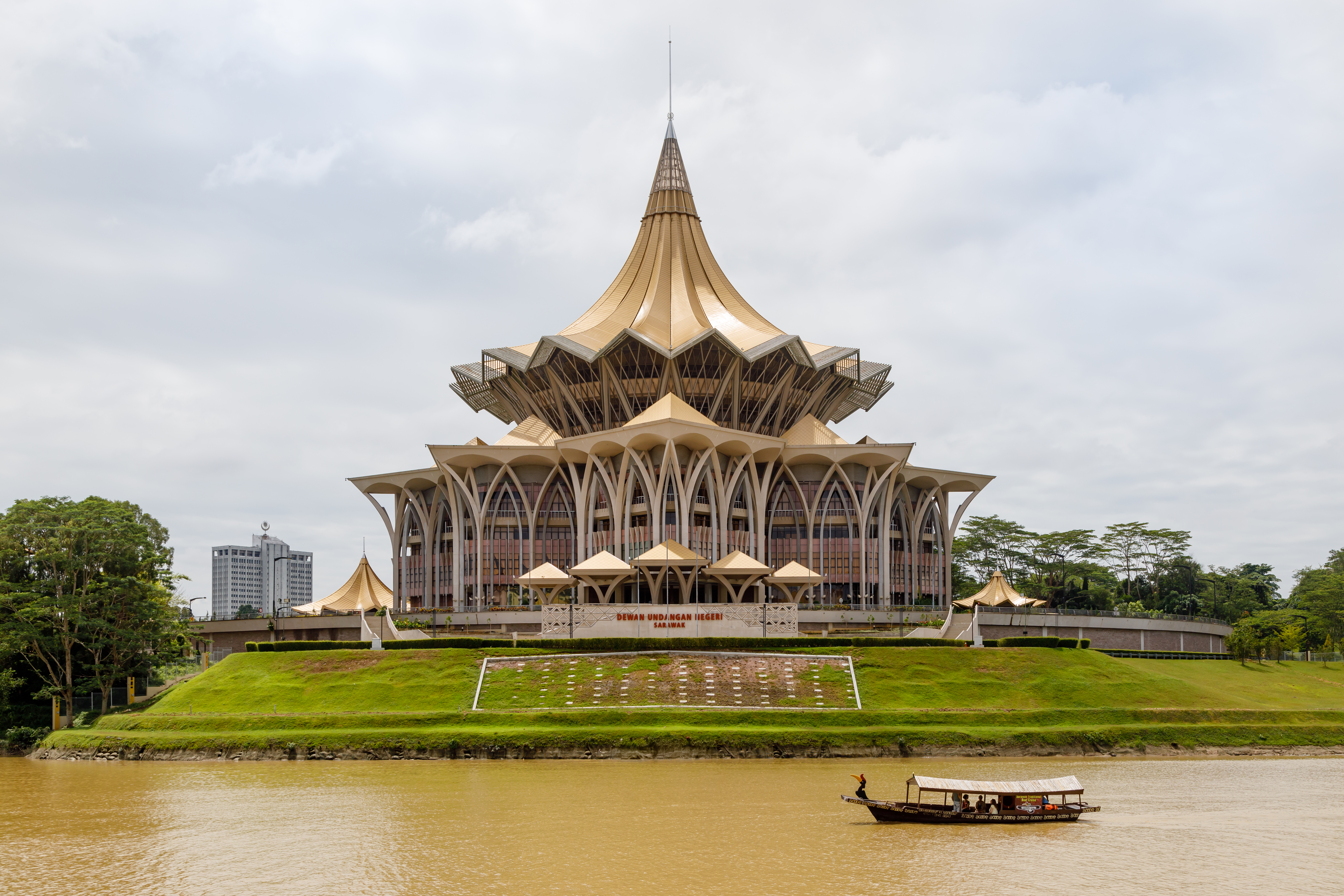
Steven Runciman's book “The White Rajahs” was originally published in 1960. It tells the curious story of James Brooke, a 19th century British adventurer who established himself at Kuching on the Indonesian island of Borneo. The area where Brooke landed is called Sarawak, and was at the time under the control of the Sultanate of Brunei. The control was pretty nominal, however, with the Sultan's princes and officials acting as petty sovereigns in their own right, fleecing the local population. Pirates, slave-raiders, Chinese triads and headhunting Dyak tribes were other problems in this truly God-forsaken part of the world. In 1841, Brooke was appointed ruler (Rajah) of Kuching and the immediately surrounding area. Over the next decades, James Brooke and his successor Charles Brooke managed to expand the territory considerably. In 1888, Sarawak became a British Protectorate, but it continued to function as a de facto independent state until 1946, when the third White Rajah, Charles Vyner Brooke, ceded the area to Britain. Today, Sarawak is part of the independent nation of Malaysia.

The rule of James Brooke and his successors proved popular among most sections of the diverse Sarawak population. The Ilanun pirates (slave-raiders from Ilanun Bay in the Philippines) had been a constant scourge along the Borneo coast, until Brooke managed to stop their operations with the aid of British gun ships and local Dyak warriors. His prohibition of Dyak headhunting was perhaps less popular, but most tribes eventually preferred peace and stability to the perennial conflicts that had characterized Sarawak before Brooke's advent. A new system of taxation eased the burdens on the local population considerably, often triggering rebellions in areas still controlled by the Sultan, with the rebels demanding that Brooke take over administration of their territory. The White Rajahs opposed too fast economic exploitation of Sarawak, fearing that this would harm the native population. Runciman describes Brooke and his dynasty as a positive example of enlightened despotism, a kind of paternalistic form of colonialism.

It's intriguing to note that Britain was originally uninterested in Sarawak, despite the White Rajah's constant lobbying for a British Protectorate over the area. At various points, the Brooke dynasty considered placing itself under Dutch or French protection, and there was even a none-to-serious plan to place Sarawak under nominal Greek suzerainty! Later, of course, the area became central to the world economy due to the discovery of oil. Ironically, most of the oil was discovered in areas still controlled by the dwindling Brunei Sultanate, making the rulers of this enclave some of the richest in the world…

In a book published in 1960, some things couldn't be said openly. Runciman strongly implies that Rajah James Brooke was a homosexual, but never says so explicitly. Male homosexuality was still illegal in Britain the year the book was published. (James Brooke's successor Charles wasn't his son, but a nephew.) Runciman's book also contains the following, almost bizarre piece of understatement: “Not only was the Duke of Brabant later, as Leopold II and ruler of the Congo, to show that he wasn't a suitable man to deal with native races...”. That's rather like saying that Adolf Hitler was somewhat awkward at Jewish-German relations… Another weakness of Runciman's account is that he says very little about why Rajah Vyner decided to cede Sarawak to Britain in 1946, and the political crisis following the decision (including protest marches and the assassination of a the British governor). Surely this must have been part of some big picture, with Britain and other Western colonial powers attempting to reassert their authority in Asia after Japan's defeat in World War II?

Otherwise, Runciman's book is quite good and well-written, with many of the colourful characters of Sarawak's history coming to life: imbecile Sultans, scheming but ultimately cowardly Brunei princes, rowdy Anglican bishops, and the Dyaks, with their headhunting traditions…

A final piece of information not found in this book. The last Rajah, Charles Vyner Brooke, had a heir-apparent, the Rajah Muda Anthony Brooke, who never got the opportunity to ascend the throne, due to Vyner's cession of the area to Britain. Instead, Anthony became a peace activist working for the United Nations. In that capacity, he became a friend of…David Spangler.

The world is small.

Monday, August 13, 2018

Madame Butterfly


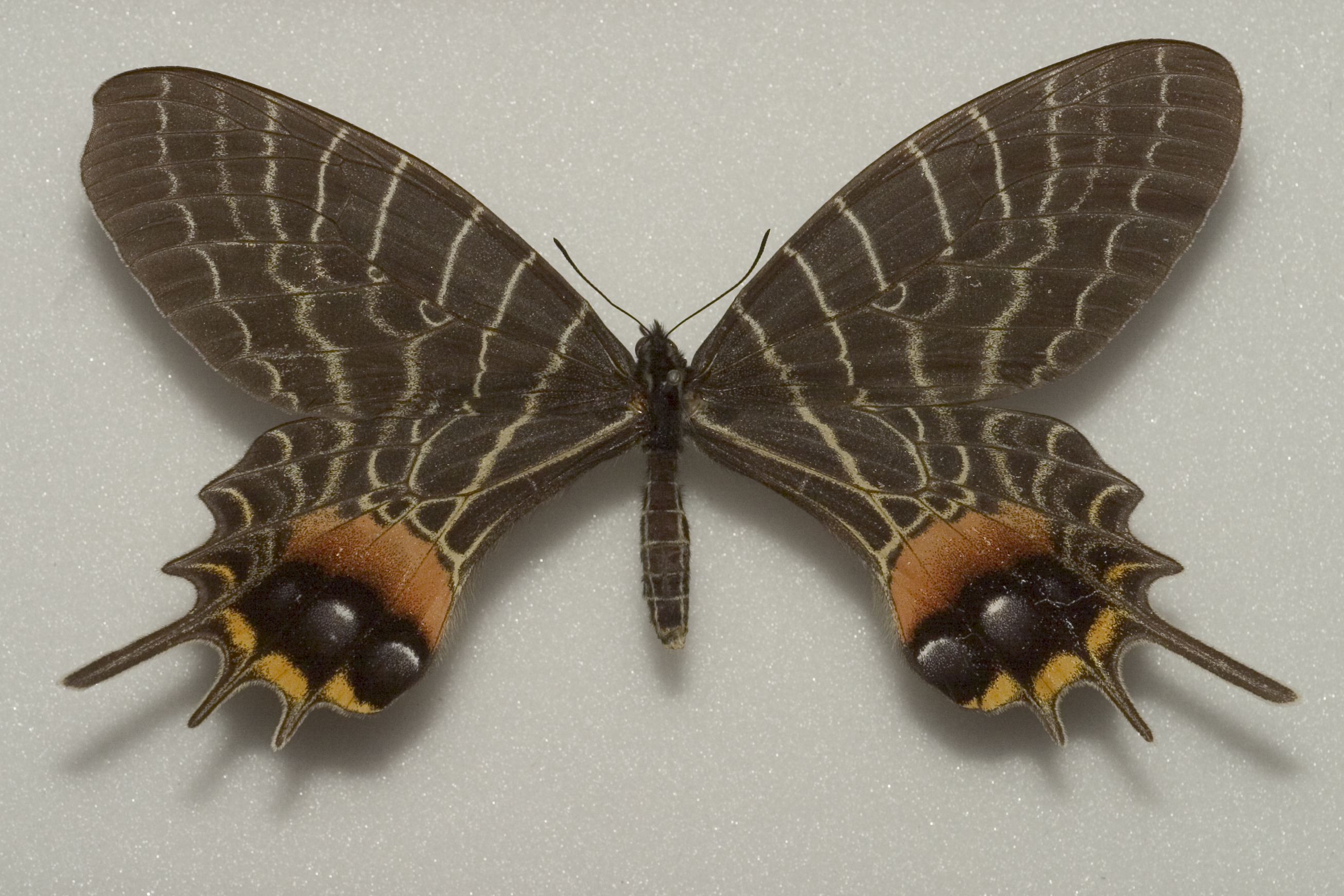
"Butterflies of the Oriental Region, Part 1" is a reference work on the butterflies of south Asia: India, Indochina, south China, Taiwan, the Philippines, Malaya and the East Indies up to Flores.

It covers three families: Papilionidae, Pieridae and Danaidae. In contrast to many other volumes of this "mother of all encyclopedias", this one could actually work on your coffee table. The reason is, of course, the large and dramatic species of the Oriental region Papilionidae, the birdwing and swallowtail butterflies. The local milkweed butterflies (Danaidae) are also something to actually write home about. "Butterflies of the Oriental region, part 1" is thus excellent for your collection of must-see butterfly books.

Of course, in other ways this work could be considered boring. The species presentations are extremely short, and the photos (although in color) show pinned specimens from the collections of the British Museum.

Still, it's impressive that some butterflies look "all that" even when dead...

Five stars - for who- or whatever made, spawned or selected for the south Asian Papilionidae and Danaidae. ;-)