After the (perhaps unexpected) success of Lynx
Edicions' mammoth project “Handbook of the Birds of the World” (HBW), a
multi-volume encyclopedia covering about 9,000 species of birds, the Spanish
publishing house decided to bring us a similar-looking work on mammals.
“Handbook of the Mammals of the World” (HMW) will cover all mammal species
found in the wild in nine volumes, six of which have been published. This is
the second volume, subtitled “Hoofed mammals”. Most of it is devoted to
ungulates, including such well-known groups as rhinos, hippos, horses, camels,
pigs, deer, antelopes, etc. In addition, the volume includes elephants,
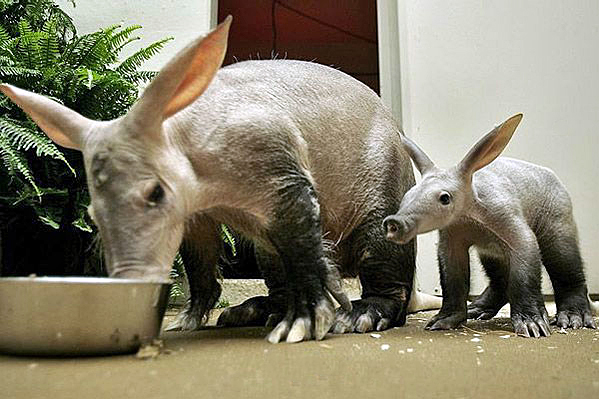
hyraxes, pangolins and the aardvark (none of which are “hoofed”). Although HMW
is supposed to deal with wild mammals only, this principle has been temporarily
suspended in this volume in order to describe all six species of camelids,
three of which are only found in domesticated condition (the llama, the
dromedary and the alpaca).
Just like the bird encyclopedia, HMW contains lavish color plates and color
photos, which unfortunately makes each volume extremely expensive. The species
presentations are somewhat heavy due to all the information contained, but the
family introductions sound almost popularized. On this point, HMW is different
from HBW, which was obviously geared towards scientists and therefore used a
terminology almost impenetrable to the layman. The fact that HMW doesn't
strictly follow the scientific classification of mammals (for instance by
lumping all sea-mammals into a single volume) also shows that the work is
geared towards a more general audience. A surprise is that the number of
species, especially within the family Bovidae, is much higher than usual due to
the use of a new and somewhat controversial species concept. Even if you are a
“nerd” already specializing in hoofed mammals, you might find a few nuggets in
these pages…
There are many books on charismatic megafauna available on the market, but this
volume of HMW does seem like a worthy challenger, and I will therefore give it
five stars.