Showing posts with label Assorted other passerines. Show all posts

Wednesday, January 28, 2026

Wednesday


- Yeah, I´m your god, apparently!

Ganesha has pretty original "ganas" in this adorable picture... 

Thursday, November 20, 2025

Penrose-Terrell effect


"Yeah, the guys at CERN just discovered that the Penrose-Terrell effect is real. Just wait what´s gonna happen when they realize how the universe *really* works, LOL". 

Friday, August 3, 2018

Birds and bowers


This is the 14th volume of the mega-encyclopaedia "Handbook of the Birds of the World" (HBW), published by Lynx Editions.

This volume covers 17 passerine families, including bowerbirds, birds of paradise, corvids, starlings and Old World sparrows. All species are extensively described and illustrated on large colour plates.

There are also introductory chapters to the various families, complete with photos. Some of these are quite spectacular, including a drongo attacking an eagle, a House Crow chasing a flying fox, and a raven being attacked by a kestrel. Some other photos are more humorous, such as the one with a small girl eating ice cream, while the tray besides hers is frequented by House Sparrows. For whatever reason, the photographers seem to love birds sitting on top of cows, camels and buffaloes!

The most bizarre group of birds covered in this volume are presumably the bowerbirds, their "bowers" sometimes eerily resembling small human-built huts, complete with neatly arranged colourful objects outside, almost as if somebody was preparing a ritual of some sort. Indeed, the natives of Australia and New Guinea assumed that the bowerbirds *were* conducting rituals, and believed these birds to be supernatural. After watching the photos of bowerbirds and their bowers in this book, I see why!

As usual, the HBW is extremely expensive and the text is rather heavy. This is a book for the reference section of a university library, rather than something for the average reader. Still, the colour plates and fanciful photographs make it well worth waiting for, in case you do order it!

Both this volume and earlier ones can be ordered directly from the publisher.

From nidification to filoplumes


"Handbook of the Birds of the World" is an immensely fascinating mega-encyclopaedia, still under publication. 14 volumes have been published, the first already in 1992, and two more are being prepared. The ultimate goal of the exercise is to cover all (!) living species of birds, about 9000 and counting.

This is volume 13, covering a number of passerine families. The shrikes, a kind of passerine raptors which hunt small mammals and lizards, play a prominent part. So do the honeyeaters, a large family of Australian songbirds. Two "cousins" to the tits, penduline-tits and long-tailed tits, are also included. So are nuthatches, treecreepers, Old World orioles and sunbirds. If your primary interest in life is the wallcreeper, prepare yourself for a real treat - an entire section is devoted to this particular bird, placed in a family all of his own, Tichodromidae. The volume also covers a number of obscure birds only found in New Guinea or the Philippines.

What makes the HBW particularly appealing are the colour photographs and colour plates. Even if you're not interested in birds, the book is fascinating to just leaf through, for purely aesthetical reasons. If you really want to buy it, however, please note that the price is extortionate. On Amazon, 314 dollars is the bargain price. Even if you buy this volume directly from the publisher, the cost is still about 260 dollars (excluding postage and packing, I presume).

The HBW is thus mostly for libraries. It's also relatively difficult to read for a layman. You have to learn the meaning of strange words such as "nidification", "filoplumes", "sturnid" and "parvorder". And that's just from one page!

However, if you are an ornithologist or very advanced bird-watcher, and just won the jackpot at the state lottery, you might want to invest in a copy of HBW, volume 13.

Thursday, July 26, 2018

Babbling birds and silent fossils


"Handbook of the Birds of the World" (HBW) is a 16-volume mega-encyclopedia and reference work, covering all 9,000 bird species known to science. It took almost 20 years to publish. Interestingly, the publishing house (Lynx Edicions) is based in Spain. The HBW is only available in English, though. Lynx Edicions have also begun to publish a kind of quasi-official sequel to this series, known as "Handbook of the Mammals of the World" (HMW). I suppose their office workers don't have to worry about the Spanish finance crises! Guys, you have guaranteed employment until at least 2020. I'm jealous.

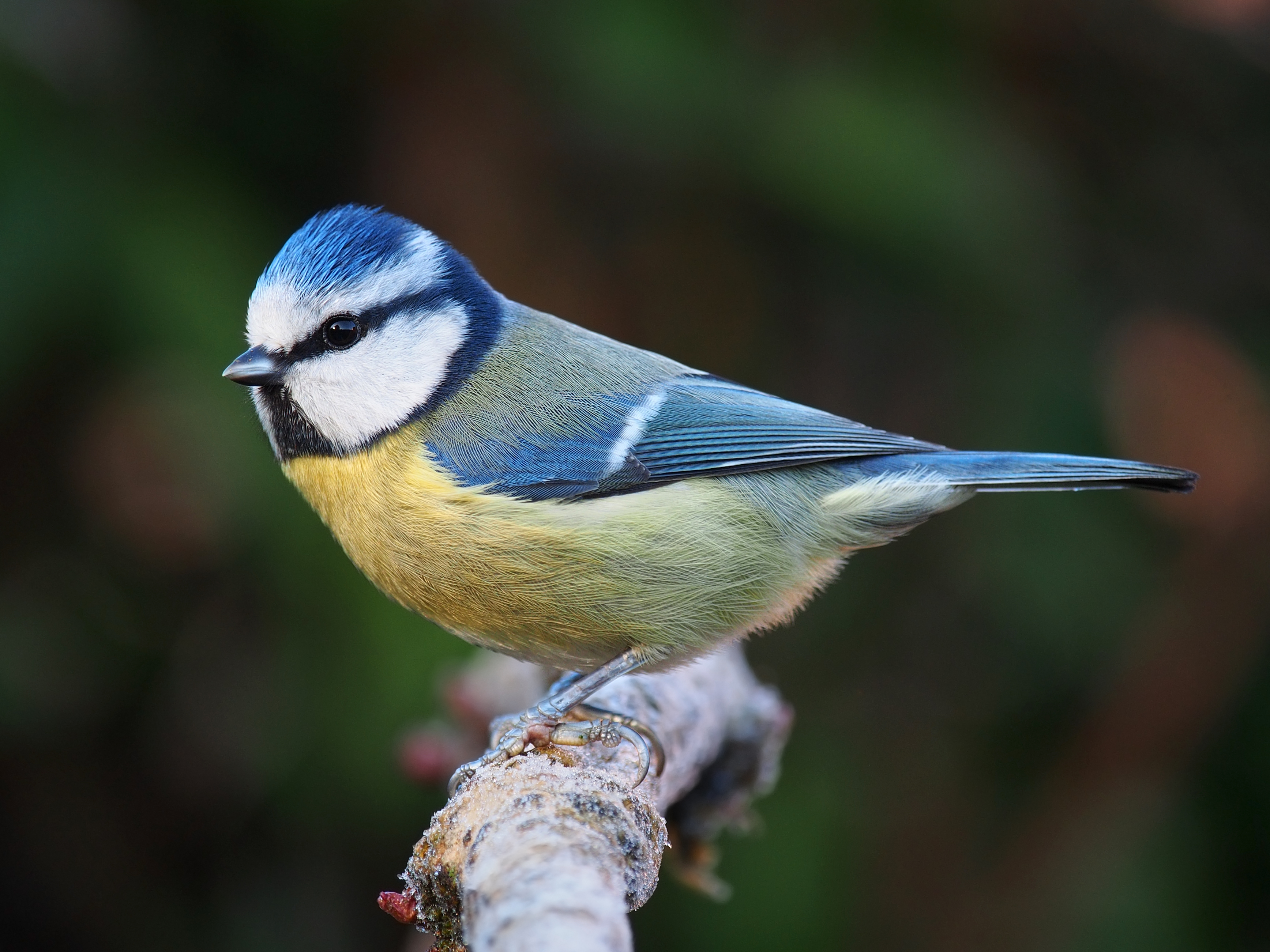
This is volume 12 of the HBW, covering 15 passerine families, the most well known being the Paridae (tits and chickadees). Despite their small size, tits have the reputation for being one of the most intelligent bird groups, after parrots and corvids. Otherwise, this volume contains chapters on birds with funny names like Babblers, Jewel-babblers and Australasian Babblers. Were they really named by bird-lovers, I wonder? The most comic part of the book deals with Pseudopodoces humilis, once assumed to be the smallest corvid in the world, until DNA tests showed that its really the largest parid in the world! Since some people can't tell the difference between a crow and a tit, I wonder what's next? What could a DNA test on the birds in your backyard possibly disclose? Alien genes?

Each volume of the HBW also contains a special chapter about some specific aspect of ornithology. This volume has an extensive section on fossil birds. For those tired of living, babbling birds? Apart from well-known fossil species (Archaeopteryx and so on), we meet the Messelirrisor (a hoopoe from Eocene), Mancalla (an auk from Pliocene), a megapode known simply as the Du, the condor-like Teratornis and the La Brea Condor, which actually was a condor. And countless of others!

Each volume of the HBW is extremely expensive and (I presume) something of a status symbol in the world of bird-watchers and bird-lovers. If I ever get a slush fund on the Cayman Islands, I'll make sure to procure all 16 volumes of this extraordinary work.