Showing posts with label Tyresö. Show all posts

Thursday, August 1, 2024

An alien Church?


Josefina (1807-1876)

“Världsvid men främmande. Den katolska kyrkan i Sverige 1873-1929” by Yvonne Maria Werner is a somewhat eclectic book in Swedish, published in 1996 by a Swedish Catholic press. It´s almost 500 pages (including footnotes and references). I didn´t read literally all of it, but it probably *is* necessary reading if you want to know “everything” about the Catholic Church in Sweden 1873-1929. I mostly remember scattered facts, but they too were interesting.

In the beginning of this period, the Catholic Church was scarcely even legal in Sweden, while at the end, it was – but still heavily challenged, now perhaps more by secularism than Lutheranism. This was also a period of heavy centralization around a conservative papacy in Rome, and the deliberate creation of an insular and sectarian Catholic “counter-culture”. There was an obvious tension between this Ultramontanism and attempts at “inculturation”, that is, make Catholicism in Sweden seem as “Swedish” as possible.

The Jesuits in Sweden (most of whom were German immigrants) tried to have it both ways. While promoting strict obedience to Rome and theological orthodoxy, they nevertheless attempted to preach in Swedish, emphasize Swedish patriotism, celebrate Swedish Catholic saints from the Middle Ages, and so on. Ironically, when Rome ordered that the Jesuits stop their activities in Sweden, many recently converted Swedish Catholic laypersons refused to accept it, and petitioned the Roman hierarchy to change their decision – something as piquant as a lay rebellion in favor of a pro-papal fighting order, directed against Rome itself! The Jesuits themselves were unhappy with it, seeing it as an example of the “Lutheran” spirit of the Swedish converts.

Not all Swedish Catholics liked the “inculturation”. Upper class Catholics associated Catholicism with French high culture, and liked it that way. Apparently, the French School in Stockholm (Franska skolan) was originally a Catholic girls´ school. There may have been intrigues between pro-French and pro-German factions during World War I (when Sweden was neutral).

Some facts are actually quite funny (in a way). For instance, during the period when Catholicism was almost illegal in Sweden, the foremost Catholic in the country was…the queen consort (later dowager queen) Josefina! The reason? As a French immigrant, she was allowed to practice her Catholic faith during a time when Swedes were prohibited from attending Catholic masses and banished from the country if they converted. Years later, the Jesuits had considerable problem firing the Lutheran (!) organist in one of the Swedish Catholic churches, since he had gotten his position thanks to Josefina. It also turns out that many “Catholic” choirs in Sweden were Protestant for decades, since there simply weren´t enough Catholics to go around. The recalcitrant organist was eventually gotten rid of by denying him a pay rise (something Josefina had not provided for during her lifetime), at which point the man simply quit…

During the period in question, most Catholics in Sweden seems to have been relatively lowly immigrants from Germany, Italy and Poland (although some of the Germans later advanced socially). Most of the priests and nuns were also foreigners. At the same time, there were also upper class Catholics. The hierarchy had longstanding “diplomatic” connections with the Swedish court. 

The most colorful Catholic convert of the time, social climber Claes Lagergren, was on a friendly basis with virtually everyone: the papal court, the Jesuits, several Swedish kings, and even the Social Democratic leader Hjalmar Branting. (Judging by other sources, he was also friendly with Decadent – or perhaps decadent – artists.) Lagergren´s description of his conversion to Catholicism is weird. He claims that he simply wasn´t capable of confessing his sins to the priest, at which point *the priest* said “I have heard all your sins before” and started renumerating them one by one, to Lagergren´s great astonishment. This strange confession-by-proxy was then approved and Lagergren could become a member of the Church in good standing! It´s not clear to me why Lagergren converted, but he was fascinated by the old nobility, developed ultra-conservative political views, and loved the pompous rituals of late 19th century Catholicism.

One interesting claim in the book is that Catholicism was seen as “the wave of the future” by many people during the 1920´s. World War I triggered a crisis in Protestant liberal theology, since the carnage of the war brought into question its strong belief in societal progress. The collapse of Wilhelmine Germany and its replacement with the Weimar Republic hit Protestantism more than Catholicism, since the former used to have good relations with the imperial court while having a much more indifferent membership base. The author doesn´t mention the rise of Communism and other forms of socialism during the interwar period, but surely this too could have made a staunchly conservative Church look attractive to people on the other side of the fence. Especially one that was international, had ancient roots and was strongly centralized. 

It´s difficult to make out why Swedes converted to Catholicism during this period, but the “teaching authority” of the Church and its claims to absolute dogmatic certainty was probably a strong factor, while Protestantism was seen as fractious and too liberal. The splendor of Catholic liturgy may have been another reason. I already mentioned that a strong interest in French culture was a factor in some cases.

With that, I close this somewhat eclectic review!


Thursday, March 7, 2024

Glada dagar


SÄPO har arresterat fyra misstänkta IS-terrorister i Tyresö utanför Stockholm. De antas även ha kopplingar till den organiserade brottsligheten.

Min reaktion ovan. 

Sunday, June 30, 2019

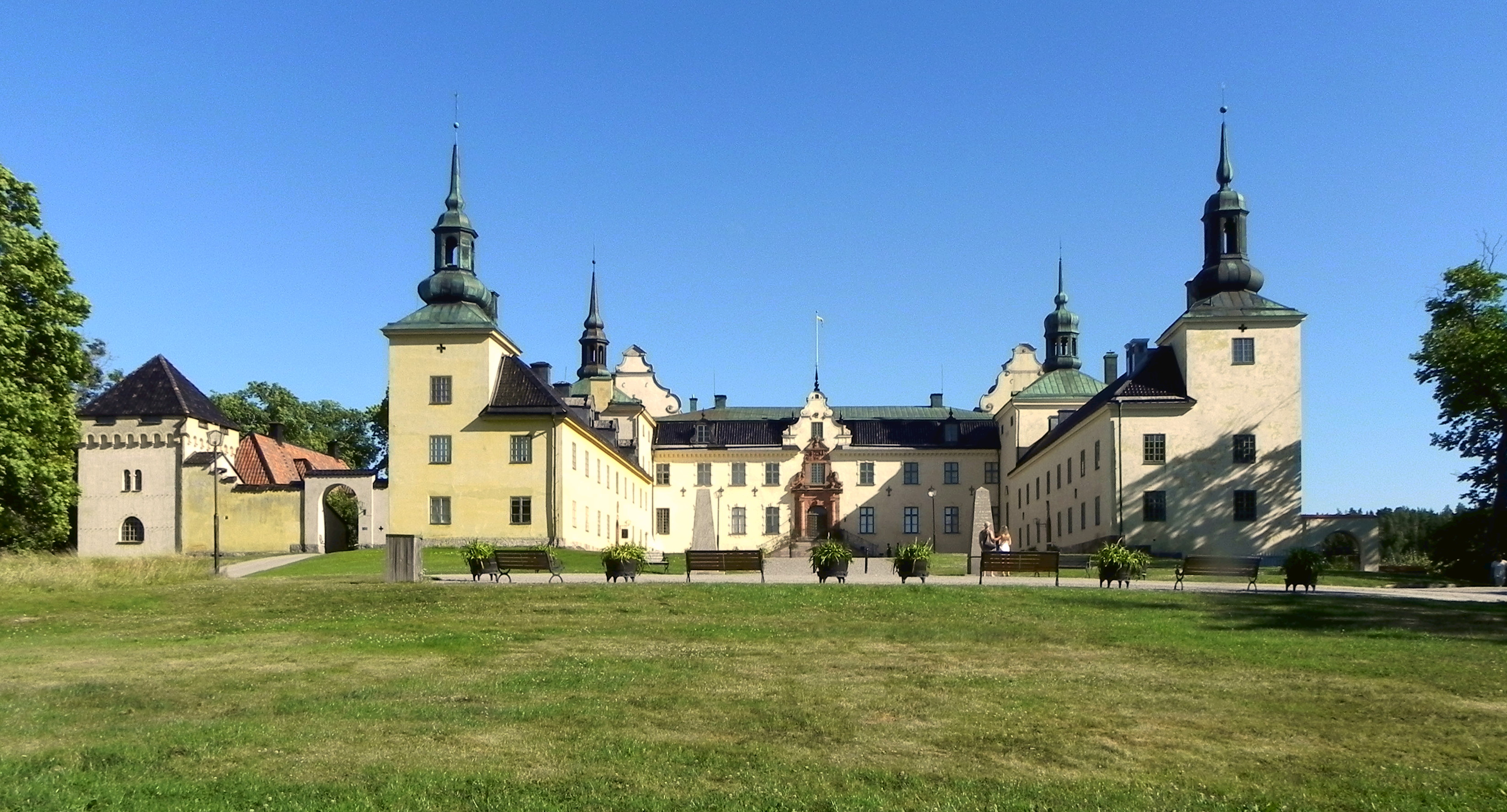
From Duce to decadence: the strange tale of the Tyresö Palace


“Tyresö Palace – Nordic Museum”, published in 2016, is a tourist guide to Tyresö Slott in Stockholm, Sweden, and its immediate surroundings. Since 1932, the palace belongs to the Nordic Museum, founded by 19th century ethnographer Artur Hazelius (who also created Skansen). I recently visited and found it…strange. The last owner had a weird obsession with Marie Antoinette, the 18th century French queen executed during the French Revolution. If you want to see 20+ portraits of said Marie Antoinette, Tyresö Palace is definitely the place for you! Yes, one little engraving even shows her execution at the hands of the evil revolutionaries. There are also many portraits of Catholic popes and cardinals, and one photo of Mussolini. Yes, *that* Mussolini.

Clearly, not what you expect to find at a Swedish “palace” (I suspect a British lord would refer to the premises as “manor”)!

I was glad that I picked up this little book at a bookstore in nearby Tyresö Centrum, since it explains a thing or two. The palace was originally built during the Swedish “Great Power period”, and belonged to the ultra-illustrious Oxenstierna and De La Gardie families. Often, it was inherited on the female line (strange, I´ve been told by my politically correct teacher that Swedish women didn´t have inheritance rights until the late 1800´s, Muslim women of course getting them already under Muhammad). The palace has been rebuilt so many times that it´s not *really* a 17th century building anymore, rather it´s a bewildering and eclectic combination of many different Revival styles. I have no idea what they are called, but I suppose we could call them Neo-Renaissance, Neo-Romanesque and Neo-Gustavian. The Rococo interiors are real, though (including a Chinese tapestry). And yes, the present look of the palace is due to American wealth!

The last owner of Tyresö slott, Claes Lagergren, was a late 19th century Swedish businessman of farmer stock (well-to-do farmers, presumably). He was something of a maverick, had a fascination with the old European aristocracy, and converted to Roman Catholicism during a visit to Rome in 1880. This was at a time when most Swedes still considered Catholicism politically and religiously suspect, Sweden being a Protestant nation (with growing pockets of secularism here and there). Lagergren become papal chamberlain (!) in 1884, and five years later Pope Leo XIII officially ennobled him, giving him the title of marquis. Serving as a kind of diplomat between the Vatican and Sweden (this was before the Vatican became a soverign state), he also supported the Bridgettine Order of Elisabeth Hasselblad. His money made it possible for the Bridgettines to acquire Saint Bridget´s old house at Piazza Farnese in Rome. This of course explains both the Catholic portraits at Tyresö Palace (including of Saint Bridget or Birgitta, the famous Swedish 14th century mystic who moved to Rome) and the infatuation with the French aristocracy. The only known portrait painting of 16th century pro-Catholic Swedish king Johan III actually painted during the king´s lifetime also hangs at the palace, Lagergren apparently acquiring it in Rome.

Did I say “his” money? Well, not entirely his money…

In 1891, Lagergren married a super-rich American, Caroline Russell (later Caroline Lagergren), a member of a prominent New York business family with interests in banking, shipping and railway transport. It was thanks to her money that the Lagergrens could acquire Tyresö Palace and the enormous estate surrounding it. The restoration and/or rebuilding of the palace were also made possible by Caroline´s substantial wealth. Claes Lagergren´s newly minted aristocratic title gave the couple access to the Swedish crème-de-la-crème, including Prince Eugen who periodically lived at their estate and even established an artists´ colony there. (Eugen was a “Symbolist” painter otherwise mostly known for his connection to Waldemarsudde.) After Caroline´s death, Claes married another rich American, which enabled him to continue the lavish lifestyle. The palace was bequeathed to the Nordic Museum at Lagergren´s death in 1930 (officially taken over two years later).

One thing that struck me when visiting Tyresö slott was the (fairly typical) combination of ultra-conservatism and decadence. Lagergren was on a friendly basis with the painters around Eugen, including Anders Zorn (something not mentioned in the info booklet). Zorn, notorious for his paintings of nude women, was apparently something of a pornographer in private as well, telling lewd stories in drunken condition at Lagergren´s dinner parties, after having first tasted roasted peacock (the favorite dish of the marquis). It sounds weird that a papal chamberlain and admirer of Duce would have a guy like this over for dinner, but there you go! It´s also interesting to note that a huge portrait of Madame Le Pompadour adorns one of the many walls of the palace…

“Tyresö Palace – Nordic Museum” also contains information about a very different world: that of the peasants and servants working at the estate. Many of the peasants were crofters, and all of them seem to have been dirt poor, or nearly so, living in run-down houses literally infested with bugs. Once Caroline came down to a peasant who had just given birth, giving her some blankets – something unprecedented at the time. It seems the marquis missed the social encyclical of Leo XIII.

With that, I end this little blog post.