Showing posts with label Lithuania. Show all posts

Tuesday, April 7, 2026

The thirteenth tribe is so back


A (probably correct) criticism of the Khazar theory. What a pity it´s written by an anti-Semite who wants to blame the *real* Jews for all of the world´s ills, but there you go. Of course, I´m so edgy that I linked to Keith Woods content several times before... 

Are modern Jews Khazars?

Saturday, March 7, 2026

Serving idols


Who were the last pagans of Europe? Very interesting (and scholarly) discussion about Estonia, Latvia and Lithuania. Principally Estonia.  

Flashback to my own peregrinations over 20 years ago at the Religious Studies department of a certain Swedish university, where we learned about Uralic religions from all over northern Eurasia.

Interesting detail: it seems scholars have rescued the term "animism", which was considered very problematic during my student days. And the curious term "creolization" is really what used to be called syncretism. Who knows, maybe we can save "paganism" next? ;-) 

Tuesday, November 11, 2025

Perfidious Albion


- Yeah, I know, the trans-atlantic link
isn´t what is used to be...

This is pretty damn rich coming from Britain´s main ally during the 18th century, the Napoleonic Wars, World War I and World War II. Who is *really* in league with Perfidious Albion, I wonder? 

I assume the Russian propaganda turn has something to do with the British being heavily invested in both NATO and the trans-atlantic link, so heavily that Russia see them as their main enemy at a time when Trump-Vance are gyrating back and forth over Ukraine, threatening NATO allies with war, and so on. 

Note Breitbart´s strangely subliminal choice of illustration: a contemporary cartoon from the late 19th century of how Britain managed to obtain a disputed territory from Venezuela. Perhaps by corrupting or tricking Uncle Sam? Subliminal, but in the wrong way, since this act of Western imperialism could be seen as a legitimate causus belli for *Venezuela*!

Or was the article penned and illustrated by an isolationist who secretely agrees with Moscow (and Caracas)? LOL.  

Britain is secret power controlling European geopolitics, Russia says

Wednesday, October 15, 2025

Converting Calvinists


The video above is from a Catholic YT channel. I never heard of this particular Marian apparition before (to Protestants!), so I asked my amigo ChatGPT about it...

Is it really true that the entire country of Lithuania was at one point Calvinist or very close to becoming Calvinist?

No — Lithuania as a whole was never Calvinist, but there was a remarkable period in the 16th century when a significant portion of the Lithuanian nobility (szlachta) adopted Calvinism (Reformed Protestantism), and for a moment, it looked as if the Grand Duchy of Lithuania might tilt toward a Reformed identity. It never became the state religion, but the influence was unusually strong — stronger than in many other parts of Eastern Europe.


🇱🇹 Lithuania and Calvinism: A Forgotten Episode (16th Century)

🕰 Historical Context

  • Mid-1500s: The Grand Duchy of Lithuania was in a union with Poland (Polish–Lithuanian Commonwealth).

  • The nobility began adopting Protestant ideas, especially Calvinism, brought in by traveling scholars, Reformers, and Italian exiles.

  • The Radziwiłł (Radvila) family, one of the most powerful noble dynasties, became major patrons of Calvinism.


🏛 Noble-Led Reformation

Key FamilyInfluence
RadziwiłłsFounded Calvinist synods, printing presses, schools
Pac & Sapieha (briefly)Supported Reformed ideas and anti-Trinitarians
  • Calvinist churches, academies, and printing houses were established.

  • The first Lithuanian Bible (1579, known as the Radziwiłł Bible) was published under Calvinist patronage.

Some towns, like Biržai and Kėdainiai, were nearly entirely Reformed Protestant under the Radziwiłłs.


🛑 Why It Didn’t Become a Calvinist Nation

ReasonExplanation
Jesuit Counter-ReformationThe Jesuits arrived strongly in the late 1500s, founded schools, reconverted nobles
Religious ToleranceThe Commonwealth allowed many faiths; no single Protestant unity
Internal Protestant SchismCalvinists vs. Lutherans vs. Anti-Trinitarians
Catholic Identity of the PeasantryThe countryside stayed deeply Catholic

🕇 Outcome

  • By the 17th century, most Lithuanian nobles had returned to Catholicism.

  • A small Remnant of Reformed Churches (Evangelical Reformed Church of Lithuania) still exists today, descendants of those Calvinist communities.


🗣 So, Was Lithuania Ever “Calvinist”?

✅ The elite almost were
❌ The nation as a whole never was

It came closer than most people realize, especially under the influence of the Radziwiłł family — but the Counter-Reformation ultimately restored Catholic dominance.


Would you like a list of Calvinist churches still standing in Lithuania or maps of the Protestant strongholds (like Kėdainiai or Biržai)?

What is "Our Lady of Siluva"? Was Siluva Calvinist?

Our Lady of Šiluva is a Marian apparition and shrine in Lithuania, deeply connected to a powerful Catholic revival. It is also directly tied to the question of Protestantism in Lithuania — yes, Šiluva had become Calvinist before the Catholic faith dramatically returned through the reported apparition of the Virgin Mary.


🕊️ Our Lady of Šiluva

Location: Šiluva, northwest Lithuania
First Apparition: ~1608 (one of the earliest approved Marian apparitions in Europe)
Significance: Sparked a major Catholic reconversion in a region heavily influenced by Calvinism


🌿 Was Šiluva Calvinist?

Yes — before the apparition, Šiluva was under the influence of Calvinism.

  • In the mid–16th century, during the Reformation, the local landowners of Šiluva had converted to Calvinism.

  • The Catholic church was confiscated and turned into a Reformed (Calvinist) congregation.

  • Catholic worship ceased, and Catholic property was lost due to legal disputes.

Lithuania was never fully Protestant, but Šiluva was one of its strongest Calvinist footholds.


🌟 The Apparition (1608)

According to Catholic tradition:

  1. Shepherd children saw a lady holding a baby and weeping on a stone.

  2. When asked why she wept, she said:

    “Once, my Son was worshiped in this place, but now they have taken it away.”

  3. Word spread; Catholics and Protestants alike were stunned.

  4. Legal records later led to the recovery of Catholic land.


🔁 Impact of the Apparition

OutcomeEffect
Catholic revivalRegion returned to Catholic worship
Pilgrimages beganŠiluva became a major shrine
Identity symbolA bulwark against further Protestant spread

🛕 Modern Shrine

Today, The Basilica of the Nativity of the Blessed Virgin Mary in Šiluva is one of the most important Catholic pilgrimage sites in Lithuania. The annual Šilinės Feast attracts thousands every September.


🧭 In Summary

QuestionAnswer
Was Šiluva Calvinist?Yes, the town became Calvinist during the Reformation
What is Our Lady of Šiluva?A Marian apparition that marked the Catholic revival of that region

Would you like the official Church account versus the historical-critical view of this apparition? The contrast is fascinating.

Yes, please.

Certainly! The apparition of Our Lady of Šiluva can be viewed through two very different lenses:

1️⃣ The Traditional Catholic Account
2️⃣ The Historical/Critical (scholarly) Perspective

Both offer meaningful insight — one theological, one historical.


🕊️ 1. Traditional Catholic Account

🌟 Context

Šiluva had become Calvinist, the Catholic church was abandoned, and Eucharistic worship ceased.

👁 The Apparition (~1608)

  • Several shepherd children saw a beautiful lady holding the infant Jesus, standing on a rock, weeping.

  • When questioned by a Calvinist catechist:

    “Why are you crying?”
    She replied: “Because once my Son was worshiped in this place, but now they have taken it away.”

🪔 Effects Considered Miraculous by the Church

  • Religious fervor returned even among Protestants.

  • Lost Catholic deeds were rediscovered.

  • Catholic Mass was restored.

  • Šiluva became Lithuania’s first major Marian shrine.

Interpretation:
Mary intervened to restore Eucharistic worship in a land turning away from Christ.


📜 2. Historical / Critical Perspective

Most historians accept key facts:

  • Šiluva was indeed a Calvinist stronghold.

  • The Catholic Church sought legal means to reclaim lost property.

  • A legend of a Marian apparition emerged during a legal dispute over religious land.

🔍 Critical Observations

Scholar’s PointInterpretation
☁️ Apparition narrative appeared decades laterPossibly expanded orally before written form
⚖ Legal property dispute ongoing at same timeApparition bolstered Catholic legal claims
✝ Marian devotion spreading in Counter-ReformationSimilar Marian revival as at Guadalupe, Loreto, La Salette, etc.

Historians believe the apparition story helped solidify Catholic identity during the Catholic Counter-Reformation, countering Calvinism through popular devotion rather than force.


⚖ Two Views, One Legacy

LensMeaning of the Event
Devotional / ReligiousA miraculous intervention of Mary to reclaim sacred ground
Historical / SociologicalA powerful myth that helped restore Catholic unity and identity

🗝 The Deeper Mystery

Even historians admit that the sincerity and fervor with which people responded cannot be dismissed. Something happened — mystical or psychological — that transformed a community.


Would you like to explore other Marian apparitions with similar historical dynamics, like Guadalupe, Lourdes, or Pontmain?

Did the Catholics claim that a Calvinist clergyman saw the Marian apparition?

Yes — in traditional Catholic accounts of Our Lady of Šiluva, it is indeed claimed that even a Calvinist clergyman (or catechist) witnessed the apparition or at least spoke directly to the apparition. This detail is significant, because it serves as a theological argument that the vision could not be dismissed as simply “Catholic imagination.”


👁‍🗨 The Calvinist Witness — Key Element of the Šiluva Story

💬 The Dialogue According to Catholic Tradition

A young Calvinist theologian or catechist approached the apparition and asked:

“Why are you crying?”
Mary replied:
“Because once my Son was worshiped in this place, but now they have taken it away.”

This exchange is said to have deeply moved him and became a turning point in the restoration of Catholic worship in Šiluva.


🕯 Why This Detail Matters in Catholic Tradition

ThemePurpose of Including a Calvinist Witness
Ecclesial LegitimacyShows apparition wasn’t hallucination or Catholic-only vision
Doctrinal ImpactSuggests even opponents were confronted with divine truth
Symbol of MercyMary reaching even those outside the Church

🧾 Historical vs. Legendary Interpretation

ViewAnalysis
Catholic TraditionThe Calvinist catechist physically saw and spoke with the Virgin
Critical HistoryPossibly symbolic or later embellishment to strengthen Catholic claims during the Counter-Reformation
Modern Pilgrim NarrativesOften present it as fact to emphasize Marian universality

🧠 Did a Calvinist actually see it?

  • No original 17th-century sworn testimony survives.

  • The story solidified in later retellings and pilgrim literature.

  • Even skeptical historians acknowledge that Protestants were shaken enough to reopen discussion of Catholic property — meaning some kind of impactful event did occur locally.


⚖ Summary

ClaimStatus
A Calvinist clergyman saw MaryAffirmed in Catholic tradition
Historically verifiableDifficult to prove, seen as legendary by scholars

Would you like me to compare this with other apparitions witnessed by non-Catholics (e.g., Muslims at Zeitoun in Egypt or atheists at Fatima)? This pattern is fascinating.

Yes, please.

Here are some remarkable Marian (and Marian-type) apparitions in which non-Catholics — including Protestants, Muslims, and atheists — were said to have witnessed or confirmed the phenomenon. These accounts are often used by Catholics to argue for the universality of Marian intervention, while historians note their role in broader cultural reconciliation.


🌍 Apparitions Witnessed by Non-Catholics

A comparison with Šiluva, where a Calvinist reportedly saw Mary


1️⃣ Our Lady of Šiluva (Lithuania, 1608)

👤 Non-Catholic witness noted: Calvinist catechist or pastor

  • Asked Mary: “Why are you crying?”

  • Mary answered: “Because once my Son was worshiped in this place…”

  • Led to restoration of Catholic worship in a Calvinist region.


2️⃣ Our Lady of Zeitoun (Egypt, 1968–1971)

👀 Witnessed by thousands — including Muslims, Copts, atheists

  • Apparitions occurred atop a Coptic Church in Cairo.

  • Muslim taxi drivers, soldiers, crowds shouted: “Ya Maryam!”

  • Egyptian government photographers took official photos.

  • No verbal messages — only luminous form of Mary.

Importance:
Seen as a pan-religious sign, reinforcing Marian presence even in the Islamic world (Mary is revered in the Quran as Maryam, mother of Isa).


3️⃣ Our Lady of Knock (Ireland, 1879)

👁 Witnesses included Protestants and skeptics

  • Silent apparition of Mary, St. Joseph, and St. John

  • Some Protestant locals confirmed seeing a bright figure but did not interpret it doctrinally.

  • Church commission recorded 15 official witnesses, including those outside Catholic practice.


4️⃣ Fátima (Portugal, 1917) — The “Miracle of the Sun”

🟡 Witnesses: Believers, atheists, journalists, Freemasons

  • The sun phenomenon was observed by 50,000–70,000 people, including known anti-clerical atheists.

  • Newspaper O Século (secular, anti-Church) reported:

    “The sun danced… It was impossible to deny.”

This event gave Marian devotion national power in post-monarchy Portugal.


🌐 Comparative Table

ApparitionNon-Catholic WitnessesNature of Vision
Šiluva (1608)Calvinist ministerPersonal, spoken message
Zeitoun (1968)Muslims, secular crowdsPublic, silent luminous form
Knock (1879)Protestants, skepticsPublic tableau, motionless
Fátima (1917)Atheists, pressCosmic phenomenon (sun)

🧭 Interpretation

ViewpointInterpretation of Non-Catholic Witnesses
Catholic MysticalMary's universality transcends doctrine
EcumenicalShared symbols of the Sacred Feminine
Psychological / JungianArchetypal eruption of the “Divine Mother” into collective psyche
SkepticalMass suggestion, atmospheric optical events, retroactive embellishment

Would you like a Jungian or archetypal interpretation of why Marian figures appear even to non-Catholics — as the Great Mother, Sophia, or Anima Mundi?


Tuesday, November 19, 2024

Lake NATO or Sino-Russian sea?


I´m of course a completely devout supporter of the North Atlantic Treaty Organization, but the meme that the Baltic Sea is "Lake NATO" was always extremely silly, if seriously intended. You know, irony and all that. 

Recently, two cables on the bottom of the Baltic Sea were sabotaged, and already everyone is pointing a finger at Russia (without explicitly mentioning them by name). 

A Danish military ship has apparently shadowed a Chinese merchant vessel, and it seems the most recent rumor is that the ChiComs did it, if by design remains to be seen. The Chinese ship did come from Russia, so...

Lake NATO? If only...

Saturday, August 10, 2024

Breaking bad


Yes, breaking or breakdance is an olympic sport these days. So is skateboard. And surfing (come on, that´s also a crazy subculture LOL). 

Why? Diversity? Nah, probably because it looks good on TV. In contrast to modern pentathlon, which despite being hyped by "Baron de Coubertin´s will" or whatever, is considered boring beyond belief. 

So we´re all breaking this year! Note, btw, that the two "b-girl" finalists were White and Asian, respectively. 

Wednesday, February 14, 2024

Baltic Caucus


- You have to come back, old man,
the Russians have a nuclear-powered cruise missile!
We need your vast scientific knowledge to stop it!
- Not a chance, I´m going to attain Rainbow Body instead...

A breaking story. Most of the GOP don´t seem willing to spend more money on Ukraine. Is this another faction trying to put pressure on the quasi-isolationist House Republicans? 

According to Wiki, Mike Turner (also GOP) has connections to the US military and NATO. He is also a de facto lobbyist in Congress for the Baltic republics! I had no idea there was a bipartisan House Baltic Caucus?! 

So the answer seems to be "yes": Turner is absolutely attempting to influence the other GOP Congressmen in a more pro-Ukrainian direction.

What´s much less clear is what the Russian threat could be. Could it be some kind of AI capability? My guess would be nuclear-powered cruise missiles, since even a certain Mr Trump considered them a threat, even to the point of bragging that the US might have something similar...

Developing.  

House Intel Chairman announces "serious national security threat", sources say it´s related to Russia

Tuesday, February 13, 2024

Wanted persons


Russia shows who may be next in line in their Drang nach Abendlandes. Of course it´s the Baltic republics. Russia recently declared the Prime Minister of Estonia and some other Baltic officials "wanted persons". Note that all three Baltic states are members of NATO.   

Russia declares Prime Minister of Estonia a "wanted" person

Saturday, September 2, 2023

The wild hunt


“The Hunt for Red October” is a 1990 film starring Sean Connery as a rogue Soviet submarine captain. It´s based on a novel by Tom Clancy. One of the protagonists of the story, Jack Ryan, is probably based on Clancy himself. How freely I can´t say!

I don´t think the film is *that* good or interesting, but Sean Connery can make any film – no matter how awful – into a treat. Also, “The Hunt for Red October” does have a Cold War feel that makes me almost nostalgic. And yes, the Cold War stereotypes of Russians (Communist or anti-Communist) are very Hollywood-esque and frankly ridiculous, but that simply adds to the nostalgia.

The rogue captain, named Marko Ramius, is said to be Lithuanian and decides to abscond to the United States when realizing that the Soviets are developing a new class of submarines that are almost impossible to detect by sonar. Not suspecting that Ramius and some of his officers are traitors, the Soviet fleet puts *them* in charge of the prototype, named Red October. Ramius then decides to make a daring escape to America in the actual submarine. In the process, he kills a political commissar actually named Putin! 

Naturally, the Soviet Red Fleet isn´t amused and goes after him, while Soviet diplomats tell the US leadership that Ramius has gone insane and wants to nuke America. Unfortunately for the evil Reds, CIA analyst Jack Ryan has met Ramius on a previous occasion and suspects him of being a covert anti-Communist. Ryan convinces a sleezy Washington operative to give him three days to find out the truth about the captain´s intentions. Several major plot holes later, the Americans realize that Ramius is really on their side, while the Russians are still in hot pursuit…

As I said, not exactly a deep philosophy lecture, but could perhaps be splendidly devoured on a rainy autumn evening. Should perhaps be watched together with the documentary “The Real Hunt for Red October”, reviewed by me elsewhere on this blog.

The real hunt for "Red October"


Saturday, August 5, 2023

We are unstoppable


Credit: Albin Olsson

Here´s a scenario.

Let´s assume Russia takes the Suwalki corridor tomorrow morning. They threaten anyone who interfers with *massive* retaliation. Perhaps nukes. The corridor is Lithuanian and Polish territory. It connects the Russian exclave of Kaliningrad with Belarus, a close Russian ally. 

Does anyone seriously believe that NATO will risk a world war over this? I don´t. 

Turkey will be the first to declare that they won´t come to the aid of Poland and Lithuania. Except as "peace-makers", of course. "We can negotiate an agreement with the Russians". Turkey also happens to have the second largest military of any NATO member-state.

Then, Germany will fold. They never wanted the present war to begin with. Next, France. They always wanted to get rid of the Americans anyway. 

What will the United States do then? Exactly. As in exactly nothing. Sure, they will move some troops to Lithuania. But they won´t actually *do* anything...

But now imagine the opposite scenario: NATO bombs and finally destroys the Kerch bridge, which connects Crimea with Russia proper. Does anyone seriously believe that the Russians wouldn´t escalate? They could bomb the port of Constanta in Romania. Or take the Suwalki corridor...

The two sides aren´t equal. Russia is fighting for geopolitical survival. And, of course, domination.

The Western world is fighting for Conchita Wurst.

Draw your own conclusions.      

Tuesday, July 25, 2023

Searching for the Mothers


The Carnac Stones
Credit: Steffen Heilfort


You think you know everything. And then you read “Europas mödrar. De senaste 43 000 åren” and realize that you really didn´t know anything. Anything.At.All. This Swedish book, published last year and written by science reporter Karin Bojs, attempts to summarize the current state of mainline archeological research on the European Stone Age (with some landfalls in the Bronze Age). In translation, the title means “The Mothers of Europe. The last 43,000 years”. The main themes of the book include the role of female labor in Stone Age cultures and (of course) whether or not matriarchy existed, and if so, where patriarchy comes from. Controversial Lithuanian archeologist, the late Marija Gimbutas, plays center stage. Bojs believes that DNA research has vindicated at least some of Gimbutas´ speculations. There is also an undertone of criticism against political correctness in archeology (any political correctness – I assume Bojs is a liberal and Gimbutas was a feminist icon). Bojs believes that objective research into the origins and expansion of the Indo-Europeans has been hampered by some kind of irrational fear of said research being “Nazi”.

Although the book is intended for a mass audience, it covers a lot of ground in little under 300 pages. My main take away from it is that “pre-history” really is a ridiculous term (and so is His-Story). Human history (and herstory) begins at the very least the moment Homo sapiens acquires the ability to speak and communicate through a complex language – which we did already during the Paleolithic. The rest of the so-called Stone Age (in itself a problematic term) includes complex patterns of migrations, cultural interactions and ditto changes. In other words, what we would call “history” if it had happened after the invention of writing.

And speaking of that writing…

Bojs believes that the first writing system might have been invented by the Vinca culture in the Balkans, rather than by Egyptians or Sumerians. The Vinca people also invented metallurgy, yet their culture is weirdly still classified as “Stone Age”. At Carnac in Brittany, a Neolithic culture of megalith-builders apparently had the ability to cross the Bay of Biscay in boats, loaded with 100 tonne stone slabs! The yoke, the plow and the wheel were invented in northern Europe, perhaps in Denmark, rather than in the Middle East. Which doesn´t mean those guys were stupid. At the famed Göbekli Tepe (in today´s Turkey), people were producing ale and porridge in massive quantities, suggesting they must have had agriculture, despite being a hunter and gatherer culture otherwise. That, and they built rather large monuments – Göbekli Tepe itself. The Stone Age has never been so advanced…

DNA research has more or less conclusively proven that the Indo-Europeans really did come from the area north of the Black Sea and then expanded westward into the rest of Europe. Or invaded, if you like that term better. There were several waves of Indo-European expansion. The first one didn´t involve horses, but “only” large cattle herds, overrunning the settlement areas of pre-Indo-European farmers. One reason why the expansion was successful was that “Old Europe” had been devastated by a plague pandemic, presumably depopulating large areas. The old stereotype of Indo-Europeans on horseback (but without chariots) conquering stable Neolithic cultures never sounded very believable, but now we have a more realistic picture.

But what about patriarchy? Marija Gimbutas´ main claim to fame, after all, was the theory that “Old Europe” was matriarchal, and that patriarchy was a foreign imposition of the invading Indo-European hordes. On this point, DNA evidence disproves some of her takes. While it´s true that the Indo-Europeans were indeed strongly patriarchal, patriarchy and class society already existed in Neolithic Europe. It seems to have emerged in northern France, including Carnac in Brittany, where a complex society with a privileged male elite built grandiose tombs for their rulers. They even had implements made of jade! (Apparently, jadeite does exist in Europe. I had no idea.) While the Vinca culture and even the Bronze Age Minoan culture may have been more matriarchal or matrifocal, the megalith-builders weren´t. Patriarchy and hierarchy was further entrenched with the arrival of the Indo-Europeans. DNA studies suggest that while non-IE genetic lineages survived among females, they eventually died out among the males. This suggests that the newcomers monopolized power and resources, making it more likely they would survive and pass on their genes. Note also that the Indo-Europeans often married non-IE females, while the opposite (non-IE males marrying IE females) was presumably extremely rare, suggesting some kind of caste society.

Many other topics are touched upon in this book, too many to go through here: “Neanderthal activism” in the media, the skin color of Paleolithic hunters-gatherers, the myth and reality of the Männerbund, and “the female Viking chief and warrior” recently found at Birka in Sweden (hint: probably not true). Bojs is clearly very well read, at one point even making an oblique reference to “The Arctic Home in the Vedas”! At times, however, her colloquialisms annoy me. But then, the Swedish language in general has been dumbed down and colloquialized lately. The book is still at a much higher level than any tabloid…

Well worth reading, if Swedish happens to be your first language.


Monday, June 20, 2022

A special transportation operation


Overheard on Twitter: "It´s not a blockade of Kaliningrad, it´s a special transportation operation". I admit that was funny. The Lithuanian blockade itself, on the other hand, isn´t. It could be the single most important escalation from the Western side so far. So how come almost nobody in the media covers it? 

Putin might be bluffing about nuclear weapons, but is it really unthinkable that he could launch a conventional attack on Lithuania (a NATO member) if an internationally recognized Russian territory (not some obscure breakaway republic) is felt to be under threat? Note that the Kaliningrad exclave is surrounded at all sides (except the ocean side) by NATO member-states, and that it houses Russian submarines with nuclear missiles that can reach Stockholm in 40 minutes. 

I mean, what could possibly go wrong if an American ally threatens it? 

I hope NATO knows what they are doing. If not, well, it´s a dangerous world...


Saturday, January 22, 2022

The guns of January


NATO members Estonia, Latvia and Lithuania will ship US-made weapons to the Ukraine. Estonia also wants to send German arms, but needs the approval of both Germany and Finland (the latter being a non-NATO member). 

This is probably as far as the Western alliance can go without actually sending troops to aid the Ukrainian government against a Russian invasion attempt. Will probably not be tolerated by Putin anyway. 

Things are getting dangerously close to a war.... 

Baltic nations to ship US weapons to Ukraine

Tuesday, December 21, 2021

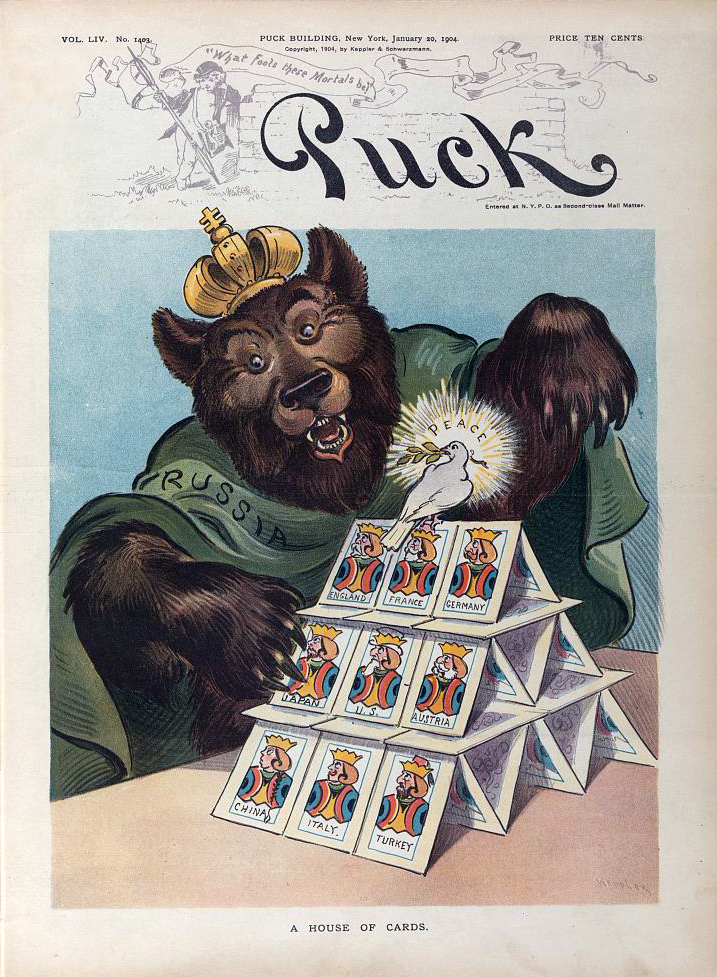
The Russian bear hibernates no more


Russia is in effect demanding that the United States dissolve NATO. Note the (probably deliberate) ambiguity concerning Estonia, Latvia and Lithuania.

It´s good to know that the US administration and military are in such capable hands. Absolutely no need to worry! 

Russian draft proposal for treaty on security guarantees with the United States


Sunday, August 29, 2021

"Så används flyktingar som politiskt vapen"


En del intressanta fakta i denna artikel från Aftonbladet. Det där med Nordnorge kände jag inte till tidigare, inte heller att Belarus i princip "köper" migranter från Irak. 

Så används flyktingar som politiskt vapen

Thursday, July 1, 2021

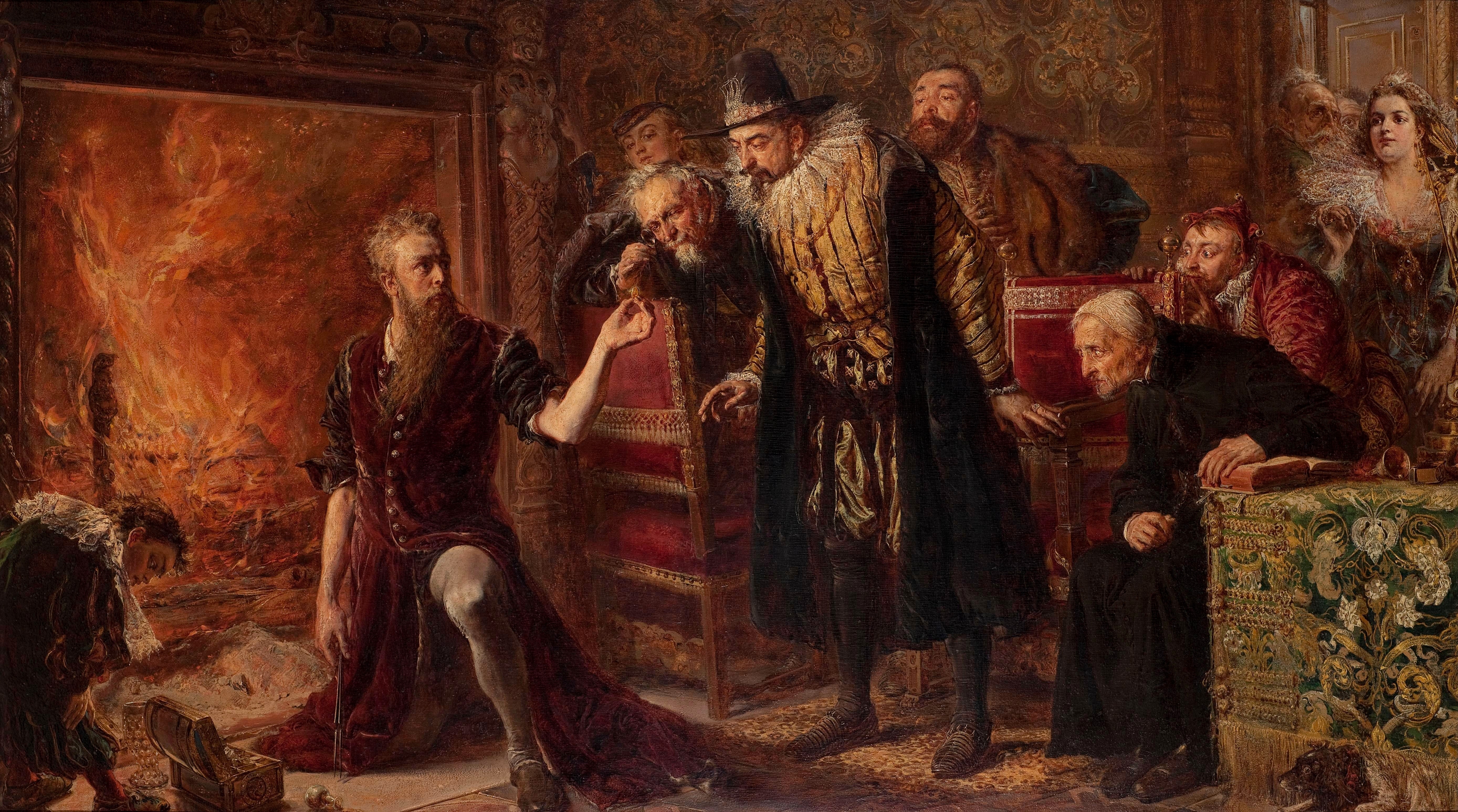
Sigismund bland alkemisterna


Titta vem som kommit på besök hos guldmakaren...

En målning från 1800-talet av Jan Matejko, föreställande Polens och Litauens härskare Sigismund (han som under några år på 1500-talet även var svensk kung). Alkemisten som demonstrerar hur oädla metaller kan transmuteras till guld är Mikael Sendivogius. Denne var tydligen både kemist och alkemist, så något nyttigt gjorde han väl! 

Från Wikipedia, som aldrig upphör att förvåna.

Sunday, May 12, 2019

Next time, just run


Interesting clip from YouTube about martial arts and why they *don´t* work. In real life, just running away is a far better "technique" in many situations!