Saturday, April 11, 2020

Is this really protected under the First Amendment?


I admit that I don´t understand "Chaos Magic"... 

In this clip, Thomas Sheridan argues that the coronavirus is our new god, and that Chaos Magicians should therefore invoke it?! He claims to have invoked the mysterious astronomical object ´Oumuamua and caused a huge UFO flap in Ireland! The man also says that Cthulhu used to be the most powerful deity, that he was connected to SJWs, but now the coronavirus can save us from his wrath...

Eh, wtf????

OK, further into the clip, Sheridan (or is this the *real* Catfish?) says that corona isn´t literally a god but a "chaos force". So that makes it alright then?

I always assumed Israel Only Full Preterism was the strangest religion out there, but here is another possible contender!


A battle not even Corona-chan can win


Donald Trump´s response to the corona pandemic may not have been adequate, but as these (admittedly partisan) pieces point out, Trump was merely following the advice of the medical establishment, which initially didn´t believe there was any grave reason for concern either. 

Indeed, the Democrats *took exactly the same position*, including New York governor Andrew Cuomo and New York City mayor Bill de Blasio (the latter a supporter of Bernie Sanders). Indeed, the Democrats *attacked Trump for racism* when he imposed a travel ban on China - the country the virus was actually coming from. And yet, the media are accusing Trump of "doing nothing"?!

Here we go again! 

Even liberal Sweden, which isn´t even on literal lock down, criticizes Trump for "doing nothing", whatever than even means. And no, I´m not saying Trump or the establishment are innocent. How about finally giving everyone health insurance, close the tax havens and actually start taxing the tax-exempt foundations? Still, it is fascinating that nothing can trump TDS. Not even a coronavirus pandemic...


The progress of this shit storm

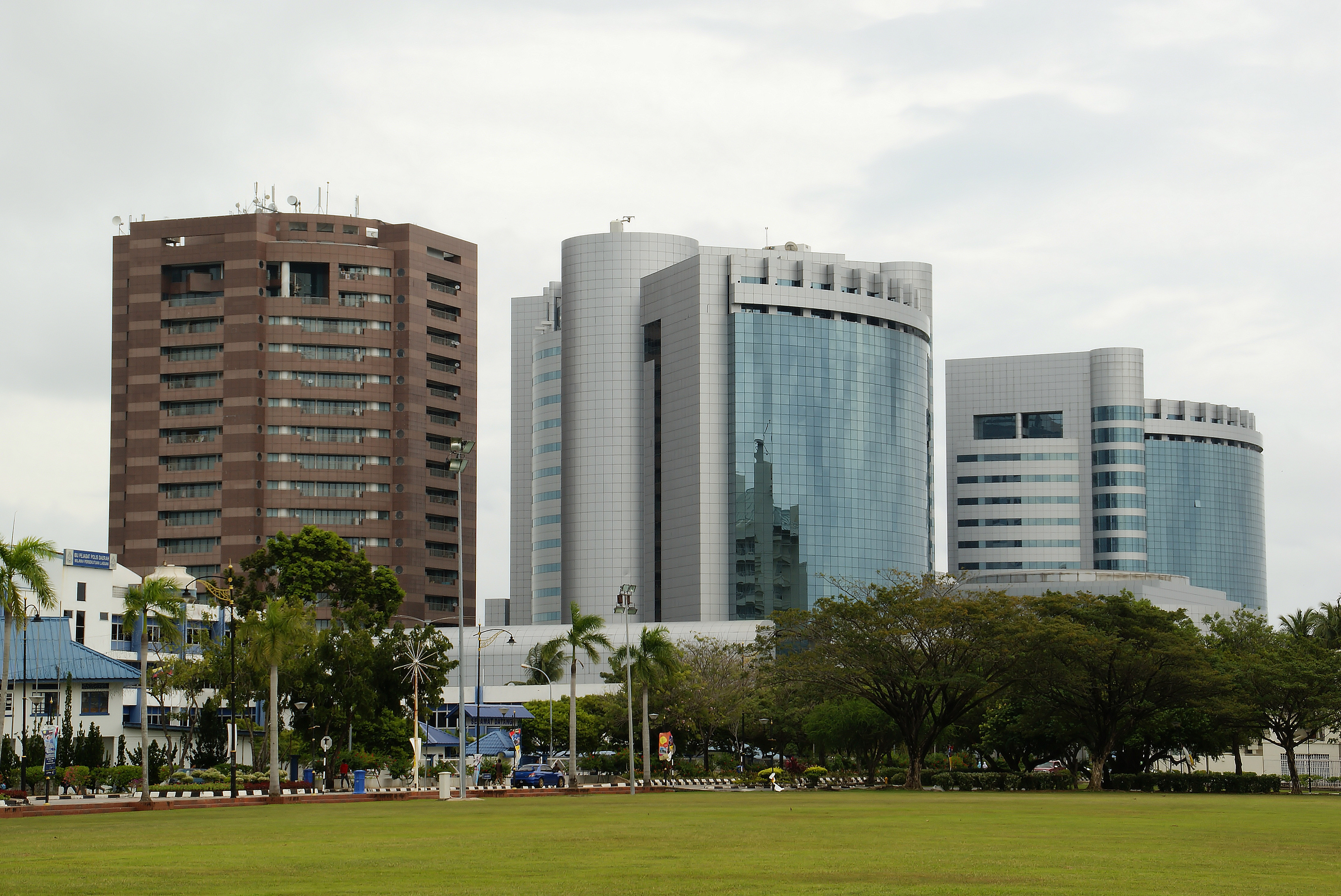
Labuan today


Andreas Malm is a Swedish left-wing intellectual and eco-socialist. I´m old enough to remember Malm as a rookie activist about 20 years ago, when he expressed support for Hizbollah, brawled with a group of exotic Trotskyists in the Palestinian solidarity movement, and called on the Swedish right-wing government to aid NATO in its bombing campaign against Gaddafi in Libya. Yes, you read that right. Andreas Malm *supported* the bombing of Libya. At the time, I rechristened him Andre-jas Malm, JAS being a highly advanced Swedish fighter plane. After reading his more recent thought products on the greener spectrum of things, I have to ask whether Malm still supports Western imperialist bombing campaigns against economically advanced Arab nations, or whether he simply wants the JAS bomber to be powered by biofuels and the bombs with solar cells? Or did he just switch his allegience from Hizbollah (pro-Iran, pro-Russia) to Hamas (anti-Iran, anti-Russia and therefore anti-Gaddafi)? 

It´s really a pity that I´m not a revolutionary Marxist, since writing a criticism of Malm´s works on the climate crisis from such a perspective would be great fun, if for no other reason that Malm claims to be, well, a Marxist. It´s a very peculiar form of Marxism, to be sure, with the working class strangely absent, replaced by the usual panoply of middle-class identity politics, petty bourgeois Greens and (supposedly) the huddled poor masses in the Third World (the migratory behavior of which strikes me as decidedly anti-Green). That capitalism can use fossil fuels and steam engines to move production wherever it feels like (a state of affairs usually known as "modern civilization") is seen as *negative* in this curious version of Marxism, while Marx himself would of course see it as capitalism being historically progressive, creating its own grave-diggers as it goes. But then, Marx wanted workers´ management of fossil fuels and, I suppose, engines. Malm wants...what?

In "Fossil Capital", he envisages a situation in which capital is *tied down* to a limited number of hubs around the world, due to the intermittent character of solar and wind power. This will force the employers to stay put (no globalization!) in the same places where they originally built the power plants, and somehow Malm believes that this will also increase the bargaining power of the workers in the green energy hubs. Note the dramatic difference with Marx, who regarded the free and therefore *mobile* character of the worker as a historically progressive gain. That being said, I admit that Malm´s scenario could work - unless, of course, the employers employ thousands of militarized praetorians to suppress the workers at their immobile solar power plants. And what if the workers start acting as Zionist colonial-settlers, forming a privileged labor aristocracy, forcing the workers outside the hubs to pay dearly for the energy only the solar and wind plants can provide? The only *material basis* for a revolution in this system seems to be for the impoverished peripheral workers to form war-bands, encircle the intermittently energetic hubs from the countryside, and simply destroy them - or take them over, and then the circle starts again. A situation remarkably similar to the pre-modern state of affairs! 

In "The Progress of this Storm: Nature and Society in a Warming World" (the book I was really intending to review), Malm offers up two contradictory perspectives on the post-Greta state of affairs. On the one hand, Malm goes full primitivism - no JAS fighter planes here! When discussing the island of Labuan in the South China Sea (with which he seems to have a strange obsession), he reaches the conclusion that the best solution would be to simply cordon off the island (and by implication, all pristine wilderness areas with noble savages) from any outside interference whatsoever, and most specifically Western imperialist and high tech interference. There is such a place already. It´s called the Andaman Islands, and seems to play a prominent part in the hagiography of Western middle class liberals, the defense of the right of the Andamanese to live as they please on their own little atolls being the only known example of anti-immigration policy supported within this particular social stratum. If the present inhabitants of Labuan (the most important financial center of Muslim Malaysia) would like to live on Andamanese level is, alas, less clear. 

The other perspective offered by our stormy petrel is somewhat more surprising. Yes, he calls for high tech solutions. One of the points of the book is that the storm is already upon us due to certain decisions made in the past, decisions which can´t be undone (not even by the multi-identitarian soviet or the savages). For this reason, "negative emissions" are necessary to save the world. The author doesn´t tell us what this entails, CCS apparently being the n-word of honest eco-socialists, nor does he tell his readers how the CCS facilities should be powered, if not by fossil fuels. Intermittent storm power, perhaps? Malm also makes a rather oblique call for geo-engineering on a massive scale, being gradually phased out by the revolutionary world government, until nature can take over the weather systems again without undue interference by our unfortunate species. Once again, we wonder how the geo-engineering gadgets should be powered if not by fossil fuels or electricity made in nuclear facilities. And who, pray tell, should pay for it? American pension funds? And what makes Malm think that the technocratic elite and their labor-aristocratic supplements will *phase out* a highly succesful program of weather control in favor of Mam Gaia´s decidedly more spontaneous take on things climatic?

Andreas Malm also has a blind spot for the overpopulation problem. How many Third World peoples could possibly survive if by some strange stroke of luck, say a comet or a coronavirus, the global population would be forced to live on Labuan (pre-Malaysia) or Andamanese levels forthwith? The population of North Sentinel Island is 400. To the usual Green conceit that somehow, in some way, we can all keep our high standard of living even if we completely replace fossil fuels with sun, wind and clean country livin´ (and, I suppose, Monégasque yachts), the author has simply added a new Red conceit: that somehow we can use high technology to save the world, and then simply abolish it, without anyone ever noting the difference... 

I´m not sure if that counts for progress. I am pretty sure it can´t pass for Marxism. 

The Quattrocento Dark Age


“`Renässansmänniskan´: 1400-talets Italien – myter och verklighet” by Swedish writer Michael Nordberg is a blistering attack on the Renaissance in general and the Quattrocento in particular, with Florence and Venice (and Jakob Burckhardt) taking most of the whipping. Nordberg was an authentic history professor, and his book was published in 1993. The iconoclastic prof had previously published a book sensationally rehabilitating the Middle Ages, “Den dynamiska medeltiden”. His book on the Renaissance might perhaps be a *bit* over the top, but it sure is fun reading for those with a slightly revisionist bent. Renaissance aficionados, ye have been warned.

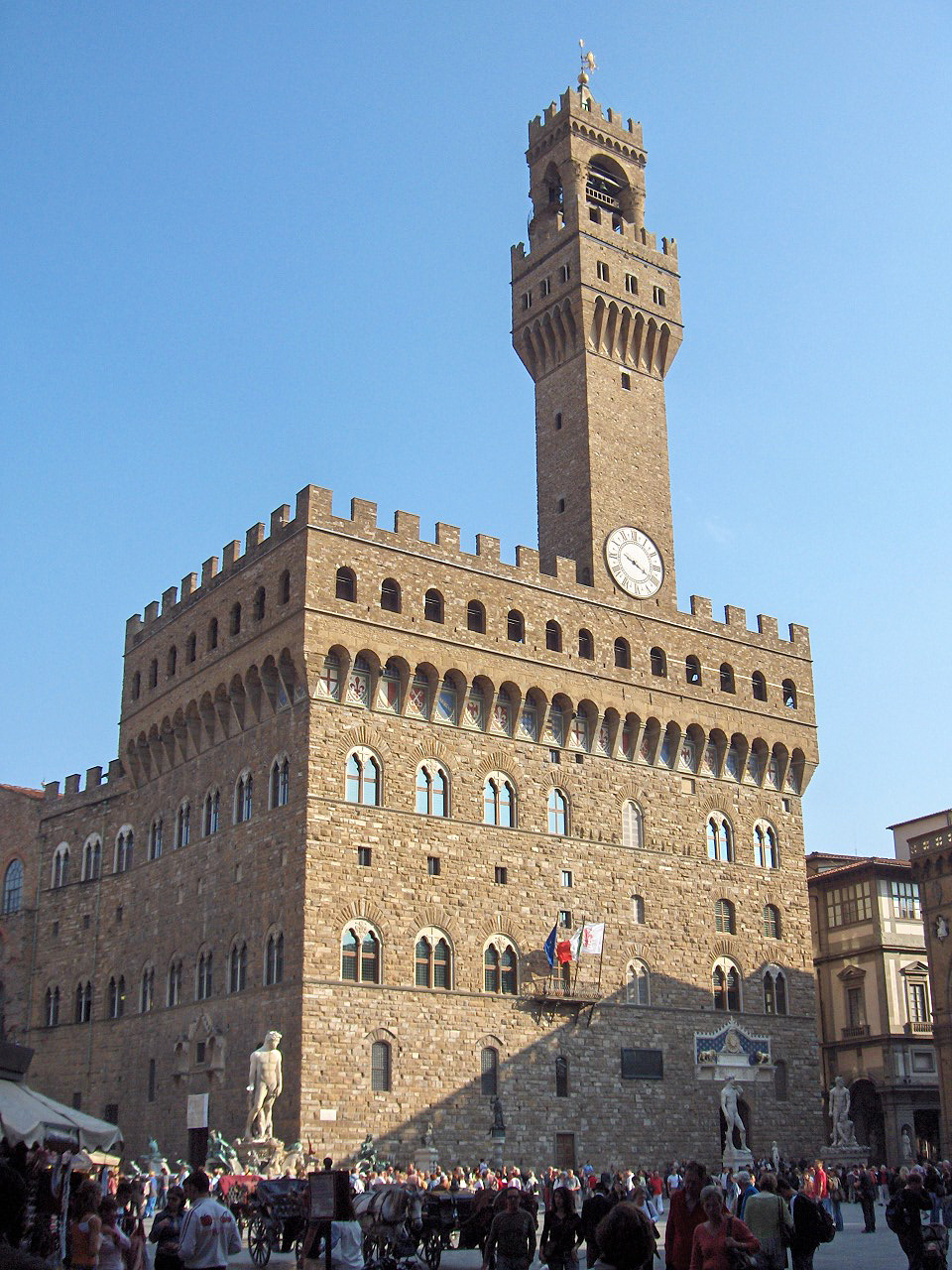
Life in Florence, this supposed pinnacle of human civilization and then some, turns out to have been anything but “secular”, “humanistic”, “enlightened”, “individualist” and what not. But sure, they did paint some really pretty shit. Florence was hit by recurring plague epidemics. In one of them, the notorious plague of 1400, about 13,000 people died within six months. That would have been a fifth of the city´s population! No herd immunity there. Florentine democracy turns out to have been a hierarchic oligarchy, in which a patron-client relationship was the only way in which a common laborer could (perhaps) get some protection. Women were hideously oppressed in all the usual ways: rape, prostitution, early marriages to substantially elder men, demands for high dowries, etc. Prostitution was officially sanctioned by the Florentine authorities, who hoped in this way to dissuade the young males from homosexuality (which was rampant in the city). Violence ruled in the streets as youth gangs habitually attacked each other. Venice may have been marginally better, but frankly not by much. In this cesspool of business as usual Italic barbarity, the city-state of Ferrara stands out as unusually progressive, ironic since the city was openly ruled by an authoritarian duke rather than by a (supposed) democracy. Duke Ercole decreed that only females could be brothel-owners – perhaps a way to minimize the violence against female prostitutes?

Coming this far, we might with some justification wonder if Nordberg has some axes to grind somewhere. We might also wonder if the Quattrocento Renaissance might have been progressive anyway, even outside Ferrara, despite all the undoubted human degradation. After all, people were dying of the plague already during the dynamic Middle Ages! However, Nordberg does have some serious arguments for the 15th century not being the radical break with the previous period as many like to imagine. The Florentines were hardly “individualist”, but strongly collectivist, usually on a family basis (“family” as in “clan”). The collectivism was strongest in the upper class – the class which patronized the Renaissance humanists and painters – and weakest at the bottom. Among common laborers, there was hardly even a nuclear family! Nor was there any particular secularization. All Florentines were intensely religious and Catholic. The entire worldview was “medieval” and superstitious, with constant religious processions to avert worldly or spiritual dangers. What about modern capitalism? Didn´t that begin in the northern Italian city-states? Not really, according to Nordberg. The merchants of course wanted to make great profits, but very often, these weren´t invested to form future capital, but squandered (from our viewpoint) on grandiose building projects, including the construction of churches. Indeed, the merchants often contributed money to the Church as a way of paying for the sins incurred when earning the riches in the first place! It´s also interesting to note that real wages never rose in Florence during the plague epidemics of the 15th century, not even for skilled workers, suggesting that there wasn´t a free labor market, but rather an economy tightly controlled by the city oligarchy.

Nordberg also criticizes the usual view of 15th century Italian art. While the Renaissance painters were undoubtedly creative, their art wasn´t the result of individual aesthetic inspiration. Rather, all aspects of the artworks were controlled by the rich patrons commissioning them. The motifs were usually religious in nature. Even the “individualism” of the portrait paintings can be questioned. In large artworks, the patrons and their families are indeed depicted as distinct individuals, but the context is wholly traditional – such as a religious procession. Otherwise, the usual use of portraits was to show the prospective bride (or her parents!) in a negotiated marriage agreement how the suitor actually looked like. This, of course, was still part and parcel of a collectivist society. It´s also important to note that all painters and sculptors in Italy had to belong to a guild which controlled their education and initiation into the craft. Overall, Nordberg feels that the modern view of Renaissance art is strongly anachronistic. Seen in context, most of the “secularism” and “individualism” simply disappears in favor of a magico-religious corporatism.

But didn´t the Italian humanists rediscover the ancient Latin and Greek writers? Nordberg believes that the Latin “discoveries” are much exaggerated, since these texts had never really disappeared during the Middle Ages. Indeed, many of them were “discovered” in monastic libraries in France! After being read by perhaps ten people, these manuscripts were now studied by perhaps a hundred people instead… Nordberg isn´t overtly impressed by the way the humanists used the Latin corpus. Rather than paying close attention to *what* the texts say, they were mesmerized by their style, by *how* they said it. This led to an artificial resurrection of Classical Latin, often for purely rhetorical or propagandist purposes. Nordberg believes that Medieval Latin was better, since it was a living and evolving language. The ancient Greek corpus was rediscovered to some extent by the Italian Renaissance men, but it had (of course) never disappeared in the Byzantine Empire. Nor would it have disappeared under the Turks, who didn´t destroy such things. The Platonic Academy in Florence around Ficino had a purely marginal influence, Aristotelianism being dominant all over Europe until the 17th century when it was unseated by modern science, not by Platonism. Indeed, “science” in this sense didn´t even exist during the Quattrocento.

One problem with “`Renässansmänniskan´” is that the author never really tells us how the Middle Ages were finally overcome and the modern era ushered in. If not by the Florentines and Venetians, then who? And when? He does imply that the really important developments took place in France and northern Europe rather than in the Mediterranean region. It was here that a new social formation had begun to evolve already during the High Middle Ages. I also get the impression that the process didn´t come to an end during the 16th century (the usual starting date of the modern period) but only later, during the 17th century, perhaps even later.

If Michael Nordberg was right, Renaissance Man was firmly anchored in…the Dark Ages.

The unexpected origins of modern science


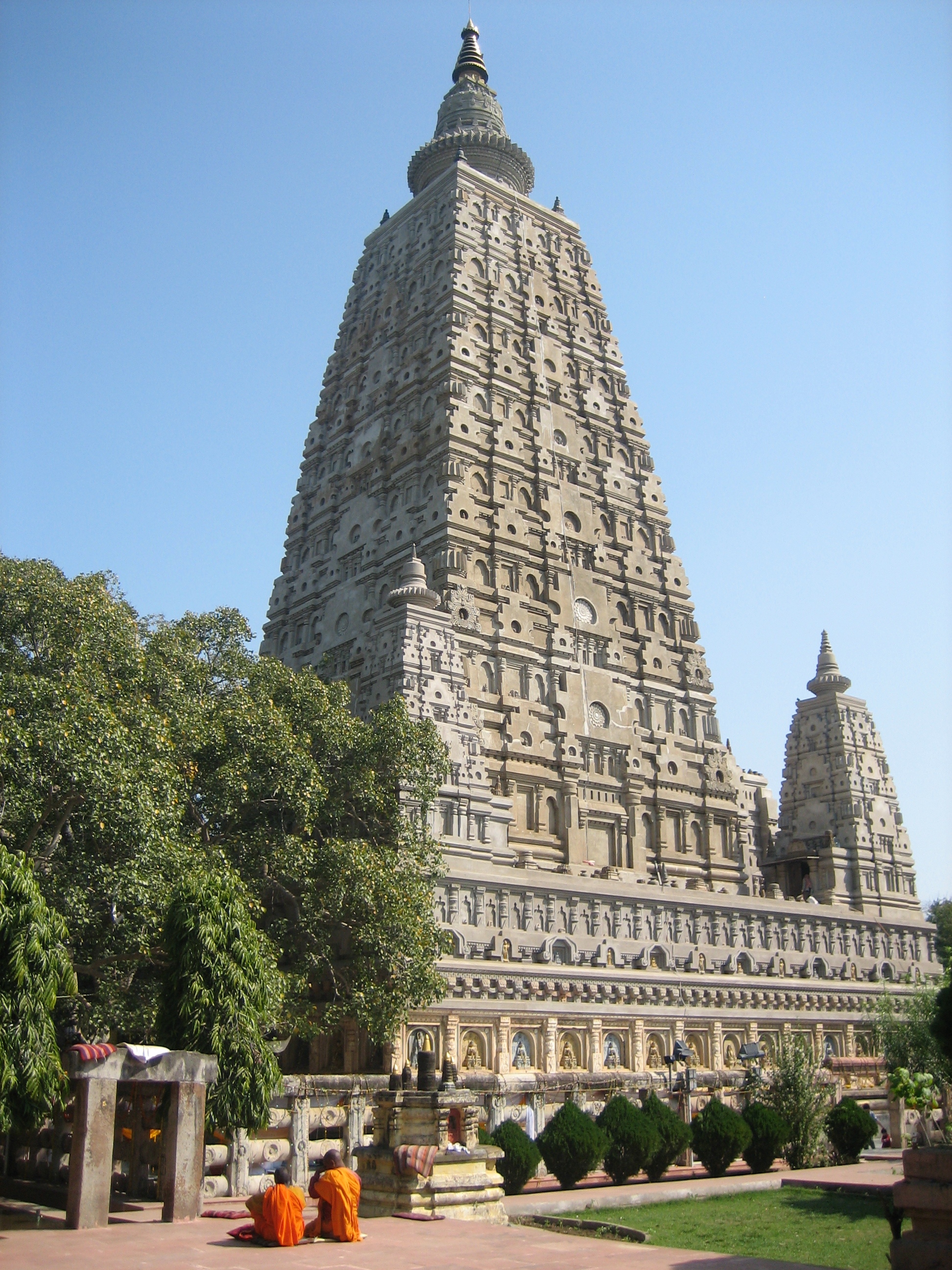
“Warriors of the Cloisters: The Central Asian Origins of Science in the Medieval World” is a provocatively titled book by Christopher Beckwith, professor in Central Eurasian studies at Indiana University, USA. The book is rather narrow and technical, and hardly intended for the general reader. Beckwith argues that the so-called scholastic method of argumentation, which he calls the recursive argument method, originally comes from Buddhist schools in Central Asia. When the Muslims conquered the area, their culture was heavily influenced by Buddhist models. Thus, the Muslim madrasa (a kind of college) is modeled on a similar Buddhist institution. The recursive argument method was also taken over by the Muslims, and later found its way to High Medieval Europe. At the time, this was the really existing “scientific method”. Note, however, that the author doesn´t literally claim that “science” comes from Central Asian Buddhist monasteries! That would be, well, an unexpected conclusion…

The author believes that all elements of a “scientific culture”, save one, existed in the Muslim world for centuries. However, they were never properly integrated there. The main reason was opposition from conservative Muslim clerics. For instance, the madrasas were usually used for religious instruction only. The conservatives looked upon Greek or Indian philosophy with intense suspicion. The main culprit in destroying Muslim science was the Sufi mystic al-Ghazali. The author points out the irony that the Muslim Aristotelian Averroës was more studied in medieval Europe than in the Muslim world! It was in the Europe of the High Middle Ages that the various elements of a scientific culture were finally properly integrated with each other. These include Aristotle´s contributions, the idea that “science” is a distinct field of study, the recursive argument method and the college. The Europeans also added an invention all their own: the “universitas” or teachers´ guild, which was fused with the college and became what we call a university. The conservatives within the Church made some feeble attempts to stop these developments, but obviously failed.

Beckwith doesn´t believe that medieval science was exactly the same thing as early modern science. Indeed, he doesn´t believe present-day science is the same as early modern science, either. Yet, there is nevertheless a kind of continuity. Without the first steps taken during the 13th century, we wouldn´t have any science at all. The recursive argument method, which looks weird and incomprehensible today, was actually a great step forward at the time. It forced its users to think in a systematic and logical way, an approach which at least potentially could elevate reason above revelation and tradition. I assume it also made the scholastics compile as much information as possible from various sources about the topic at hand, both pro and contra.

Perhaps this is how all progress is usually made: in a piecemeal fashion, with inventions originally intended for something else being applied in unexpected ways by later generations. The scholastic method was invented by Buddhist monks in Central Asia who wanted to defend their metaphysics from competing schools of thought. It was later used by a Catholic monk who wanted to fuse Aristotelian reason with Christian theology. Yes, that would be Thomas Aquinas. And yet, in the long run, this schooled our minds – or some of them at any rate – in the vagaries of modern science.

Friday, April 10, 2020

Empires of the Silk Road


“Empires of the Silk Road: A History of Central Eurasia from the Bronze Age to the Present” is a grossly mistitled volume by Christopher Beckwith. I say that with a smile, since Beckwith happens to be my favorite distracted professor. This 471-page tome could best be described as a long compilation of topics, some connected to Central Eurasian history, which the author feels need further scholarly attention, since most research published so far have been found wanting, at least on the author´s revisionist scales. I un-ironically sympathize with the agenda! Of course, I can´t vouch for Beckwith´s particular reinterpretations, except to say that they are interesting. So is “Greek Buddha”, another work by the same writer which I review elsewhere on this site.

The term Central Eurasia refers to the vast steppe regions spanning from East Europe to northern China. In ancient and medieval times, this was the home to a bewildering maze of “barbarian” peoples rightly or wrongly associated with nomadism, pastoralism and mounted warriors: Proto-Indo-Europeans, Scythians, Huns, Turks, Mongols, Tatars and many others. The author could be described as “pro-barbarian” or “pro-Central Eurasian”. He often refers to the settled high cultures and empires of Europe and Asia as “peripheral”. He doesn´t deny that the steppe peoples were frequently brutal, but so were the “peripheral” empires, so on *that* score there is little difference between them. On a micro-level, ordinary people living in the “great” empires sometimes tried to abscond to the “barbarians”, suggesting that they felt freer among them. To Beckwith, the Central Eurasians were not parasitical nomads who plundered big cities or forced empires to pay huge tributes. All powerful nomadic peoples controlled “empires” of their own, which always included agricultural land and towns alongside the vast steppes. Their primary non-pastoral activity was not plunder, but trade. The nomads controlled the so-called Silk Road, really a vast and ancient trading network connecting China, India and Europe. As long as the steppe peoples were strong, trade was relatively easy and secure. Not only did the nomads promote trade among the empires, they were also keenly interested in luxury products themselves. One example: the Scythians traded in silk, with the Greeks paying them in gold, the same gold used for the exquisite Scythian handicraft later found by archeologists. The fact that the nomads only destroyed cities which resisted them (standard practice among the “peripheral” empires, too) shows that they didn´t “hate cities” á la Pol Pot, but preferred to integrate them into their spheres of influence as hubs for commerce and taxation. The awful tributes supposedly paid by the Byzantine Empire to the Huns and other steppe marauders only constituted a tiny percentage of the total Byzantine budget.

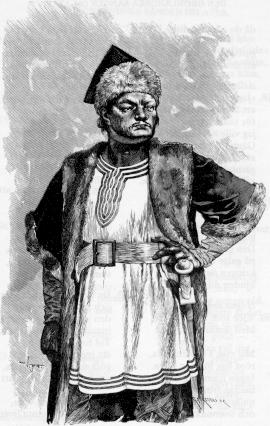
Beckwith believes that many steppe peoples shared something he calls the Central Eurasian Culture Complex. Its origins are probably proto-Indo-European. An important part of this culture complex is the comitatus, a tightly knit band of male warriors sworn to defend the ruler to the death. The ruler and the members of the comitatus were not blood relations, nor were the members of the war-band usually related to each other. If the ruler died or was killed before the comitatus, its members usually commited suicide or were ritually executed! Why would anyone risk such a fate by binding himself to a non-blood-relative? The answer is that the ruler was expected to bestow fabulous riches on the members of the band, including gold, jewels and silk. While plunder was an obvious way of getting such things, a more important one was trade. Thus, the mercantile orientation of the steppe peoples was in large part a function of their peculiar culture, and this also explains the importance of trade in luxury products. (Later, the comitatus system spread to the Muslim world through Central Asia and Persia. The Mamluks and the Ottomans had distinct versions of the system.)

Beckwith regards the Celtic and Germanic peoples of Iron Age Europe as part of the same Central Eurasian Culture Complex as the nomads further east. He is critical of the usual theories about the decline and fall of the Roman Empire. The “barbarians” weren´t responsible. Rather, internal problems in the Roman Empire made it less interested in trading with the “barbarian” peoples. This forced the “barbarians” to move ever closer to the metropolitan areas of the Empire in order to safeguard their trading rights. This, then, are the so-called “barbarian invasions” much maligned by historians ever since.

Being a trained linguist, the author has appended a chapter on the Indo-European language family. Here, too, the tendency is revisionist. Beckwith believes that the remarkable similarity between Avestan and Sanskrit is no mystery: Avestan *is* an Iranicized form of Sanskrit, rather than the ancestral Indo-Iranian language. The oldest preserved copies of the Avesta, the sacred scripture of the Zoroastrian religion, are from the 13th century AD. Old Persian inscriptions are known from the 5th or 6th centuries BC, and are very different from the Avestan language. Also, the Zoroastrian belief system as recorded in the Avesta isn´t attested from such early times. So why is Avestan regarded as an extremely ancient language at all? Everyone seems to agree that Avestan is weird compared to other members of the Iranian branch of the Indo-European language family. Also, the original Vedic scriptures aren´t really attested before 1000 AD, and Beckwith believes that it´s “romantic” to date them from thousands of years earlier. Presumably, this has consequences for how to look upon Sanskrit and its place in the Indo-European language family tree. He doesn´t say, but the implication seems to be that Sanskrit could be from a later period than the Prakrits! Beckwith also argues that the Indo-European languages simply couldn´t have developed by a “glacially slow process” over many millennia. Rather, they must be the result of rapid changes due to creolization between the language spoken by the Indo-European invaders and the that of the natives. Needless to say, the author doesn´t believe it´s possible to *really* reconstruct a Proto-Indo-European language!

In several chapters, Beckwith attacks the modern world, including democracy (really the rule of a new modern elite), secularism, Communism, postmodern discourse, modern art and modern music. In a very curious footnote, he briefly discusses Frank Zappa´s music. This in a book supposedly about Central Eurasian steppe empires! The author sounds “traditionalist”, but it´s a traditionalism with several twists. His ideal isn´t the landed aristocrat nor the lofty philosopher, but rather the dynamic merchant, including merchants who trade in pure luxuries. He is both generally pro-Central Eurasian and specifically pro-Germanic, viewing the Early Middle Ages less as a Dark Age than as an age when Europe was dominated by a dynamic mixed Germano-Roman culture connected with the steppe empires. He also seem to regard the European colonialists, including the early exploits of the Portuguese, as somehow connected to the general dynamism of the Germanic peoples. Beckwith says very little about the only Indo-European people known to have many female warriors: the Sarmatians. Yet, unless I misunderstood him completely, he also suggests that patriarchy and warfare are ultimately bad things!

If "Empires of the Silk Road" has a central point, it is that historians should stop underestimating how all of Eurasia was connected through an overland route since ancient times, thanks to the "barbarians", and how this positively affected cultural diffusion and economic growth. 

I could probably continue this review indefinitely, but for reasons of space (mine being less expansive than the pusztas of Central Eurasia), I simply stop it right here!

Why didn´t I see this before?

Note flag of Neo-Roman Empire (also 666) in background


Greta Thunberg´s campaign is called Fridays for Future. That would be FFF. The letter F is the sixth letter in the alphabet. FFF is therefore 666. Aha! Therefore, Greta is the Anti-Christ. But frankly, is anybody really surprised? 

The corona comet


Irish occultist and chaos magician Thomas Sheridan discusses some conspiracy theories about the coronavirus. 

He claims that Earth might collide with an asteroid or comet in the near future, and that the corona lock down is a way for the establishment to avoid a global panic over this event (which is carefully being hidden from the public). 

Or perhaps the curfew is a way to clear the skies for Trump´s space force to launch something that will destroy the asteroid? 

Note also that the comet is called C-2019, almost the same as the designation for the virus, COVID-2019. There is also a mysterious connection to Walpurgis Night (30 April). 

For the record, I don´t believe a word of it, but the clip is interesting anyway, so I might as well link to it. 

Sanningen om coronapandemin?


Den irländske ockultisten Thomas Sheridan har en originell konspirationsteori om coronaviruset. Han hävdar att det är resultatet av muslimsk svart magi! Resonemanget börjar ungefär tolv minuter in i klippet. 

Islam är kopplat till en demon, eller kanske en mäktig ande, som Sheridan kallar "the Jinn". Denna ande vill krossa Kina för att hämnas på regimen för dess förtryck av de muslimska uighurerna i Sinkiang. Demonen har därför tagit kontroll över coronaviruset (som egentligen är tillverkat i kinesiska laboratorier) och släppt ut det i världen. Detta för att de andra stormakterna ska straffa Kina med ekonomiska och politiska sanktioner. 

Med tanke på att Sheridan i allmänhet hjärtlöst verkar hata abrahamitiska religioner, är ju detta ganska intressant för att komma ifrån honom...

I början av klippet nämner han även Stephen Kings roman "Pestens tid" (The Stand) som han givetvis kopplar till den nuvarande situationen.

"Obama" ringer Jimmy Dore


Den amerikanske stå-upp-komikern Jimmy Dore får ett samtal från "Obama", givetvis en imitatör. Fast det är en rätt så bra imitation. Den distinkta stilen, den fantastiska retoriken...och absolut noll substans i slutändan. Visst är det Obama. Skulle nästan kunna vara originalet...