Showing posts with label Mongolia. Show all posts

Thursday, July 2, 2026

Dzungariska slavinnor


Okej, det här var ju nästan lite intressant. En dimension av världshistorien jag helt har missat! Var tvungen att kolla upp vad i allsin dar "dzungarer" är för något. Observera förresten att Frans II Rákóczy enligt diverse skrönor var far till den mystiske greven av Saint Germain... 

General Adam Ludvig Lewenhaupt

Tuesday, June 2, 2026

7 and 8


This is clearly some kind of cult. So we´re supposed to extend our natural life spans with some occult techniques in order to serve the cult longer? Yeah, so about that...

There seems to be fundies and fanaticos in every religion. Note also that the speaker is, ahem, conflating Amitayus and Amitabha. LOL.

Saturday, March 21, 2026

Schizos will schizo


A lot of self-proclaimed Christians are going apeshit over this quote by Netanyahu just now: "Jesus Christ has no advantage over Genghis Khan. Because if you are strong enough, ruthless enough, powerful enough, evil will overcome good." Not only is the quote taken out of context, they double down when this is pointed out to them.

Just another day on the Low IQ Interwebs.

[Added later:] There are also conspiracy theories about Netanyahu having died, including a (perhaps ironic) X account which purportedly tracks his movements to see if he really is dead?! I´m beginning to *really* suffer from Internet fatigue, and I don´t think it has anything to do with my age...

Saturday, December 27, 2025

Mongolian Jingle Bells?!


HAH HAH HAH. I doubt very much this is Mongolian. The account is registered in the Netherlands! Probably something similar to Dr Bombay, if anyone remembers him? (A fake "Indian" pop star who was really Swedish-Danish.) But OK, the reindeer were hilarious! 

Sunday, August 3, 2025

The heat is on


"Red Heat" is a somewhat strange film released in 1988, starring Arnold Schwarzenegger, James Belushi and Lawrence Fishburne. I recently watched it on a Swedish TV channel, where it was marketed as a "comedy". Ahem, I beg you pardon? More like an extravaganza in Murder One (and some mayhem) if you ask me! But sure, Arnie and Belushi do try to add some comic relief here and there. Arnold usually by not smiling at all. He´s supposed to be a hard boiled Communist police officer from the old Soviet Union! 

The film was made during Gorbachev´s perestroika/glasnost, which may explain why the Russians are the "good guys" in this production. The "Soviet" segments were actually taped in Hungary, at the time the most "liberal" Eastern bloc nation. Curiously, "Red Heat" is so Russophile that it even assimilated Russian racism against non-Russian ethnic groups in the old Soviet Union. The villain is a Georgian (from Georgia south of Russia) and another bad guy is described as a "Mongolian hippie"...

On the American end, the bad guys are African-Americans and led by a certain Abdul Elijah, who turns out to be a Black supremacist, Marxist and drug kingpin. He is clearly intended as a hybrid between Elijah Muhammad and Malcolm X (or perhaps the Black Panthers). Abdul hates all White people with equal gusto, including...Russians. OK, so there is little Wokeness in this film, if you get the drift.

And yes, I noticed that the bus at the end was marked "American Liberty Lines". Perhaps interesting as cultural studies in 2025?


Thursday, June 19, 2025

The Golden Child


Is the Tibetan diaspora (and Tibetan Buddhism) headed for a succession crisis? China may try to replace the current Dalai lama with their own chosen successor. Meanwhile, the Dalai lama has hinted that the next "reincarnation" will be found outside Chinese-occupied Tibet... 

Saturday, March 15, 2025

Struggling without a script?


Richard Hanania isn´t a scholar of genetics or demographics, obviously, but he does make some interesting observations and reflections here. The bottom line is that East Asians are genetically primed to be conformists, and therefore "struggle without a script" when social conformity comes unglued. Which may explain their extremely low birth rates, for instance.  

Why Asia stopped having kids

The East Asian package

Tuesday, February 18, 2025

Alter Ego


So I just saw a French science documentary, "Alter Ego", on Swedish TV about cloning. Artificial human cloning of non-human animals, to be exact. Remember Dolly the cloned sheep? For whatever reason, the European Union bans this kind of cloning, so the industry thrives in the rest of the world. In the docu, they interview Americans and Argentinians who clone horses (including race horses), Chinese who clone pet dogs, and a hyper-modern lab in the United Arab Emirates financed by the Emir of Dubai which clone dromedaries (camel races are popular in some nations). In the United States, there are supposedly cloned deer with exactly the qualities a wild-game hunter wants!

There are also discussions to clone mammoths and other extinct animals, such as the dodo. Maybe this is a bit too much hype? One scientist actually believes that cloning birds is extremely difficult to impossible. Another opines that "cloned mammoths" would really be genetically enhanced elephants which can live in cold weather! However, the cloned foal of a Przewalski´s horse (this species or sub-species is extinct in the wild) is real, so here is a possible avenue to save endangered species. It seems cloning can even enhance the genetic diversity of a species. The two-humped Bactrian camel (which is almost extinct in the wild) is mentioned as the object of another possible rescue mission. 

The documentary doesn´t discuss human cloning and no Raëlians are interviewed. The production is clearly pro-cloning and I do wonder after watching it why the EU has banned cloning. How does this help us? How does it help the animals? Is it just some weird superstition? On our "enlightened" continent! In reality, the applications are almost endless. Imagine killing off all wolves, but keeping their DNA around for future re-creation just in case. 

Hmmm...    

Monday, March 25, 2024

The Soviet Sasquatch


An interesting video about Soviet cryptids. I was struck by how unoriginal they were. Yes, it´s essentially the same kind of cryptids as reported from North America or Western Europe: hairy humanoids, lake monsters, sea serpents and extinct charismatic mega-fauna still supposedly lurking somewhere in the far corners of Siberia. In this case the Steller´s sea cow, the wolly mammoth, and the giant short-faced bear (never heard of that one). 

There are two possible explanations for this curious fact. One is that the cryptids are actually real. After all, why *would* people behind the Iron Curtain see exactly the same kind of unknown animals as in the rest of the world? Another possibility is that Soviet cryptozoology was influenced by its Western counterpart. That´s not as far-fetched as it sounds, since one prominent Soviet cryptozoologist, Boris Porshnev, was a friend of Bernard Heuvelmans! (A book by Porshnev has been translated to English: "The Soviet Sasquatch") The same transformation of older folklore into "unknown real animals" - typical of much Western cryptozoology -  may have transpired in the modernizing Soviet Union, too. 

Misidentification is another factor. The Mongolian Death Worm (which was searched for by Soviet scientists) is often depicted as the monstrous Shai-Hulud from Frank Herbert´s science fiction novel "Dune". In reality, the Death Worm is only said to be about one and a half meters long. And it took me about five minutes to find *exactly such a creature* living in Mongolia: the desert sand boa. Case closed.

The Soviet Union was one of the few nations (if that´s the word for it) that launched several scientific expeditions in search of cryptids, both on its own territory and in Mongolia. Soviet scientists also participated in Chinese expeditions to find the Yeti. The fact that these official projects had as little luck as lay cryptid hunters in the US or Scotland is perhaps suggestive. 

The creatures don´t exist. Or maybe they do exist, but since they are ghostly in nature, Communists feared reporting what they had *really* found...

Thursday, November 9, 2023

Our Mongol predicament


"Djingis khan: Erövraren och hans värld" is a recent book by Swedish professor Dick Harrison about - you no doubt guessed it - Genghis Khan, the 13th century Mongol warlord who began the creation of what became the world´s greatest land empire ever. Harrison points out that surprisingly little is *really* known about him. What did his name even mean? Or his original name, Temüjin? When was he born, where is his grave, and how did he look like? All portraits of Genghis Khan are fantasy. 

That being said, Harrison has deep dived in the scholarly literature and written an easily accesible introduction to this notorious character (only available in Swedish). Temüjin must have been an extraordinarily capable leader and warrior, since he managed to unite previously bickering tribes in Mongolia into a "state" and world-conquering army. Steppe nomads had been important before in world history (Attila comes to mind), but Genghis Khan took things to an entirely new level, perfecting the military tactics that usually gave the nomads an advantage in battle against armies of "normal" kingdoms and empires. He also skillfully introduced non-nomad tactics, making the Mongol armies dangerous both in the open field and during sieges. Non-nomad administrators were employed to run the day-to-day business of the Khan´s expanding empire, and skilled craftsmen were forcibly impressed and sent to the Mongolian heartland from conquered regions. Severe repression against anyone who dared to question orders (of any kind) also played an important role in the success story. A peculiar detail is that the laws of the Mongol Empire were secret! How do you follow a secret law code?

What made Genghis Khan most notorious was, of course, his genocidal tactics. The Mongol armies frequently slaughtered the entire population of conquered cities, as a warning to anyone who would dare to resist them. On land, the Mongols were largely undefeated, and after the death of Genghis, pushed as far west as Poland, Hungary and the outskirts of Vienna. The standard interpretation is that medieval Europe wouldn´t stand a chance had the Mongols chosen to continue their invasion (Wikipedia quotes some recent studies which disagree). However, when Genghis Khan´s grandson Kublai Khan attempted to take Japan and Java, which necessitated sea power, the Mongols were actually defeated. Still, for centuries, the Mongols and their successors ("Tartars", Ilkhanids, Mughals and so on) were the most important cluster of land powers in Eurasia. The original Mongol Empire at its height stretched from East Europe and Anatolia all the way to China and Korea (but excluding India). 

What strikes me when reading Harrison´s overview is the contradictory nature of Mongol rule. On the one hand, genocide, plunder and enslavement. On the other, a "Pax Mongolica" which stimulated long-distance trade and meetings between civilizations (Marco Polo visited China when it was ruled by Kublai). Somewhat bizarrely for an empire based on the slaughter of entire populations, there was almost complete religious tolerance. Some of the Mongols were actually Nestorian Christians. Genghis Khan was a traditional shamanist, but tolerated Islam, Christianity, Buddhism,Taoism and so on. The only exception to the rule was halal slaughter, which Genghis found personally distasteful. Muslim halal butchers were sentenced to death by being butchered themselves! 

The Western view of Genghis Khan has been strangely contradictory. In medieval Western Europe (never conquered by the Mongols), the khan was seen as a valiant warrior and wise ruler. During the crusades, the Christian princes hoped that the Mongols would ally with Christentum and attack the Muslims in the rear. The strange legend of Prester John is connected to these hopes. Prester John was supposedly a priest-king ruling a vast Christian empire somewhere in the East. At other times, Genghis Khan, the Mongols and the "Tartars" (compare Tartaros - the lowest level of the underworld in Greek mythology) were seen as menacing and genocidal. The conversion of the Mongols to Islam presumably didn´t improve their reputation. Today, the Western understanding of Genghis Khan is mostly on the genocidal side, although he is sometimes depicted as a comic character. Harrison actually mentions the German hit song "Dschinghis Khan" from 1979! I assume some people might dress up as the old butcher at Halloween parties. Meanwhile in Mongolia - today a very weak nation - Genghis Khan is a national hero, and I think he is venerated in Central Asia as well (sometimes together with Timur Lenk). 

If anything, the life of Genghis Khan and the history of the Mongol Empire shows the contradictory and perhaps absurd character of the human condition...


Wednesday, November 8, 2023

Sources please


Overheard about Genghis Khan: he was tolerant in matters of religion, except on one point. Muslim halal slaughter was strictly prohibited, and if anyone was caught in the act, he was slaughtered himself?! 

I would need a source for this, obviously.

Nice boy


An argument in favor of Genghis Khan overheard on some web forum: "Genghis Khan only killed the people in towns which resisted him". 

Oh.

Nothing like Hitler, then.  

Friday, August 11, 2023

Splits and fusions


Credit: Rjruiziii


“The Ismailis: Their History and Doctrines” is a voluminous and extremely detailed book by Farhad Daftary. I read the first (1990) edition years ago, and now I´ve also devoured most of the second edition from 2007. The Ismailis, Ismaili or Ismailites (not to be confused with the Biblical Ishmaelites) are a branch of Shia Islam. Or rather several branches! Their history is notoriously complex, unfolding in several quite different theatres: North Africa, Syria, Persia, Yemen and India. Sources are often meager, except those written by hostile outsiders. Since the Ismailites were frequently conspiratorial or persecuted, much original literature have been lost or is jealously guarded by small Ismailite communities. For centuries, the Ismailite Fatimid dynasty ruled an empire centered on Egypt, but when their regime was overthrown by Saladin, this "hero" destroyed their House of Learning with its large library...

Daftary begins his "door-stopper" by debunking the myth of "The Old Man on the Mountain" and "The Assassins". Apparently, all the stories we´ve memorized by heart about the hashish, the paradise garden and the beautiful young maidens are just romantic tall tales, mostly of a medieval Crusader provenance (and Marco Polo). What *is* true is that the so-called Nizari Ismailites really did carry out a long string of assassinations of political opponents (or acts of terrorism, if you like). Their Arab opponents referred to the Nizaris as "hashasheen" or hash-smokers, from which the European word "assassin" is derived. And, of course, all the hash legends! In Arabic, however, the word´s connotation at the time was "underclass rabble" rather than literal users of cannabis-derived drugs.

To summarize Daftary´s 760-page long book is impossible (over 200 pages seem to be footnotes), but a few things stand out. It´s frequently asserted that Khomeini turned Shia Islam revolutionary, probably inspired by Communism, and that the original religion was quietist. In reality, Shia Islam has always oscillated between revolutionary and conservative periods, and also between openness and concealment. Khomeini´s activities are no mystery. The original Shiites were probably revolutionaries, including the proto-Ismailites. On the "far left" of the Shia spectrum stood the Qarmatians, who ruled a "socialist" state centered on Bahrain. The Qarmatis even attacked Mekka and stole the black stone! On the "far right" we have Jafar al-Sadiq, who could perhaps be regarded as the "founder" of Shia Islam proper. Jafar is recognized as an imam (spiritual leader and esoteric exegete) by Ismailites and Twelver Shias alike, and is respected even by Sunni Muslims. The Fatimids ended up somewhere in the center of this spectrum, while the Nizaris are more to the "left". 

Another thing that stands out is that history always repeats itself (it´s almost as if the Shia idea of "cycles" is true - or not really, since their cycles are supposed to have a Messianic consummation). The Middle East has virtually always been war-torn, brutal and Machiavellian. In Daftary´s book, the Crusaders are a supporting act, not the evil imperialists everything revolves around (a common trope in both the modern Muslim world and among Western leftists). Oh, and suicide attacks were just as common during the Middle Ages as they are today. It´s not clear what could impose order on this volatile region - a centralized empire, perhaps, and even that only barely (since there is usually more than one). Another repeating theme is the revolution betrayed by its own leadership. The Abbasids used revolutionary Shia ferment to overthrow the Umayyads...and then quickly turned against the radicals, becoming aristocratic Sunnis instead. The Safavids used the Qizilbash to take power in Persia, and of course turned against them and other radical Shia or Sufi groups while consolidating their quasi-theocratic Twelver Shia regime. Even the Ismailite Fatimids follow this pattern, becoming more conservative and "Byzantine" when firmly entrenched in power in Egypt than they had been ditherto. 

And speaking of the Fatimids...

Fatimid Egypt is sometimes used as a splendid example of "Muslim religious tolerance", but the background is never explained. As a ruling Shia minority in predominantly Sunni Egypt, the Fatimids tried to broaden their social base by allying with Coptic Christians and Jews. As already noted, Saladin - often depicted as some kind of Christ-like figure by Western Islamophiles - was the destroyer of this relatively tolerant dynasty in the name of orthodox Sunni Islam (when he wasn´t busy executing Suhrawardi). It´s also interesting to note that the Fatimids even when settling down as the rulers of an imperial polity nevertheless fomented rebellious sentiments in other Muslim lands through a vast network of Ismaili missionary organizations. In modern times, we have an obvious parallel case in...Soviet Communism.

Daftary is very positive towards the Nizari Ismailites during their "Alamut period", precisely the period when they were known as the Assassins. To Daftary, the Persian Nizaris were a kind of Persian nationalists against foreign (Seljuk and Mongol) domination. They also represented the interests of the poor, downtrodden and oppressed masses in both town and country. Hasan-i Sabbah (the bad guy of much anti-Ismailite polemics) is the hero of this story. Although the author never says it aloud, Hasan-i Sabbah comes across as a Lenin: an austere, ascetic and stern man who was also a genial organizer and revolutionary strategist. But somewhere here, we also see a problem. The leaders of the Nizari Ismailites were obeyed almost without question, they were seen as infallible gurus or even god-like figures, and the Nizaris suffered virtually no splits even though the U-turns of the leadership could be pretty dramatic. In other words: the Assassins were a cult! Or perhaps an early version of a Stalinist vanguard party...

Which brings me to the religious aspect of the equation. Shia Islam believes that while prophets reveal an exoteric or public message (as when God instructed Muhammad to reveal the Quran), there is also a hidden revelation. This esoteric message is explained (perhaps only to initiates) by the imam. The first imam of the Islamic dispensation was Ali. All subsequent imams are supposed to be descendants of Ali, and they are also supposed to be designated by the previous imam during his lifetime. Sometimes, this goes together with strong apocalyptic expectations. All these things create constant problems for the Shia, when imams are killed before they can appoint a successor, change their designations, or fail to inaugurate the parousia. Hence, the constant disputes over who has the right to the imamate, and all the creative theological "solutions" to the inability of the imams to live up to the expectations. There are "hidden" imams, representatives of the imams, and (I think) representatives of the representatives. The prophetic cycles are constantly prolonged with various excuses. In one form of Ismailism, the final Qaim (Messiah) won´t appear until 130 billion years into the future, although I´m sure even on this reckoning you could get in trouble if some partial Qaim doesn´t show up on time! On the "positive" side, I suppose the ability of the imams to simply change the message at will does give the Ismailites a certain resilience, since they can simply adapt to changed circumstances. The modern Nizaris, led by the Aga Khan, are far from revolutionary...

The esoteric side of Ismailism is fascinating, but also difficult to understand. The various systems have affinities with Gnosticism, Neoplatonism and Kabbala. There are similarities to Hindu notions of gurus, avatars and cycles. Daftary makes a valiant attempt to sort out these doctrines, but I´m not sure if he entirely succeeds. As an aside, he also mentions the peculiar Druze religion, since it began as an Ismaili faction devoted to the deification of Fatimid caliph-imam al-Hakim.

"The Ismailis: Their History and Doctrine" is hardly an introductory work in any sense of that term, but if you really are into Shiite historiography (or even hierohistory), I suggest you give it a try!

Tuesday, June 27, 2023

We are the Wonderchild


A quasi-Messianic tune composed by German-Romanian band Enigma. The video is unofficial (one of several such on YouTube). 

The lyrics plus translation can be found in the description. The tune apparently includes Sanskrit chanting, Latin song and some kind of Mongolian shamanistic stuff. And, I think, Michael Cretu singing in English!

Remember: the kingdom of God is within you!  

Thursday, April 29, 2021

Cornering the camel


"A Perfect Planet: Weather" is the third installment in the recent BBC Earth saga. As usual, we get to see the wild, the weird and the wonderful from our (far from perfect) planet. 10 million flying foxes gathering in one small forest in Zambia, fire ants floating on the Amazon river, turtles laying eggs in Amazon sand banks which are washed away after only three months of existence, bee-eaters chased by eagles and crocodiles in Africa, red crabs afraid of sea water on Christmas Island (50 million of them), and the constant threat of climate change looming in the background. 

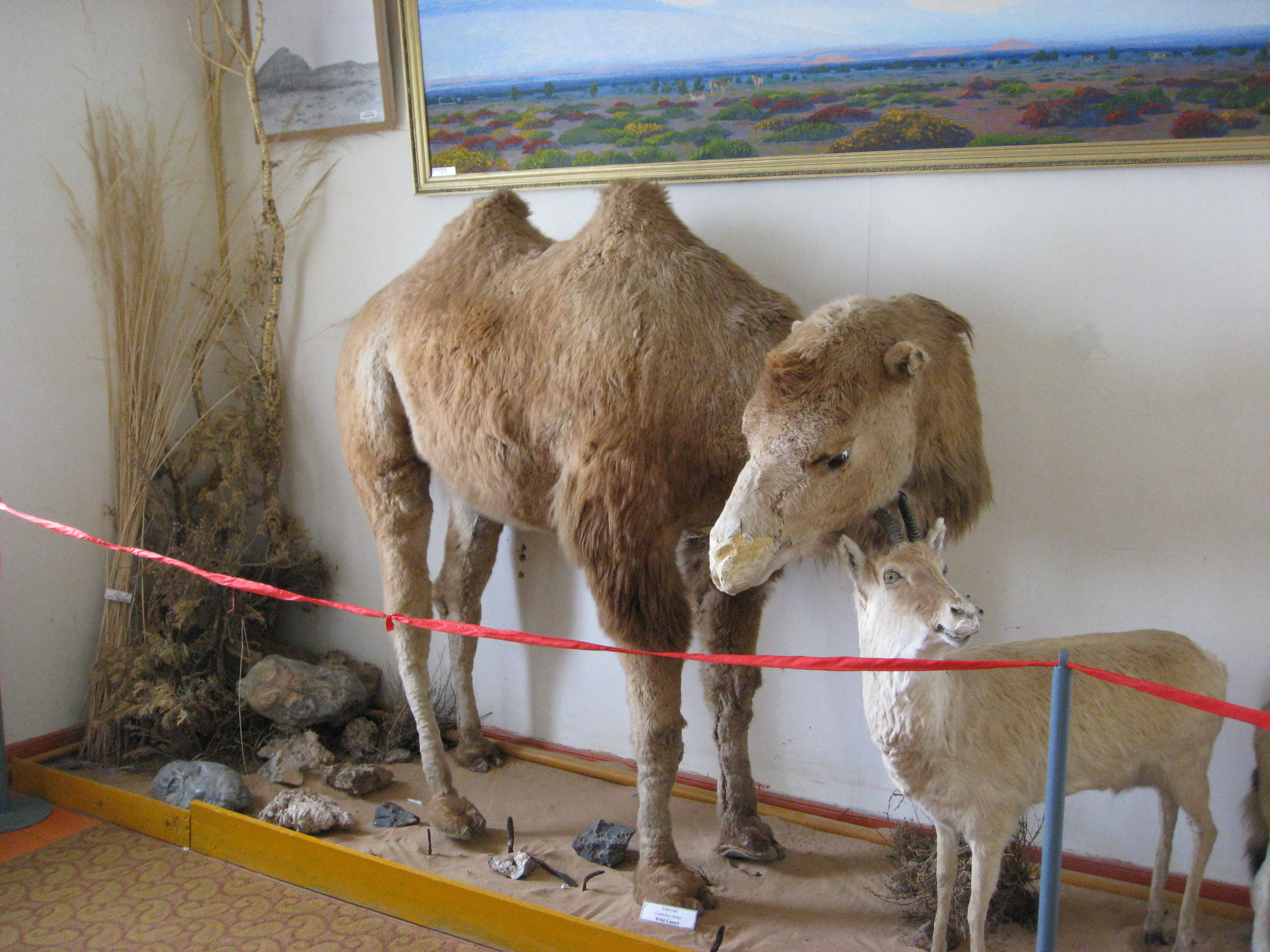
The high point of the production is the film crew´s search for the last remaining wild Bactrian camels in the Gobi desert (Mongolia). Imagine a desert that´s as cold as the Arctic, and where the camels can survive only by eating snow. If they can find it, that is... Finding the camels wasn´t easy either, the team apparently looking for them for two weeks! 

Despite protestations to the contrary, there is no particular "message" or educational value in this series, although it might of course give you a better appreciation of Nature. Or, more likely, scare the hell out of you (or make you admire new camera technology). Stay tuned for more extraordinary footage next week... 


Wednesday, March 31, 2021

Huns: the model minority?


I recently watched a documentary about Attila the Hun on Swedish TV. The documentary is really French, produced by Pernel Media for a number of English-language channels. The version I´ve seen was 50 minutes long, and it´s not entirely clear what the English title might be. Perhaps "In the Footsteps of Attila the Hun". 

I´m not a world leading expert on the Huns, but at least on one point, I think the documentary-makers pulled a fast one. They actually claim that the Norse god Odin is based on Attila, and that the Huns somehow reached Scandinavia?! Naah, unless you chose to believe some ancient tall tale á la Snorri Sturluson...

Otherwise, the documentary seems to be scholarly, with a number of "talking heads" from various academic institutions and museums. Somewhat unexpectedly, they don´t really tell the full story of Attila in the usual chronological fashion, instead concentrating on the archeological, linguistic and genetic evidence. It´s actually quite intriguing. 

Apparently, the name "Attila" isn´t known from any Asiatic language. It´s actually a Goth (Germanic) word, meaning "Little Father", presumably a term of deference to the great leader. But why would an Asiatic conqueror be widely known by a Gothic name? Perhaps Attila was of mixed race? The Huns had Goth vassals, but in the documentary, Asiatics and Whites are depicted as equal. The Huns were a multi-racial band of marauding brothers, not an example of henious Asian oppression of the fair Goths. 

Further, the documentary claims that DNA tests show that the "Hun elite" came from northern Mongolia and Lake Baykal, so presumably they were Asians and related in some way to the Xiongnu (Hsiung-nu), after all. (Otherwise, it´s interesting to note that Indo-Europeans also roamed the same area in ancient times, see the "Celtic" mummies in Xinjiang!) There are also archeological sites in Kazakhstan that are related to the Huns. Their golden artifacts are a perfect match. 

Attila and the Huns have a *very* bad reputation in European historiography, except in Hungary (Hun-gary) where nationalists to this day claim descent from the Huns and regard their leader as a Hungarian hero. Several modern monuments celebrating the scourge of God are shown in the documentary. Apparently, the theory in vogue is that the Magyars (the ancestors of modern-day Hungarians) were somehow related to the Huns, or indeed *were* the Huns at a later stage of development. I´m not sure what Viktor Orbán thinks of all this, I mean, there seems to be a contradiction between claiming to be "the defender of Europe against the barbarians" and celebrating descent from one of the barbarian tribes! 

After Attila´s death, his vast "empire" (or whatever is the correct term) soon split and was dissolved, but that´s normal steppe politicking, and the moment Russia breaks up around the year 2500, well, here we go again, with new Attilas...  

Hopefully more Germanic ones, this time.


Wednesday, March 24, 2021

Imaginary Muslims


"Imaginary Muslims: The Uwaysi Sufis of Central Asia" by Julian Baldick is an scholarly study of a Sufi scripture from around 1600 AD, "History of the Uwaysis", written by the otherwise unknown Ahmad of Uzgen in Kirghizia. A large portion of the book deals with East Turkestan, better known as Xinjiang. Today, Xinjiang is under Chinese control. At the time, portions of East Turkestan (the "historic" name of the region) was ruled by the Yarkent Khanate. The khanate was ethnically Mongol and religiously Muslim. The writer of "History of the Uwaysis" takes a positive view of the Muslim rulers of East Turkestan. The particular Sufi school with which Uzgani was affiliated enjoyed royal patronage in the Yarkent Khanate. 

Baldick´s book is not just scholarly but *heavily* so, so this is not light bedtime reading, not even for fairly advanced students of the subject-matter in question. Baldick summarizes all 40 chapters of the "History", and unless Sufi hagiography is your thing, you probably won´t enjoy this material! Still, I suppose it´s a good thing that something associated with East Turkestan has been translated to English! Or at least summarized in this particular barbaric tongue...

A few intriguing facts do stand out, though.

I happen to think that many religious founders have either been heavily mythologized, or simply didn´t exist at all. Did Jesus really exist, for instance? What about the Buddha? Or Lao-tse? Nobody thinks Don Juan Matus was real, nor did Guy Ballard actually meet Saint Germain on Mount Shasta in 1930. I therefore read the introductory chapters of "Imaginary Muslims" with some interest. Here we go again, apparently...

The mysterious Uwaysi or Uwaysis turn out to be a anarchistic current within Sufism, the adherents of which claim to have supernatural contact with the spirits of dead Sufi masters, and even with the spirit of Muhammad himself. The Uwaysis claim a certain Uways al-Qarani as their founder. Uways was a contemporary of Muhammad and hailed from Yemen in southern Arabia. Curiously, Uways never actually met Muhammad in person, yet he knew long before it happened that Muhammad would become the last Prophet and founder of Islam. Uways is venerated by both Sunnis and Shias, and he is said to have been killed in combat at the battle of Siffin, where he fought for Ali against Muawiya. Siffin is close to Raqqa in northern Syria, and recently Uways´ tomb was destroyed by ISIS. But then, nobody really knows where Uways is buried - several other locations in the Muslim world claim to host his tomb! The truth is, that no real evidence exists for Uways having been a real historical person at all. The story of his life is obviously hagiographical: Uways is the role model for every Uwaysi, since - just like them - he was a Muslim without having any physical contact with Muhammad, relying instead on supernatural (perhaps telepathic) inspiration. Also, just like many later Sufis, Uways is depicted as poor, naked and mocked, living on the fringes of society, while in reality being highly favored by God, a secret not to be disclosed to the unworthy. 

The first written sources on Uways are from the mid-9th century. It´s not clear when a more distinct Uwaysi current emerged. A certain Kharaqani (dead 1033) from Persia is considered an important figure in Uwaysi history. A Persian text known as "Memorial of the Friends" from the early 13th century claims that there is an entire group of people known as Uwaysis, who all get their instructions from Muhammad through spiritual means. During the 14th century, the Uwaysi tradition acquires a stronger position, due to the emergence of the powerful Naqshbandi order of Sufis. The Naqshbandi brotherhood seems to have incorporated both Uwaysi ideas and followers into their organizational structures. On the other hand, it also seems as if it becomes more difficult to really define what an "Uwaysi" is supposed to be, since all Sufis who claim to have supernatural contact with dead masters were now classified as "Uwaysi". 

Baldick points out that some phenomena associated with Uwaysis are actually relatively common in the Muslim world. One is the idea that a Muslim can recieve supernatural revelations from God or Mohammad in his dreams. This used to be connected to the practice of visiting and sleeping at holy places in the hope of getting a supernatural revelation from some dead prophet or holy man. Another example is the belief in a mysterious character called Khidr, not explicitly mentioned in the Quran but associated with an anonymous teacher of Moses therein. Khidr is often seen as a supernatural character who can appear at will to instruct or aid the believer. Many Sufis claim to have recieved teachings from Khidr himself. In the legends, he often appears as a physical man of flesh and blood, and reveals his true identity only later. There is also some suspicion that the Uwaysi tradition (or even Sufism in general) represent a Shiite influence on Sunnism. 

In East Turkestan, an "Uwayisi" brotherhood is said to have been formed during the 16th century by one Muhammad Sharif, who enjoyed the patronage of the Mongol ruler Abd al-Rashid (reigned 1533-1560). I get the impression that this was really the Naqshbandi order, incorporating some slightly wilder strands. Sharif is portrayed as being closely involved in the politics of his day, aiding Abd al-Rashid against his Kirghiz enemies by getting advice and blessings from Khidr, dead kings and equally dead Sufi masters. Or rather their living spirits at their respective tombs. After Abd al-Rashid´s and Sharif´s respective deaths, there seems to have been a split between the crazier mystics (the "real" Uwaysis) and the more organized "regular" Naqshbandis. Abd al-Karim (reigned 1560-1591) was associated with the wild men, while Muhammad Khan (1591-1609) favored the regulars, and was indeed their leader. But even the official Naqshbandis had certain "Uwaysi" traits, thus the father of Muhammad Khan´s spiritual master Muhammad Ishaq supposedly took instructions from "the men of the unseen", and at one point Ishaq´s deputy conjures up the master´s spirit to get some much needed advice! 

As for "History of the Uwaysis", most of its hagiographies are evidently of completely fictitious people. Baldick has diligently searched for them in other written sources, and in some cases visited the locations of their supposed tombs, and found nothing. One of the few exceptions is Satuq Bughra Khan, a 10th century Turkic ruler in East Turkestan, and a member of the so-called Karakhanid dynasty. Satuq may have been the first Turkic ruler to convert to Islam. Yet, even his biography is heavily mythologized, with the future bughra khan carrying out impossible feats of conquest (and a few miracles) at the tender age of 12. Muhammad saw him during his Ascension, when he encountered the spirits of many dead prophets. Although Satuq was not a prophet, he was nevertheless counted among them, and Muhammad prophesized that Turkestan would one day become Muslim thanks to Satuq. Some say Ali made these predictions. He was instructed by the spirit of Muhammad in Uwaysi fashion, and also encountered Khidr and a Sufi master disguised as a hare (sic). But we´re supposed to take the Bible or Buddhist traditions seriously, right?

An interesting observation made by Baldick is that the Sufi-Uwaysi practices have "pagan" elements. One example is "incubation", most famously associated with the ancient Greeks and their practice of sleeping in temples dedicated to Asklepios, hoping to see the god in their dreams. How is this different from sleeping at the tombs of dead prophets or Sufi saints, hoping to get guidence from them? (Indeed, how is that different from necromancy?) The Sufi masters often resemble antinomian Hindu gurus, who combine asceticism with libertinism, meditate on charnel grounds, walk around nude, and so on. The Sufis prefer dunghills to charnel grounds, obviously because Muslims bury their dead. I have a faint memory that one of the Uwaysis in the "History" was handling a human skull, again like fringe Hindus. There are even some "shamanistic" traits in the Uwaysi tradition, which is intriguing given its connection to Turkic and Mongol converts from shamanism. Muhammad´s Night Journey and Ascension could be given a shamanistic spin, and so can the idea that humans get instruction from animals (the hare which turns out to be a shape-shifting Sufi teacher). Baldick even believes that Khidr ("the green one") might be connected to the Green Man from European and Mideast pagan mythology. 

The main take away from "Imaginary Muslims" is that an entire religious tradition can be mostly based on fiction, including fictitious biographies of fictitious people. Which doesn´t necessarily disprove that there is *something* real behind the veil. But whatever that might be, it´s probably not an imaginary Muslim... 


Monday, July 27, 2020

Politisk böldpest


Högerextrema "Fria Tider" är en riktig knäppo-blaska. Den är pro-rysk, men utkommer i Estland och har en bild av Karl XII i tidningshuvudet. De senaste sex månaderna har Svobodnaya Pravda drivit en kampanj som underligt nog går ut på att Stefan Löfvén måste utlysa undantagstillstånd mot corona?! 

Nu verkar det dock som att Peter den stores horder har hittat ännu ett argument för att krascha den svenska ekonomin. Just det, en böldpestepidemi har utbrutit bland murmeldjuren i norra Mongoliet och TÄNK OM DEN KOMMER HIT. 

Ja, vad skall vi göra då? Tänk om ryska posten hade kunnat påpeka att det faktiskt finns antibiotika mot böldpest. Om det finns antibiotika mot politiska pester, återstår att se...